Featured Movies - Page 297

Life Goes On (Behind the Scenes)
2025
A reality TV show crew goes undercover on an unhinged director's set.Tomatoes are poisonous
2025
This is a tale of tomatoes and desire: In the 17th century, tomatoes were feared as poisonous across Europe. It wasn’t until a French painter dared to face death that the world was finally able to taste the tomato’s beauty. After twelve hours of anxiety and fear, the painter emerged not only unharmed but found the flavor of the tomato exquisite, his appetite awakened. One evening, a woman prepared a delightful dish of tomato pasta with red sauce, waiting in both anxiety and anticipation for the return of a man.SergipeWay: Do Barro ao Mangue
2025
It presents the pioneering work of Casa Dibarro, its Fouther Mother, and some of their "children" who make up the house and the ballroom scene in Sergipe, showing that clay carries the fingerprints of those who shaped it.Lo Scorpione
2025
Lo Scorpione
2025
Bury Me In Color
2025
Bury Me In Color
2025
When two estranged sisters reunite for their mother’s funeral, their opposing approaches to grief spark tension, leading them to rediscover the bond they thought they’d lost.Voyage of the Handala
2025
Voyage of the Handala is an independent, documentary film about the Freedom Flotilla Coalition: an international group of peace activists and aid workers, sailing from Europe to Gaza to raise awareness of the plight of the Palestinians and break the Israeli blockade of Gaza to deliver aid, health care and hope. The Handala, an old Norwegian fishing boat, was named for the political cartoon by Naji al-Ali depicting a defiant Palestinian boy.Parody law
2025
Roadkill
2025
Roadkill
2025
On their road trip, Marius and Dariya stop at Jasper's inherited villa – but the planned getaway turns into an absurd test of character for the couple. Amid luxury loungers and bleached Neanderthal skulls, Marius finds himself at the mercy of Jasper's power plays. Here, it's Darwin over Dolce Vita.Don't Let The Bastards Grind You Down
2025
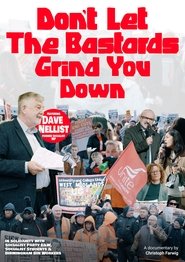
"Don't Let The Bastards Grind You Down" is a documentary film about British social policy. The focus is on the political struggle against neoliberal austerity policies, which have their origins in the hated Thatcher government. The film features the former socialist MP Dave Nellist, who is now the national chair of the Trade Unionist & Socialist Coalition and Hannah Sell, the general secretary of the Socialist Party. The film features a local election campaign in the miners' town of Nuneaton, students campaigning against an increase in tuition fees and refuse workers from Birmingham striking against massive cuts to their wages.So Long Since I've Known a Spring
2025
Director Alexandra Bidian goes to Romania, the home country of her late father. She invites her mother and sister along to the land where they used to spend their summer holidays, but this time in search of memories. It is her attempt to address and voice things, and her means to understand the man who wrote a lot and spoke very little, and about whom much remains in the dark. When her father came to Germany, he already had a life behind him – including decades of political involvement, which was documented not only by him, but also by the Securitate, socialist Romania’s secret police. Bidian combs through old boxes, reads letters, and peruses files. But instead of answers, she is left with more questions. A road trip to the past, and a letter to her father. Using archival material, family pictures, and interviews with friends and associates, Bidian tries to track down who her father was – and how her own story is intertwined with his life and his actions, as well as with his losses.Paul Jannowski
2025
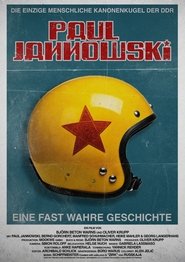
Paul Jannowski
2025
Paul Jannowski, the only $living cannonball” of the Eastern Bloc, was the superstar of the East German State Circus. But one day he dared to do the unthinkable: he shot himself across the Elbe to the West. He left love, friendships, and disappointment behind. Now, he looks back upon his adventurous life and plans one last coup. A portrait too good to be true.Dear Hans
2025
Dear Hans
2025
In 1943, Maria sends her brother Hans a postcard on which she wishes him well and expresses the hope of seeing him again soon. But the card is sent to the war zone, whence Hans never returns. Many years later, the siblings' niece takes another look at the card.To the Left of the Fir Tree
2025
A farm near Glücksburg. The return to a moment with Willi in his garden. The search for a tree that once stood here. Memories of the bygone, an echo of what is left. Audio tapes and 16 mm images drill a hole in time, opening up a gaze upon the beauty of an uneventful daily life.Arrival
2025
Arrival
2025
Ten years ago, young Syrian Alayham fled civil war, and the threat of being drafted, for Germany. There, he became one of the first refugees in Eckernförde – there were six of them at the time, he later remembers. Quickly learning German, he got politically involved in refugee projects, and spoke publicly about his experiences. A move to Jena for university followed: a new everyday life with exam stress, living in a shared flat, a relationship. It was during his studies that he finally felt that he was no longer being reduced to his experience as a refugee: he belonged. Alayham found his feet, as much as possible in a foreign country. But when is “arriving” truly over? Over a period of ten years, documentary filmmaker Fredo Wulf accompanied Alayham on his journey from Schleswig-Holstein via Jena to Heidelberg, where he has lived since getting his medical license.Em Assumes Death
2025
Em Assumes Death
2025
At the moment he dies, Em’s ghost books a sitting with an AI-generated coach named Tammy. The anime avatar patiently calls up all the clips that brought Em to this point, the redundant message of which is: What you imagine becomes real. Jacob Schill paints an intoxicating picture of an imagination colonized by social media, in which self-affirmation and delusion become indistinguishable.The Disinformation Teacher
2025
According to a 2021 study by analysts from Palacký University, around ten percent of teachers surveyed had difficulty distinguishing facts from disinformation. In this documentary report, we explore how disinformation can be identified within the education system and how both teachers and students can protect themselves against it.