Featured Movies - Page 301

Where Is the Centre?
2025
Where Is the Centre?
2025
The "center" is a metaphor for urban dehumanization. All movements of people and objects, all developments revolve around an empty illusion. Robots drift through the ruins in the deep sea, representing the collapse of the center and psychological alienation in a performance-oriented society. The film is the filmmaker's abstract response to the urban reality of her ever-growing hometown of Beijing.Subscribe to Remove the Watermark: What Makes Us Alike or Different?
2025
Commercially operated AI image generators reveal their hidden logic in the shimmering choreography of loading bars, confirmation windows, and beauty filters. Between gamification and advertising banners, the camera switches between the feverishly typed prompts of an invisible user and the AI-generated portraits. Algorithmic promise and lived uncertainty of the digital black box. A field of tension between the visible and the hidden, between conformity and difference, in which creativity must be renegotiated.Wahhab, Caretaker
2025
Wahhab, Caretaker
2025
An aging Osho commune in rural Germany. The dream of enlightenment and free love still echoes, but the winds of change are impossible to ignore. Wahhab is the caretaker of this community and faces the slow fading of things with his unwavering cordless drill.How Blue the Sky Is
2025
How Blue the Sky Is
2025
The War in Kassel and Chongqing - Explorations from the protagonist's perspective. She travels through the last words and remnants of the war to Chongqing and Kassel, two cities 7,900 kilometers apart. Although she lived there for a long time, she never experienced the war herself. As someone who grew up in a world heavily influenced by electronic media, images nevertheless give her an idea of the pain and depth. Images make the extent of the war visible and allow the horrors to be felt even beyond actual experience.Os Retornados
2025
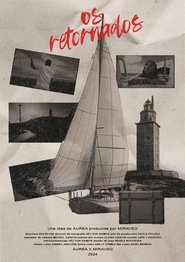
Os Retornados
2025
Inspired by The Odyssey and with Áurea's unique touch, the film tells the story of the journey home, as a powerful metaphor for the agency's return from the Canary Islands to A Coruña.Quand le grenier aura pris feu
2025
A music film about people experiencing their own reality, and about pigeons.Allegory of the Cave
2025
Proxys
2025
Proxys
2025
In her essayistic documentary film, Katrin Esser stages the story of her mother, who suffers from Alzheimer's disease. The course of the illness is told from two perspectives: that of the Polish caregiver Violetta and that of the daughter. They take turns recounting their experiences, the limits of care, excessive demands, working conditions, exploitation within the system, and death. The only filming location is the apartment, which alternates between living space, museum, and crime scene. Esser's staging reveals layers of memory and shows that remembering and forgetting are very individual processes.Raum ohne Zeit
2025
Raum ohne Zeit
2025
The artist Sarah Schrof is in her studio, where fragmentary soundscapes accompany her through the space. Observing and feeling her way, she follows fleeting materials and processes that unfold in the moment. Plants transform into pigments, colors slowly take shape. In the process, measurable time becomes a subjective sensation that is lost in the creative flow. An invitation to explore the connection between nature, art, and inner experience in this timeless space and to trace the fleeting moments.1g Quetiapine
2025
1g Quetiapine
2025
In a mosaic of games, films, and media, the protagonist's perspective, a fragmented state of mind, merges, and the boundaries between reality and dreams dissolve. 1g of quetiapine, both a remedy and a means of forgetting, dampens the heart and shatters identity. The film collage reflects on the medicalization of mental suffering and the loneliness that lies in synthetic calm. Through chaotic layers of media, it shows how the self is not healed, but rather rendered illegible and suspended in a borderline state between sedation and despair.movements to resist
2025
movements to resist
2025
Dance connects! Several generations dance for themselves and yet together. Each movement reveals its own attitude toward space, time, and internal and external barriers. The bodies and their gestures resonate with the sound and open up new approaches to silent acts of resistance, vitality, and becoming. A loving film miniature on 16mm, hand-developed, marked by traces and scratches from the analog process, revealing the fragility of the moment.Imitation Machines
2025
Imitation Machines
2025
The suicide rate in prisons is ten times higher than in the general population. But instead of improving prison conditions, politicians are focusing on technological solutions. The film documents the training of artificial intelligence designed to predict and prevent prisoner suicides in German prisons.La fábrica y el sexo
2025
La fábrica y el sexo
2025
Upload GDR
2025
Upload GDR
2025
It has to be loud and fast! Young people sample and dance against the backdrop of East Germany's past. Their social media feeds are popular, widely shared, and often liked. They symbolize rebellion and youthful revolt, but what system exactly are they trying to challenge with the speed and volume of their music?Puls zu Puls
2025
misdirected impulse
2025
misdirected impulse
2025
A sequence of pictures of picturesque tree and shrub constellations comes to an abrupt end.I kept following until i realized what was true
2025
A farewell to the city of Richmond, Virginia, a play with images and sound.Pracownicy Szkoły
2025
Pracownicy Szkoły
2025
Blended Vision
2025
Blended Vision
2025
"Blended Vision" is a duo-screen video. The screen on the left shows a video about Lau's experience of accompanying his father during eye surgery. As the father's vision gradually becomes disabled, he begins to rely on his daughter's eyes to see the world, and the roles of caregiver and caretaker are reversed. In the series of events from the discovery of the disease to examination, surgery, and recovery, the emotional changes between father and daughter constantly overlap and stagger, and are connected by an invisible line. The video on the right, Lau uses a camera lens to imitate the blurred vision from the eyes of her father, and returns to the places he passes by every day, the park near their home, the same teahouse, the same bus route, the same way home... to reproduce those things that are seen repeatedly in the scenery.Diminished
2025
Diminished
2025
An archaeological excavation site becomes the scene of a struggle for context and meaning in one's own national history. How can science deal with ambiguity? How far can one go to make oneself heard? A powerfully staged chamber play.