Popular War Movies - Page 298

Ordinary Heroes
1986
Ordinary Heroes
1986
star 6This is about a man falling in love with a girl and then immediately gets drafted into the Army during the Vietnam War. In the war he becomes blind and gets discharged.A Time for Drunken Horses
2000
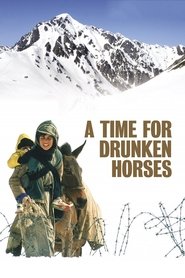
star 7.6After their father dies, a family of five children are forced to survive on their own in a Kurdish village on the border of Iran and Iraq.Cadets
1941
Cadets
1941
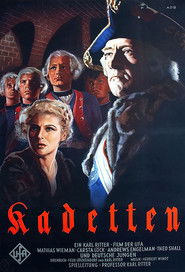
star 6.2The year is 1760: it is the time of the Seven Years' War and the advancing Russian army has taken captive 100 underage Prussian cadets. The kids are mishandled by the raping and pillaging Russians, but with the help of a Rittmeister now in the service of the Tsar, they succeed in getting away. They hole up in a deserted fort and eventually sally forward to take back their military academy from the bloodthirsty, pillaging Cossacks.Emergency Landing
1952
Emergency Landing
1952
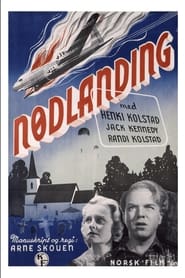
star 5.5An American bomber is shot down on the Norwegian coast during World War II. The airmen bail out and land at different locations. In spite of the German search for them, the Norwegian resistance picks them up and hides them in the attic of the local church, a center of operations. Things become tense, however, when the hideout is spotted by a notorious collaborator, and soon the protagonist, Hans, has to get the airmen to Sweden.The Valkyrie Legacy
2008
The Valkyrie Legacy
2008
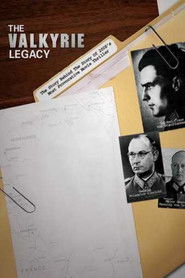
star 6Created as a companion documentary to the film "Valkyrie," this documentary details the true story behind the plot to assassinate Adolph Hitler.Private Izzy Murphy
1926
Private Izzy Murphy
1926
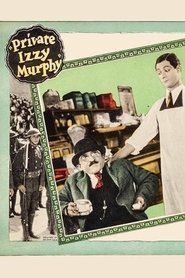
Isadore "Izzy" Goldberg changes his name to I. Patrick Murphy because his store is in an Irish-neighborhood in New York City. He meets Eileen Cohannigan, the daughter of a meat-packer, and he tells her he is Irish and a romance begins. When America enters World War I, "Izzy" enlists, is sent to France, and is wounded while engaged in a heroic rescue during a big battle. While recovering in an overseas hospital, he writes Eileen and tells her he is Jewish and not Irish. Returning home, he is parading with his regiment and he sees Eileen with Robert O'Malley, his old rival. He thinks she has thrown him over because he is Jewish. An Irish lodge comes to bestow an honor on the man they think is Patrick Murphy, an Irish hero. But O'Malley tells them his real name is Goldberg. But Eileen tels him it is he she loves, and they head for the marriage-license bureau.John, the Soldier of Vengeance
1940
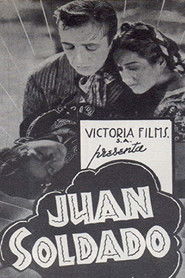
star 5The murder of an 8-year-old boy by a young soldier in Tijuana, Mexico, leads to riots on the streets. Based on a true story.The Traitor
1967
The Traitor
1967
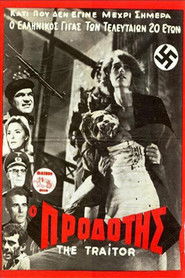
When the forces of the German occupation undertake a series of serious defeats in the Resistance, suspicions arise of being a traitor among the fighters. A girl who works within the Resistance finds in horror that the traitor is none other than her father.Friend or Foe
1982
Friend or Foe
1982
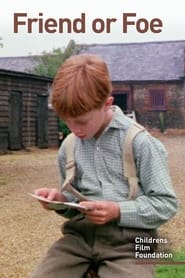
star 5Two evacuated children in wartime rural England find two German airmen hiding out in the woods. An adaptation of Michael Morpurgo's 1977 novel from writer/director John Krish .Pearl Harbor: 24 Hours After
2011
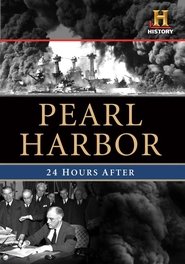
Discover the untold story of the events that occurred immediately after President Roosevelt received the call that Pearl Harbor had been attacked. New evidence from the FDR Library reveals the true panic that gripped the White House and shook the nation.Casualty of War
2021
Casualty of War
2021
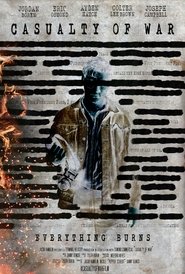
Five years after burying gruesome photos from the Vietnam war, Dave Simmons finds himself roped back into his past with the recent death of his platoons commanding officer. With him out of the picture, Dave and his comrade must decide whether to expose the truth or keep hiding behind their lies.War of Words: Soldier-Poets of the Somme
2014
star 9.5The 1916 Battle of the Somme remains the most famous battle of World War I, remembered for its bloodshed and its limited territorial gains. What is often overlooked, however, is the literary importance of the Somme: more writers and poets fought in it than in any other battle in history. Narrated by Michael Sheen, War of Words: Soldier-Poets of the Somme details the experiences of the poets and writers who served in the battle. The work of Siegfried Sassoon, Robert Graves, David Jones, Isaac Rosenberg and JRR Tolkien (who arrived at the Western Front with ambitions to be a poet) was informed and transformed by the battle. Taken together, their experiences allow us to see this dreadful historical event through multiple points of view. The film uses animation, documentary accounts, surviving artefacts, battalion war diaries and the landscape itself to reconnect this literature to the events that inspired it.Adele Shimanoff: U.S. Marine
2016
In 1945, Adele Shimanoff joins the U.S. Marine Corps amid a larger plan to bring women into the military in order to “free a marine to fight.” Adele moves away from the traditional Women’s Reserves and into active duty for a year, where she forms lifelong friendships and meets her future husband. He remains in active duty for 28 years after she leaves, giving her a full experience of life with the Marines. More than 70 years later, Adele is forced to confront the idea that she is still needed, even when her friends have passed on before her.The Taras Family
1945
The Taras Family
1945
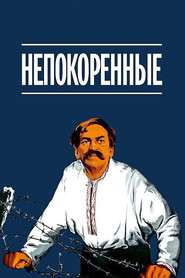
star 6.1Russian filmmaker Mark Donskoi, of "The Gorky Trilogy" fame, was responsible for the postwar Soviet drama The Taras Family (originally Nepokorenniye, and also released as Unvanquished and Unconquered). A semi-sequel to Donskoi's Raduga (1944), the story is set in Nazi-occupied Kiev. The drama focusses on the travails of a typical Soviet family and on the efforts by the Germans to force the reopening of a local munitions factory. The film is at its most grimly effective in a long sequence wherein the Nazis conduct a search for Jewish escapees, culminating in a horribly graphic re-creation of the slaughter of the Jews at Babi Yar. While Donskoi was critically lambasted for his cinematic "sloppyiness" during this sequence (hand-held camera, rapid cuts etc.), it can now be seen that he was attempting a realistic, documentarylike interpretation of this infamous Nazi atrocity.The Continent in Flames
1965
The activities of a group of Korean independence fighters in Mongolia, who try to steal a valuable item from the Japanese Army.The Battle
1934
The Battle
1934
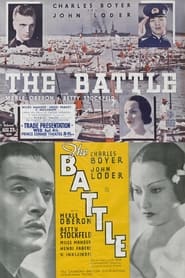
star 3In 1904 during the Russo-Japanese War, a Japanese naval officer gets his wife to seduce a British attaché in order to gain secrets from him. Things begin to go wrong when she instead falls in love with him. Adapted from a novel by Claude Farrère.South Pacific 1942
1981
South Pacific 1942
1981
Follows the crew of a Canadian submarine in World War Two and their fight against the Japanese Imperial Navy.Valley of the Wolves: Palestine
2011
star 5.5After the Freedom Flotilla attempts to bring humanitarian assistance to Gaza refuses to turn back, it is attacked by the Israeli military. In a dramatic battle scene, activists resist and are killed by the Israeli soldiers. A Turkish commando team led by Polat Alemdar (Necati Şaşmaz) travels to West Bank in Palestine, where they launch a campaign against Israeli military personnel in an attempt to track down and eliminate an Israeli general, leader Moşe Ben Eliyezer (Erdal Beşikçioğlu), who is the responsible for the flotilla raid.