Popular War Movies - Page 327

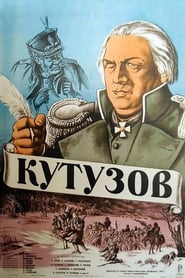
1812
1943
Information Please
1944
Information Please
1944
Instructional military film that shows the many deceptive ways that Germans might extract valuable information from British prisoners-of-war.The Boy on the White Horse
1995
At the end of the Garabagh war, a young Azeri man, who has been witness to the martyrdom of many people and the dispatch of his friends and relatives to the war front, mounts a white horse and without informing his family sets out for the front, He joins the relief work group in spite of the objections of the commander of the forces, until...Unserious Hero
2018
Unserious Hero
2018
star 6A staff member of a game company came to a historical museum in the border city of China. They are Wu Mi, a second-generation rich man, Mei Feng, a graduating internationaire, and Andrew, a Russian drunkard. The three inadvertently crossed...Gunpowder
1985
Gunpowder
1985
star 5.9At the end of September 1941, Soviet artillery troops in besieged Leningrad realize that pretty soon they will fire their last shot, and after that the defense of the city will be doomed. The film is based on a true event: a small group of fearless soldiers transported a large supply of gunpowder through enemy lines to Leningrad.The Test of Womanhood
1917
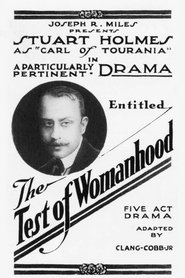
When the country of Akkadia is overrun by its militant neighbor Turania, war runs rampant and Marie, a young Akkadian governess, and Carl, an officer of the Turanian army, fall in love in spite of loyalty to their respective countries.At Eighteen Boyish Years
1974
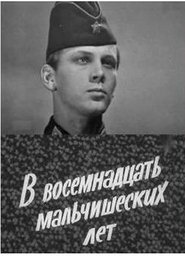
About the life of fighter pilot Timur Frunze, who died heroically in an unequal battle with the Nazi invaders near Moscow.The Hundred Regiments Offensive
2015
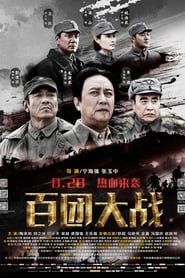
star 5.2The Japanese has invaded far into china, defeating the Kuomintang (KMT) soldiers many times and pushing them back into Central China. There was a general sentiment among anti-Japanese resistance forces that the Communist Party of China (CCP) was not contributing enough to the war, and that they were only interested in expanding their power. As a result, the CCP planned a major offensive against the Japanese, consisting of 105 regiments, called the Hundred Regiments Offensive.It's Your War Too
1944
It's Your War Too
1944
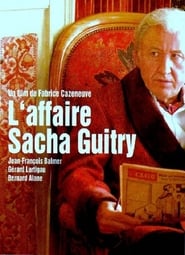
Documentary short film detailing the history of the American Women's Army Corps, the WACS. Preserved by the Academy Film Archive, Academy War Film Collection, in 2009.The Sacha Guitry Affair
2007
On the morning of 23 August 1944 Sacha Guitry was arrested at his Paris appartment, as the French capital was being liberated. Accused of collaboration with the enemy, the author of successful plays ("My Father was Right," "Let's Make a Dream," "Quadrille") and director of the theatre of the Madeleine was to remain captive for sixty days. His detention took from from the depot, to the Vel' d'hiv', then Drancy, and finally Fresnes Prison.Deserter
1989
Deserter
1989
During the battle with the Nazis, Lieutenant Soslan was shell-shocked and captured. A funeral comes home. But he escaped from captivity and is hiding in the attic of his home.Remembering You
2017
Letter from a Time of Exile
1988
star 5Alaouié presents the stories of four exiles from Beirut. Their only connection is the voice of the narrator and their situation of living in exile in Europe. Told with a subtle humor, the film sketches four highly individual portraits of people, whose lives have taken unexpected turns due to the madness of the Civil War.The Fog
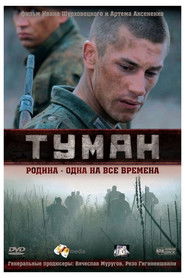
2010
The Fog
2010
star 5.1Present time. A squad of young soldiers of the Russian army during the march-throw splits from the main group. In order to save time, they decide to cut the path, but get into the strange fog, which transfers them to the past, right into the World War the Second. Boys, who saw fight only in the movies, and imagined it on the training field, get into the heart of the real WAR. Real courage, real fear, real love and hate, and real DEATH. No time to ask questions. Survive and fight for your country!This Is Korea!
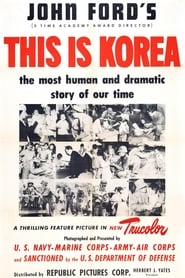
1951
This Is Korea!
1951
star 5.7John Ford's documentary about the early battles of the Korean War, shot in color.Action
1987
Action
1987
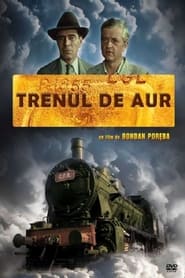
star 6.5Summer 1943. Soviet commanders become aware about a spies school in the occupied territory of Ukraine running the traitor Karayev. The group of five is sent to destroy the school.Złoty pociąg
1986
Złoty pociąg
1986
star 4.5First days of September 1939. The government decides to transport the Polish gold stored in the treasury of the National Bank of Poland out of the threatened Warsaw. A convoy is formed under the command of the man for special tasks, Major Bobruk. A string of trucks and city buses travel along crowded roads under relentless attack by aircraft. The convoy makes its way through Lublin to Romanian territory, where the gold will be reloaded onto a train. Prime Minister Calinescu, disregarding the threats of the Nazis, agrees to the transit of the precious bullion through his country. The evacuation of the gold is threatened all the time by a special German sabotage group under the command of Second Lieutenant Rudolf Lang.Pedro Calungsod: Batang Martir
2013
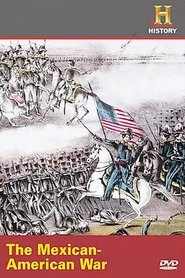
star 4Pedro Calungsod, a young Filipino man, leaves his Visayan native roots to join the Spanish Jesuit priest Fr. Diego de San Vitores in his mission to the Marianas Islands (Guam) in 1668. The San Diego Mission arrives in the Marianas where the young Pedro, a trained catechist and mission assistant, begins work for Fr. Diego de San Vitores in baptizing the Chamorro natives, preaching the holy gospel and spreading the good news of salvation through the Christian faith amidst paganism, doubt and disbelief. Despite the longing for his father and the threats to their lives, even at the peril of death, Pedro and Fr. Diego continued their missionary work. They roamed the dangerous islands and baptized many more natives and continued to enlighten them about Christianity.The Mexican American War
2006
star 8.5One of the most controversial conflicts in U.S. history, the Mexican-American War erupted as President James K. Polk sought to extend the borders of the nation to the Pacific, taking by force whatever territory stood in the way. This special, produced by The History Channel and hosted by Oscar de la Hoya, looks at the war from the perspective of both countries, and chronicles the fighting from its inception to its conclusion with the Treaty of Guadalupe Hidalgo.Hongse de zhongzi
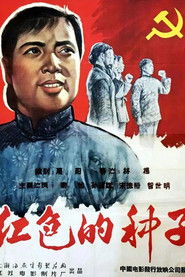
1958
Hongse de zhongzi
1958
On orders from the command, the wife of the commander of the 4th Army, Hua Xiaofeng, infiltrates enemy lines to establish contact with an underground organization and rally the masses to take up arms against the Kuomintang. Under difficult conditions, risking her life, the young woman carries out her combat mission. The red seeds she sows among the people sprout—the peasants help the 4th Army defeat the Kuomintang.