Popular War Movies - Page 388

Silence
2010
Silence
2010
During the civil war in Turkey, many people were assassinated or disappeared while in custody. Mothers and families of the ones who disappeared in custody have held a demonstration every Saturday for the last 15 years. These mothers are called the Saturday mothers. The project tells the story of the encounter between an ex-soldier and a mother who's son disappeared in custody.The Last Strand
1968
The Last Strand
1968
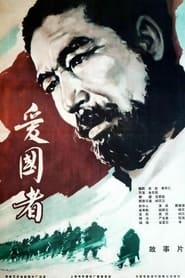
A short film about a young Soviet border guard's confrontation with a state border violator.애국자
1959
애국자
1959
Izhora Battalion
1972
Izhora Battalion
1972
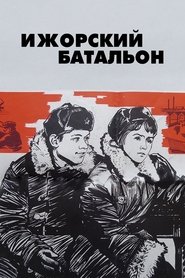
star 7The film is about the fate of the soldiers of the Izhora battalion. Formed from the factory’s workers, the battalion took part in decisive battles against the regular units of the Nazi army and ended its heroic journey on the coast of the Baltic Sea.The Last Fort
1972
The Last Fort
1972
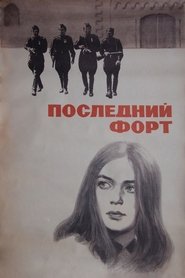
Four soldiers of different nationalities serve in small garrison on the territory of post-war Germany.Cartas de guerra
2015
Cartas de guerra
2015
It centers on the ethical and moral dilemma of a gudari (soldier) who is torn between continuing his duty as a soldier, or to abandon his position and comrades and return home with his wife.Borodino
2020
Borodino
2020
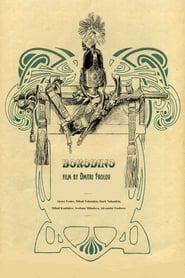
star 10An experimental sitcom, shot in the style of silent films of the early twentieth century. A parody of military-patriotic films. The plot of the film is the battle of the Russian army with Napoleon in 1812.Lena Kostenetskaya
1969
Lena Kostenetskaya
1969
The civil war separated families on opposite sides of the barricades. How to understand this situation for a young girl who is being raised by a rich aunt, while her father leads a partisan detachment.Zun Yi Conference
2016
Zun Yi Conference
2016
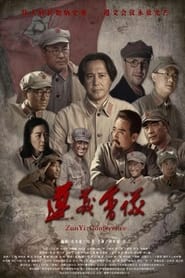
The film recounts a pivotal chapter in Chinese revolutionary history: the Zunyi Conference held from January 15 to 17, 1935, in Zunyi, Guizhou. During this meeting, the Chinese Communist Party corrected the military errors of Wang Ming’s “leftist” leadership and began establishing Mao Zedong’s Marxist line as the guiding force within the Party. This turning point helped save the Party, the Red Army, and the revolution itself. The film is structured into five key segments: The Great Retreat from the Soviet Base, The Bloody Battle at the Xiang River, Zunyi at Dawn, Crossing the Dadu River, and The Triumphant Meeting in Northern Shaanxi. In the dramatic Dadu River crossing scene, 17 Red Army soldiers brave the treacherous current, with two tragically falling into the river—highlighting the courage and sacrifice that defined this historic journey.1931 Hidden War the Hero Bai Yihua
2025
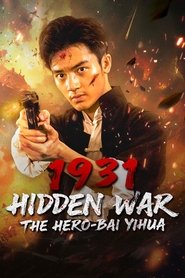
After the “September 18 Incident” in 1931, Japanese forces occupied Northeast China. University student Bai Yihua was ordered to return to his hometown, Liaoyang, posing as a teacher to secretly organize anti-Japanese resistance. However, constant threats put his mission and identity at risk. As enemy and ally clashes intensify and his cover nears exposure, can Bai Yihua uncover the traitor, break through the siege, and turn the tide of the resistance?The Secret of the Partisan Dugout
1975
A children's adventure film about pioneers of the 1970s, red scouts who discovered a partisan squad's diary and a pioneer flag, which was saved during a battle by a young hero.Lued Suphan
1979
Lued Suphan
1979
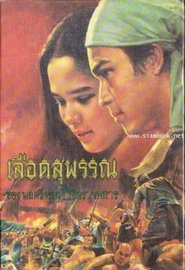
In 1765, at the end of the Ayutthaya period, at a village in Suphan Buri. The villagers live in peace. Despite the news of the war from Angwa, they thought that the Burmese army is not convenient for marching and make a war in flood season. With Unawareness of the Thai people, the Burmese army was able to easily invade Suphan Buri. The moon survives by disguising himself as a man, while many village women have been raped by the Burmese army. Duangjan's friend is dragged to Mangratho (Suthat Intranupakorn), a right-wing commander, but is saved by Mangrai (Pairoj Sangwaributr), a left-wing commander who is the son of Mang Mahasuranat (S. Asan Chinda), the general who commanded the army this time. Mangratho fights with Mangrai and is defeated, therefore he have a great malice toward Mangrai.Prelude to Axanar
2014
Prelude to Axanar
2014
star 6.8Prelude to Axanar is a short film that will give viewers a historical look at the events leading up to the Battle of Axanar, the central event of the film Axanar. The short is a historical look at the battle of Axanar, filmed like a History Channel special. Each character will give a different view of the war with the Klingons leading up to the final confrontation that will be chronicled in Axanar, which will be released later this year. Prelude will tell viewers about the war and what it meant to each side. Figures from both sides will talk about how the war started, how the Klingons were better prepared for war, how Starfleet built their fleet, and how the war was fought from both the Federation and Klingon perspectives. You will hear from Robert April talk about building the Enterprise, Starfleet Admiral Ramirez talk about building the Starfleet, Garth of Izar telling the story of his rise to fame and Kharn, the Klingon Supreme Commander give the Klingon view of the war.Eleven
2018
Eleven
2018
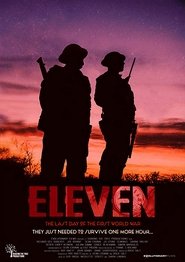
Just moments before the end of hostilities, a foolhardy order ricochets through the front- line trench. Sergeant Archie Jones and his pals find themselves going over the top one last time. All they had to do was wait just one more hour. As eleven o'clock approaches Archie, badly wounded, slips between two worlds. One filled with the familiar sounds and smells of death, the other of warm sunshine, a soft embrace and the innocent smile of a child. When all seems lost help is offered from an unexpected hand.Custaryans
2024
Custaryans
2024
This documentary tells three stories about Jewish properties stored during the Second World War, their Jewish owners and their non-Jewish custodians.Chang cheng xin qu
1975
Blockade
2006
Blockade
2006
star 6.4The images comprise only of material Sergei Loznitsa found in the Moscow film archives about the siege of Leningrad during the World War II. By providing the originally silent images with a meticulously reconstructed soundtrack, the scenes from everyday life under siege seem to be set in the present. By not intervening in the montage but giving the scenes room to tell a story, the scenes transcend the specific historic events and lead a new life. They do not evoke memories of the past, but become a breathtaking reanimation of reality.Çanakkale 1915
2012
Çanakkale 1915
2012
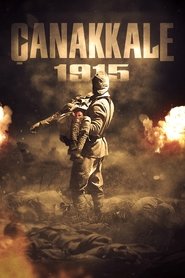
star 6.3The story of the film is about the Gallipoli Campaign during World War I on the Gallipoli Peninsula in Turkey in 1915. The film covers the resurrection of Turkey following its defeat in the Balkan War, through depictions of Sergeant Mehmet Ali (Ali Ersan Duru) from Biga, Corporal Seyit and many others. To help Russia and threaten Constantinople, the Allies try to force through the Dardanelles Straight with a large fleet. Through a series of historical sketches, the film documents how they were defeated despite many difficulties and hardships.