Popular War Movies - Page 397

Cold at the Spring's Beginning
1985
The action takes place during the Great Patriotic War in Belarus. The village in which the boy Kastus lived was located in the partisan zone. He soon made friends with the partisans, who became close people to him. The loss of his older friends was unexpected and difficult for Kastus...The Falklands Play
2002
The Falklands Play
2002
star 7.3The Falklands Play is a dramatic account of the political events leading up to, and including, the 1982 Falklands War. The play was written by Ian Curteis, an experienced writer who had started his television career in drama, but had increasingly come to specialise in dramatic reconstructions of history. It was originally commissioned by the BBC in 1983, for production and broadcast in 1986, but was subsequently shelved by Controller of BBC One Michael Grade due to its alleged pro-Margaret Thatcher stance and jingoistic tone. This prompted a press furore over media bias and censorship.The play was not staged until 2002, when it was broadcast in separate adaptations on BBC Television and Radio.Echo of Love and Death
1991
Kang-wook, a law student at Seoul National University, finds himself in a tight spot financially after losing contact with his family in North Korea. He sells his own blood at a hospital to make ends meet, and there he meets and grows close to nurse Jin-young. As Kang-wook faces financial difficulties, Ki-yong, a son of a landlord's agent, appears and tricks Kang-wook into joining left-wing activities. Ki-yong's true identity is revealed by Yoon-ae, a friend from hometown, leading to his arrest. Meanwhile, Kang-wook and Jin-young marry with the blessings of Professor Park and their friends, while Kang-wook's friend Do-hyeon struggles to hide his feelings for Jin-young. Their sweet days together come to an end with the outbreak of the Korean War, separating them. Jin-young, unable to wait for Kang-wook any longer, decides to flee the war with Do-hyeon. Kang-wook, hiding at Yoon-ae's house, is eventually arrested by Ki-yong and the leftists, who had been freed from prison.The Siege: Operation "Iskra"
1977
star 5"Iskra" is the codename for the plan of the operation of the Soviet troops to break the blockade of Leningrad. In January 1943, the blockade of Leningrad was broken. A corridor 8-11 km wide was formed between Lake Ladoga and the front line.The Dive
2019
The Dive
2019
star 6.6It is Thursday and another war is hitting the northern part of Israel hard. Three brothers reunite in their childhood kibbutz to bury their father. Two days later the youngest has to go to war, and while he seeks guidance from his older siblings who have both experienced the battlefield, the homecoming soon spins out of control.Forget the Word 'Death'
1979
1920. Russian Civil War. Operation of GubCheka (Soviet police) to destroy one of the bands in Ukraine.Wondrous Is the Silence of My Master
2025
In 19th-century Montenegro, the free mountain territories are surrounded by Turkish forces, isolated from the West and steeped in conservatism, patriarchy, and superstition. Morlak, a poet and bishop inspired by the historical figure Petar II Petrović Njegoš, leads his tribe in resisting the invaders. Gravely ill, he is sent to southern Italy in search of a cure. The journey takes him to a house in Naples, a city that contrasts sharply with his homeland’s isolated hills. As Morlak contemplates his existence, his loyal servant Djuko struggles with profound nostalgia, driven by the fear of his master’s death in a foreign land.Mediterranean
2019
Mediterranean
2019
The Mediterranean movie directed by Hadi Hajatmand and produced by Rashid Hajatmand, (ShowBox), starring Mehraveh Sharifinia, Behrang Alavi and Pouria Poursorkh, was released in cinemas across the country in 1400. Saberullah Dadian has written this film. Synopsis: Hadi Hajatmand's second feature film has a social theme and deals with the life of a loving couple who are involved in various problems and adventures...Stalingrad. Aren't We Still Alive?
2017
We recall the bloodiest battle that has become a turning point in the European history of modern times - the Battle of Stalingrad: its causes, its main events. The film takes into account new research, uses little-known or previously unpublished materials of the Bundesarchiv and the Museum "Children of Tsaritsyn-Stalingrad-Volgograd".Everyday Matters
1977
Everyday Matters
1977
star 6It consists of three short stories united by the theme of war: "Where Are You, Lyubov Dunyashova?", "You Have Me", "Everyday Matters".I'll Say So
1918
I'll Say So
1918
Hearing that the United States has just declared war on Germany, Bill Durham hurries to a recruiting station to enlist, but because he has flat feet, he is rejected. He falls in love with Barbara Knowles, whose guardian, August Myers, unknown to Barbara, is a German agent. When Bill learns that Myers plans to stir up trouble on the border of the United States and Mexico, he catches the train to New Mexico and routs out Myers' gang of bandits.Skirmish on the Home Front
1944
Promotional short extolling the virtues of the American government's wartime Economic Stabilization Plan.Men in Soldier's Overcoats
1968
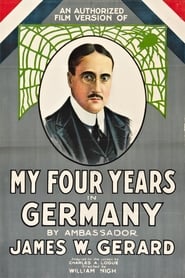
star 3.9The story of the war film is about paths of the Estonian Shooting Corps (formed by the Red Army) during the WW-2 and how the fight forms an usual man to a loyal soldier. Ideologic aspects of the movie are more hidden than in ordinary Soviet war films but they're still existing.My Four Years in Germany
1918
star 4.7The experiences of the American ambassador to Germany, James Gerard, are recounted in this semi-documentary.Boissière
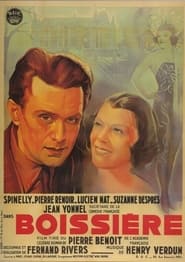
1937
Boissière
1937
In 1914, during the First World War, the rich chatelaine de Boissière, with a sulphurous past, took in Jean le Barois, a young soldier lost in territory occupied by the Germans, who was none other than the son of the man she loved, then ruined. The young man, after having despised her, falls madly in love with the woman who pushed his father to suicide.Stalking Hitler's Generals
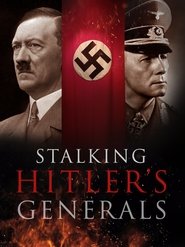
2011
During World War II, Allied operatives went on secret missions to kill Adolph Hitler and his top officers, including Erwin Rommel. Allied Special Forces launched daring wartime missions to capture or kill Nazi generals where they were stationed on the front lines of war. National Geographic Channel captures the real-time drama felt as the Special Forces commanded these dangerous and complicated missions to exotic locations.The Clear Tamir: Episode 3
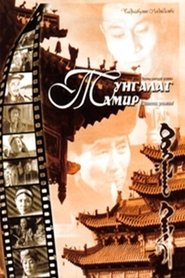
1973
The image of the Mongolian countryside, the struggle for freedom, and the changes in the minds of the people of the new social relations are reflected in the form of an epic. The main characters of the film are the well-known characters such as Erdene, his wife Dolgor, the rich Itgum, and Timur, a good glass man called "silicon", and the complex events of their lives. appears.Battle Diary: A Day In The Life of Charlie Martin
1994
An extraordinary journey into the past to that fateful day, June 6, 1944. Relive the event of D-Day on the beaches of Normandy with Company Sergeant-Major Charlie Martin of the Queen's Own Rifles. Experience an emotional and intensely personal account of D-Day through a combination of interviews, archival film and Charlie Martin's diary excerpts.Along The Jinsha River
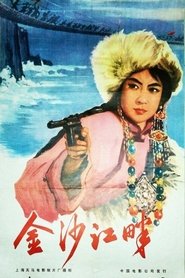
1963
In 1936, the Long March of the Red Army passed through the Tibetan area by the Jinsha River. The Kuomintang colluded with the great local tyrant Qiu Wanli in an attempt to prevent the Red Army from crossing the river north. Qiu Wanli asks his minions to pretend to be the Red Army and rob the chieftain Sangge's only daughter Zhuma to provoke the relationship between the chieftain and the Red Army. The Red Army adhered to the party's ethnic policy, rescued Zhuma, and crossed the Jinsha River to the border of Tibetan areas. Qiu again sneaked into the Tibetan area. He said that Zhuma had been killed by the Red Army and provided ammunition and weapons for the chieftain to fight the Red Army. In order to expose the enemy's rumors, the Red Army instructor Jin Ming took a squad to escort Zhuma home.