Popular War Movies - Page 408

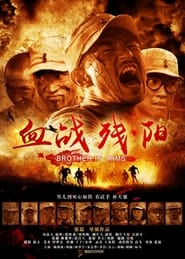
Brother in Arms
2013
Brother in Arms
2013
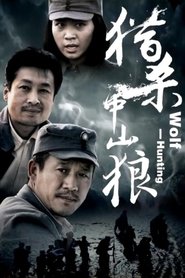
Wolf Hunting
2013
Wolf Hunting
2013
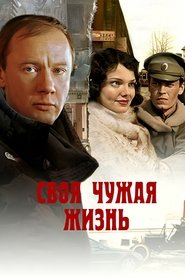
To Live for Another
2005
To Live for Another
2005
It was a time with a rise of artistic life in the former capital of Russia. But the rise ended quickly and tragically with arrests and executions. Modern St. Petersburg and Petrograd of 1921 strangely and intricately intertwine in the mind of the director. The cruel, bloody, but romantic world of the first years of the Revolution converge with the artistic and domestic life of contemporary filmmaking on the same ground, on the same streets and squares.The Sea in Flames
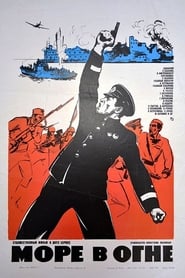
1972
The Sea in Flames
1972
star 7The film recreates the heroic epic of the defense of Sevastopol in 1941-1942. The fall of 1941. Having broken through the defense at Perekop and seized Crimea, the fascist troops begin the siege of Sevastopol. The Soviet fleet is withdrawn to Novorossiysk. For the defense of Sevastopol remained only guns of ships, coastal batteries and several detachments of marines, the defense is led by General Petrov.Heart for Heart
2020
Heart for Heart
2020
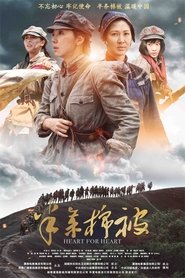
In October 1934, after the failure of the Fifth Counter-Encirclement Campaign, the Central Red Army was forced to withdraw from the Central Soviet Area and begin a strategic retreat to escape the encirclement and pursuit of Nationalist forces. Along the way, under relentless ground assaults and aerial bombings, the Red Army fought bravely, breaking through enemy lines time and again. During one such breakout, in Shazhou Village, Rucheng County, Hunan, three female Red Army soldiers stayed overnight at the home of an elderly woman named Xu Jiexiu. Before leaving, they cut their only quilt in half and left one part for the old woman. Later, Xu said, “What is the Communist Party? The Communist Party is the people who would cut their only quilt in half and give one part to the people.”The Three-Day Massacre in Guangzhou
1937
It was assisted by the Qing army and some traitors (Fan Cheng-En), who captured Guangzhou and massacred the civilians for three days until Sun Yat-Sen established the Republic of China and Chiang Kai-Shek succeeded in the Northern Expedition.Front Without Flanks
1974
Front Without Flanks
1974
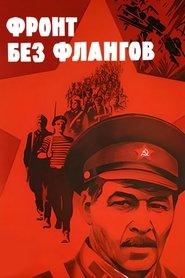
star 3A first episode in the trilogy about the Russian partisan's resistance against the Nazi occupation of Russia during WWII. The film is set in August of 1941, when the Nazi forces invaded and occupied the European part of Russia. Major Mlynsky is in charge of the special group of partisans. His group is absorbing other small groups of Russian soldiers, who managed to survive from the attacks of the overwhelming Nazi forces. The Nazi Armies are advancing to Moscow. Major Mlynsky is organizing the Russian partisan's resistance against the Nazis, behind the enemy lines.Challenging Churchill
2012
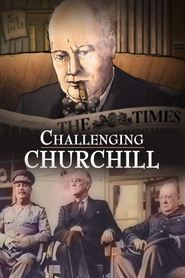
star 7Churchill, a name typically associated with braveness and altruism. Recently found evidence from Soviet and British sources however brings up questions about Churchill's doings in the conferences of Tehran, Yalta and Potsdam. Why did he agree to give Stalin large parts of Poland? The story of two world leaders in times of war - it is also the story of Poland.MOON SAGA - Mysteries of Yoshitsune I
2012
star 8The theatre play is set in the late Heian (794–1185) and early Kamakura period (1185–1333) in Japan. The main character is young adult Minamoto no Yoshitsune, from the Minamoto clan. Like previous chapters, it is a historical fiction, a world with supernatural powers and spirits (Mononokes). The idea was to create a story where the Oni (Japanese demons) were the origin of vampires, and eventually of the central character.[19] In the Heian period existed those called as Mononoke (spirits), and Mononofu, who were born between humans and Mononoke, and with special powers dominated both Mononoke and humans. The story from Mysteries of Yoshitsune spreads out when the member with inherited blood crossed over to Europe, and became the progenitor of the later vampires.The Last Battle of Yang Chao
1976
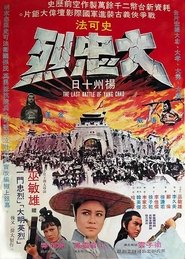
China's biggest and bloodiest battle comes to the screen in it's epic glory! The year is 1645, and the Chinese patriots are fighting for their very existence. Traitors are everywhere, so they can only trust one thing: their Martial Art Skills. Carter Wong and Polly Shan Kwan, the cast of the epic 18 Bronzemen series reunite in a major motion picture that dwarfs the rest! They fight in the thousands and die by the hundreds. Based on historical fact, Iron Phoenix takes heroism to new heights, and action to a new level!High C's
1930
High C's
1930
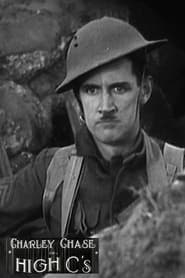
star 2.8The comic and musical adventures of Charley Chase as he fights in the great war.Okay, Joe! or the Memoirs of Private Guilloux
2023
star 8In autumn 1944, during the Liberation of Brittany, writer Louis Guilloux worked as an interpreter for the American army. He was a privileged witness to some little-known dramatic aspects of the Liberation: the rapes and murders committed by GIs on French civilians. He also discovered the racism of American military justice. This experience haunted the novelist for thirty years. In 1976, he recounted it in a short novel, "Ok, Joe", which went unnoticed. This film compares his account with the memories of the last witnesses to these forgotten crimes and their punishments.Cards on the Table: The Foster Son of the Archbishop
1982
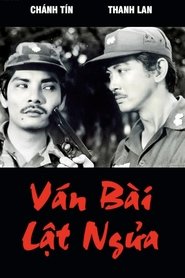
After the Geneva Convention, Viet Minh cadres are gathered to the North. There are also many who secretly stayed. Among them is Robert Nguyen Thanh Luan. He returns to Vinh Long, part of the diocese of Bishop Peter Ngo Dinh Thuc, who has known his Catholic family for long. The bishop adopts him into the Ngo family, where he begins associating with Ngo Dinh Nhu, the Vice President and Presidential Consultant of the Republic of Vietnam.Violins at the Ball
1974
Violins at the Ball
1974
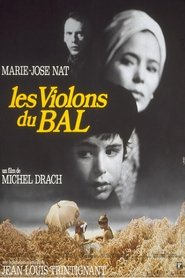
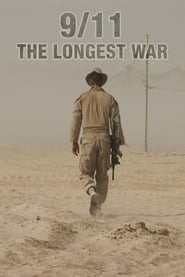
star 5.7In this WW II drama based on an autobiographical story by director Michel Drach, a Jewish boy and his family living in Nazi occupied France, attempt to escape the cruel invaders. Later the boy grows up to become a filmmaker obsessed with chronicling his childhood.9/11: The Longest War
2016
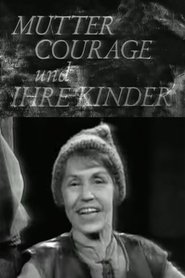
In honour of the 15th Anniversary of 9/11, National Geographic Channel is looking back at the very best reporting we have done since this world-changing tragedy first happened using extended excerpts from past specials that relate directly to events leading up to and following the attacks on New York City and Washington DC.Mother Courage and Her Children - A chronicle from the Thirty Years' War
1965
A recording of the 1939 play "Mother Courage and Her Children" for German TV.Reveille with Beverly
1943
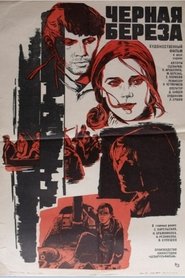
star 7Beverly Ross, the switchboard operator at a local radio station, jumps at the chance to be the DJ for an early morning show before the soldiers at a nearby army camp assemble for reveille. Beverly, with her modern music, camp bulletins and chatter, is a hit with the soldiers. Beverly's younger brother and his two buddies are soldiers at the camp. The buddies vie for Beverly's attentions.Black Birch
1977
Black Birch
1977