Popular War Movies - Page 412

L'appel du 18 juin
2010
Leningraders, My Children
1981
1942, Great Patriotic War. Thousands of orphaned children evacuated from besieged Leningrad and other cities found shelter and care in Uzbek families and orphanages.Anathema
2006
Anathema
2006
star 10A woman who is raped and gives birth to a child in war torn Kosovo, struggles to keep her child.Paris Calling
1941
Paris Calling
1941
star 5.4Marianne Jannetier, a well-to-do Parisian, engaged to Andre Benoit, a high-ranking government official, flees the city when the goose-stepping Nazi storm-troopers arrive. When her mother dies on the road to Bordeaux as a result of Nazi bombing, she returns to Paris and joins the underground movement. Nicholas Jordan, an American member of the RAF, stranded in Paris after the evacuation is also working with the Paris underground. Marianne kills her former fiancée, a pro-Nazi informant, for the traitorous state papers he is carrying, and she and Jordan try to flee over a French seaport...America at War
2025
America at War
2025
star 8The United States of America has been at war for almost all of its 250 years of existence. From the wars of independence to current armed conflicts, its armed forces have not only shaped American identity, but also influenced the political decisions of its leaders. The documentary delves deep into this complex history and analyzes the hot and cold wars that shaped the development of the USA, along with lessons for the future. How have generations of Americans experienced these wars and how have their lives been changed by them? How has military engagement been used to shape the image and role of the USA on the world stage? Do military decisions today shape the world of tomorrow and what are the effects on democracy and society? And as the US president begins his new term in office, the question also arises: what role does the army play in Donald Trump's understanding of the world?Saigo no totsugeki
1957
Saigo no totsugeki
1957
A narrative depicting the appearance of soldiers scattered in Rabaul during the Pacific War. The original work of Yoshinori Matsuura was dramatized by Toyama Tetsu of “Smuggling of the Body”, also directed by Yutaka Abe, and Shigeyoshi Mine of “Densuke's Propaganda” was in charge of the shooting. The main performers are Michitaro Mizushima of “Smuggling of the Body”, Ryoji Hayama of “The Sorrowful Garden”, Shoji Yasui of “The People of Okino”, Shiro Osaka of “Lonely Man”, “Tetsuji Kawakami Story 16” In addition to Hiroshi Nihonyanagi, Shinsuke Maki, Isamu Kosugi of the "Hunger Soul", Ko Mishima, Satoshi Nishimura, Saburo Hiromatsu, Hiroshi Kondo and others.Battles of Chief Pontiac
1952
star 5.4In pre-Revolutionary America, the efforts of a Colonial officer trying to broker a peace deal between Indian chief Pontiac and British and American settlers are threatened by the commander of a Hessian mercenary unit who embarks on a campaign of extermination against the Indians.Cobra Mission 2
1989
Cobra Mission 2
1989
star 2A Vietnam vet who specializes in freeing POWs goes behind enemy lines on a rescue mission with a group of mercenaries.Port
1976
Port
1976
Eight Women Fighters
1987
Eight Women Fighters
1987
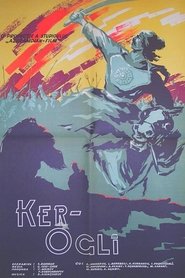
star 5Women soldiers of the Volunteer Army battle the Japanese in Northeast China in 1936.Koroghlu
1960
Koroghlu
1960
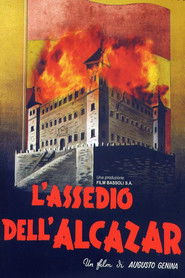
star 4The heroic Koroghlu is a poor youngster who leads a peasants' revolt against the tyrannic Khan.The Siege of the Alcazar
1940
star 5.7Set during the Spanish civil war, the story of a commander of a fort Alcazar in Toledo, faithful to general Franco.Old Heidelberg
1915
Old Heidelberg
1915
star 5Karl Heinrich is the heir to the throne of the small European principality of Rutania, but he's a lonely child, not allowed to play with other children and knowing little about life outside the castle. When he reaches maturity, he is sent to attend the University of Heidelberg, and finds fellowshi with classmates and a blossoming love with Katie Ruder, his only friend during childhood and the niece of an innkeeper. However, political turmoil in Rutania forces him to return. War is declared. Heinrich returns to Heidelberg one last time to bid a somber farewell to his beloved Katie.Opium and the Stick
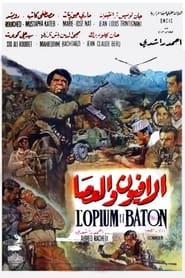
1970
Opium and the Stick
1970
star 7.6In 1950, in Algeria, in a village in Kabylia, Algerian resistance fighters resisted the French occupation army. Bachir returns to the village to escape the clashes ravaging Algiers. In Thala, he has two brothers, Ali and Belaïd. The first is engaged with the ALN (The National Liberation Army) and fights against the colonizer. His second brother, Belaïd, the eldest, is convinced of a French Algeria. His family torn apart, Bachir decides to join the war and takes sides against the repression of the French army. The French army is trying in vain to turn the population against the insurgents by using disinformation. The more time passes, the more the inhabitants of the village and surrounding areas, oppressed, rally to the cause of the FLN, their houses and their fields will be burned... Adaptation to the cinema of the eponymous novel Opium and the Stick, published in 1965, by Mouloud Mammeri, the film was dubbed into Tamazight (Berber), a first for Algerian cinema.Aerial Gunner
1943
Aerial Gunner
1943
star 4.4Old rivals are pitted against each other in basic training and fight for the same woman.Mothers of France
1916
Mothers of France
1916
star 4.7A mother loses first her son and then her husband in the trenches of France during the First World War. She devotes herself to the French cause and to helping those wounded in the war.Native Fields
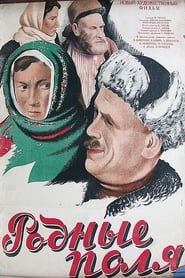
1945
Native Fields
1945
star 6November 1941. One by one, the men leave, leaving only old men, women and children in the village of Bykovka. Ivan Vybornov, the chairman of the collective farm, is also raring to go to the front, but, obeying party discipline, remains in the village and continues to skillfully and energetically lead the collective farm, mobilizing fellow villagers to send bread for the front and starving cities.The Tank and the Olive Tree, Another History of Palestine
2019
star 7.9The Tank and The Olive Tree recalls a certain number of forgotten fundamentals and sheds new light on the history of Palestine. By combining geopolitical analysis, interviews with international personalities who are experts on the subject and testimonies from Palestinian and French citizens, this documentary offers the keys to understanding what the media call the Israeli-Palestinian conflict. Enough to rid people's minds of clichés and prejudices! If The Chariot and the Olivier is intended to be educational, it speaks above all of a magnificent territory, and of a people who constantly affirm that “to live is already to resist”...In Hiding
2013
In Hiding
2013
star 3.7In the spring of 1944 in Poland, near the end of WWII, Janina faces a huge change in her life when her father decides to offer a shelter to his Jewish friend’s daughter Ester. One day, her father is arrested and Janina starts to take care of Ester by herself and in doing so secret emotions rise between them.