Popular War Movies - Page 426

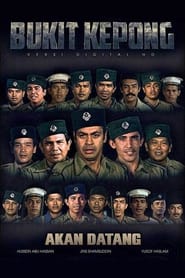
Bukit Kepong
1981
Bukit Kepong
1981
star 7The dramatisation of a Communist Terrorist assault on a rural Federation of Malaya Police station at Bukit Kepong, Muar, Johor, of then Malaya, on February 23, 1950, during the height of the First Malayan Emergency, 1948-1960.Breakout Out Of A Death Camp
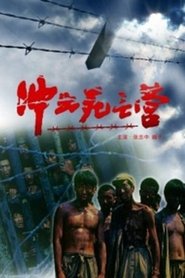
1993
Adapted from Zhou Meisen’s novella, this wartime drama follows Chinese POWs, Central Army scouts Tian and Liu alongside Eighth Route Army cavalry captain Meng and soldier Zhang, imprisoned in Japan’s “Death Camp No. 9.” Rival escape plots collide: Sichuan captain Lao Qi’s men tunnel through mine shafts even as Meng’s group plans their own breakout. Camp commandant Major Nagasaki appoints collaborators, tortures and exposes dissenters, and uses a comfort woman to bribe Liu. When guerrilla agent Zhang Mazi is executed, Meng and Zhang Dielong sacrifice themselves under blistering sun to save their comrades. Amid bayonet executions and armed revolt, the prisoners wage a final, desperate battle to smash the camp gates and reclaim their freedom.On the Eve of Freedom
1981
During WWII, Qemal Orhanaj exposes the attempts of the pseudo-democrats and traitors of the country to create their government backed by the Nazis.7 Wrekers
2020
7 Wrekers
2020
star 4June 1944. Allied troops have landed in Normandy and are fighting in France. A group of seven Dutch resistance fighters is given an important mission to help the Allied advance. However, the mission goes completely wrong and while the resistance fighters regroup at their hiding place, they begin to suspect that there is a traitor in their midst.Engagements of the Heart
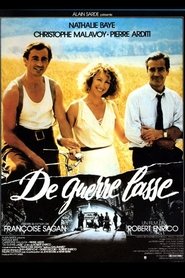
1987
star 5.5Alice is the widow of a Jewish surgeon who helps the former diplomat Jerome smuggle Jews out of Austria to save them from the Nazis. The duo recruits Charles, a shoe manufacturer whose uncle is a Nazi sympathizer in the Vichy government. Charles and Alice become lovers when they are picked up in Paris by Nazi soldiers on a curfew violation.The Manor
2018
The Manor
2018
star 6Set in 1944. A battle in the french countryside leaves a German soldier alone to bury his fallen comrades. He is attacked by a lone American paratrooper and the two do battle around a country manor house, in a tense game of cat and mouseRewi's Last Stand
1940
Rewi's Last Stand
1940
star 4Star-crossed lovers, Robert and Ariana, are caught up in the New Zealand wars of the 1860s. Ariana is claimed by the Maniapoto people as one of their own and, despite Robert's chivalrous defence, is taken by them and must help them prepare for war. Robert likewise must do his patriotic duty and enlists to fight on the other side. He volunteers to ride despatch, thinking it may give him an opportunity to see Ariana again, which it does, but their joy is short-lived; Maniapoto women fight beside their men, and furthermore she is a Rangitira (noble) and will not let her people down. The climax is the siege of Oraku Pa where 300 Maori hold off 2000 troops for three days. The Maniapoto are defeated, but Ariana, although wounded, survives to be reunited with Robert.Friend of War
1993
Friend of War
1993
star 1The film is set during World War II in a German-occupied European country. In a covered truck on a snow-covered road, the Germans are transporting a group of civilians. Thoughts of imminent death inevitably visit the passengers of the van. The Catholic priest accompanying the arrested, among whom there is a boy, prepares the companions to leave for another world. A complex psychological conflict arises between the priest and the boy. Circumstances develop in such a way that the boy manages to escape.Lo Steinway
2016
Lo Steinway
2016
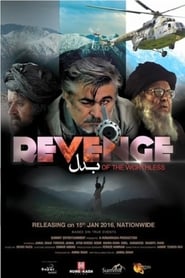
Stop-motion short by Massimo Ottoni. Follows the story of some soldiers during the Great War in an Austrian trench on the Italian front.Revenge of the Worthless
2016
star 10A film depicting the brutally disfigured cultural narrative of a land with the most enviable cultural heritage highlighting the heroic struggle of a few unsung heroes during 2009 Swat Insurgency.The Doomed Battalion
1932
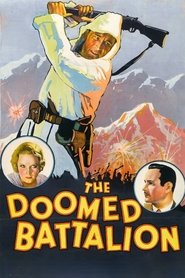
The Doomed Battalion
1932
During World War 1, an Austrian Battalion holds a mountain stronghold against the attack of the Italian army.The Black Captain
1973
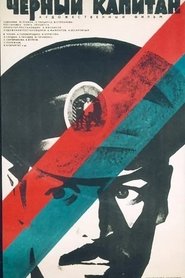
The Black Captain
1973
The year is 1919. General Denikin has concentrated his troops in one of the port cities in southern Russia. But the Black Captain, the commander of the red-green partisan detachment, decided to drive him out of his zone and from time to time began to arrange all sorts of dirty tricks in the Denikin camp, attracting the attention of not only Denikin's blood enemy, but also the Bolshevik underground, which had long been following his successes...Neighbours
2009
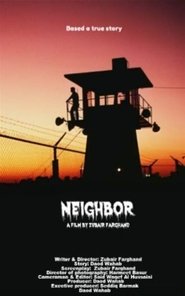
Neighbours
2009
Graphically depicts the brutalities on Afghan prisoners in an Iranian camp, Safaid Sang (White Stone) near the Iranian-Afghan border. Based on true life accounts from Afghan prisoners.Band of Rebels
2022
Band of Rebels
2022
A group of confederate soldiers uses their unique set of skills to travel behind enemy lines to take on deadly missions which reign havoc on the Union army.Ana Terra
1971
Alima
1981
Alima
1981
Mongolian girl Alima is assigned to accomplish an important mission by CCP. During the mission, her father and fellows are killed by the enemy in a public execution.Wojna światów
2020
Wojna światów
2020
star 7The documentary film is based on reconstructed archival films of the 1920 Polish-Soviet war, which ended in one of the greatest military successes of the Polish nation. The film also uses radio recordings, accounts of participants and witnesses to the events, as well as archival material testimony that has survived to our time: photographs, orders and records of secret reports. Polish Television carried out a digital reconstruction of century-old, previously unpublished archival films, including those from Soviet Union, France, Great Britain, the Czech Republic, Hungary and the USA.Nuclear Savage: The Islands of Secret Project 4.1
2011
star 6.4A shocking political exposé, and an intimate ethnographic portrait of Pacific Islanders struggling for survival, dignity, and justice after decades of top-secret human radiation experiments conducted on them by the U.S. government.The Blood of Hero
2011
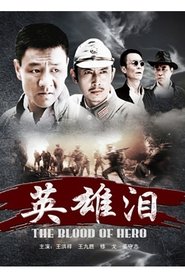
The Blood of Hero
2011
In the spring of 1937, a small group of Japanese troops was stationed in Fuwang Town in the Japanese-occupied area of Central China. On the surface, they are controlling the Chinese civilians, but in fact strictly guarding the safety of a secret underground arms depot, warehouse 103, waiting for the arms support response from their larger army. After the Communist Army learned about this, they sent an intelligence agent to sneak into the Japanese army in Fuwang Town to explore the information of Warehouse 103.