Popular War Movies - Page 439

At the Call of the Leader
1941
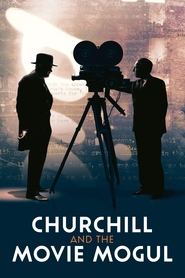
Summer of 1941. Mothers and wives of Uzbekistan escort their sons and husbands to the front. They are learning new professions and sending food trucks to the front.Churchill and the Movie Mogul
2019
star 7.3Winston Churchill understood the power of films, but the true extent of his use of cinema as a propaganda tool is rarely explored. In 1934, one of Britain's most celebrated film producers, Alexander Korda, signed Churchill up as a screenwriter and historical advisor. It was the start of a unique collaboration. Churchill provided script notes for Korda's productions and penned an epic screenplay. When war broke out, their collaboration took on national importance. Korda was sent on a mission to Hollywood to help bring America into the war, with positive results. With access to previously undiscovered documents, this film documentary examines that mission and a friendship that underpinned a unique, creative partnership.Fog
1943
Fog
1943
United States Navy Training Film produced under the supervision to the Bureau of Aeronautics by Walt Disney Productions in TechnicolorHunt for U-479
2009
Hunt for U-479
2009
Two Finnish filmmakers and an international team of divers embark on a quest to find the lost WWII German U-boat, U-479, in the Gulf of Finland. Despite Soviet claims of its sinking by the submarine Lembit, unanswered questions prompted the filmmakers to investigate the mystery firsthand.Eight Kilos of Happiness
1980
star 5A film about an incident in the last war when a gypsy girl sacrifices herself for her lover, a partisan who has deserted.Living Dangerously
1987
Living Dangerously
1987
star 6.8In 1950s Havana, a romance blooms between two young revolutionaries whose clandestine printing press publishes pamphlets meant to stir up rebellion against the dictatorship of Fulgencio Batista. As their popularity grows, so, too, does their revolutionary zeal and their desire to mobilize other urban guerilla units.Hunger for Freedom
2023
Hunger for Freedom
2023
The Second World War. A group of Royal Air Force officers led by William Ash (Jakub Reizer) is staying in Oflag XXI B, located in Szubin (Poland). The prisoners decide to organize a diversionary action, which is to be a daring escape through a tunnel, named after the main originator - the Asselin tunnel. They are helped in their activities by the Polish resistance movement, which includes a young photographer, Henryk Szalczyński (Michał Matela), who develops photos for forged documents.Act According to Situation!
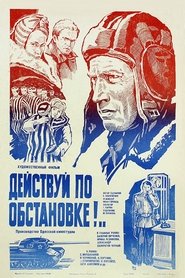
1984
star 6In the last days of the war after the special task group of the major Gorelov returns to his. Soon tankers learn that fascists are going to blow up secret plant where about two thousand prisoners of war work: french, british and americans. Despite the small forces (25 soldiers, 2 tanks, a gun and 2 trucks), the major decides at all costs to save from the death of unarmed people. The group decides to go Gorelova allies to the rescue…Noche sin cielo
1947
Noche sin cielo
1947
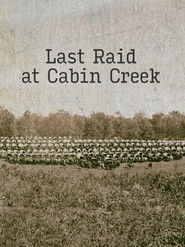
Last Raid at Cabin Creek: An Untold Story of the American Civil War
1992
This award-winning documentary tells the true story of the final Confederate raid into what is now northeastern Oklahoma. The raid culminated in the capture of more than 300 Federal supply wagons at Cabin Creek in the Cherokee Nation. Now streaming on TUBI, PRIME VIDEO, TRUETVPLUS, and HISTORYFIX.Above and Beyond
2015
Above and Beyond
2015
star 7.5In 1948, a group of World War II pilots volunteered to fight for Israel in the War of Independence.Dreams
2006
Dreams
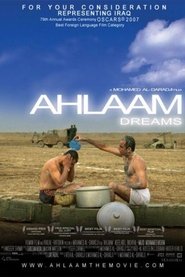
2006
star 5.8Scarred Baghdad 2003... confusion, uncertainty and death engulf the bombed ruins of a Psychiatric Asylum. Voyeuristically we move between the past and the present of three Iraqi lives entangled by the chaos of the American 'Shock and Awe' campaign...Unseen Photos of Anfal
2019
star 4The story tells the life of a photographer who lived in areas of Iraqi Kurdistan and in areas where there was genocide. He has photographed the people of the villages and towns in the areas. And after a long time more than 25 years, the negative films passed from one owner to another. Recently one from the village of Asker found out about those pictures. then he starts searches from one village to another looking for the relatives of those missing in Anfal Military operations. He wants to give them the photographs of their missing people. With every photo, there are touching stories. For example, an old man and an old woman lost their five children in 1988 and have no pictures. Thirty years later, They are able to see pictures of their five children.Normandy '44: The Battle Beyond D-Day
2014
star 5James Holland moves beyond the D-Day beaches to reassess the brutal 77-day Battle for Normandy that followed the invasion. Challenging some of the many myths that have grown up around this vital campaign, Holland argues that we have become too comfortable in our understanding of events, developing shorthand to tell this famous story that does great injustice to those that saw action in France across the summer of 1944.Rookies in Burma
1943
Rookies in Burma
1943
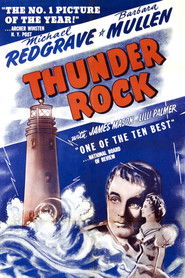
star 4.5In the jungles of Burma, U.S. Army Privates Jerry Miles, and Mike Strager, are still spending most of their time on KP duty. However they are captured by the Japanese and taken to a prison camp and discover that their long-suffering Sergeant Burke has also been captured. They manage to escape and find their way to a Burmese village in which two American showgirls, Janie and Connie who have escaped from Shanghai, are stranded. They all borrow an elephant and head for India.Thunder Rock
1942
Thunder Rock
1942
star 6.2David Charleston, once a world renowned journalist, now lives alone maintaining the Thunder Rock lighthouse in Lake Michigan. He doesn't cash his paychecks and has no contact other than the monthly inspector's visit. When alone, he imagines conversations with those who died when a 19th century packet ship with some 60 passengers sank. He imagines their lives, their problems, their fears and their hopes. In one of these conversations, he recalls his own efforts in the 1930s when he desperately tried to convince first his editors, and later the public, of the dangers of fascism and the inevitability of war. Few would listen. One of the passengers, a spinster, tells her story of seeking independence from a world dominated by men. There's also the case of a doctor who is banished for using unacceptable methods. David has given up on life, but the imaginary passengers give him hope for the future.Set In Stone
2017
Set In Stone
2017
The race to save the world's only dedicated Māori World War One Memorial from collapse reveals an unknown soldier's heroic story to the community he was once part of.The Leaves Have Fallen
1975
star 5Two years after the war, during a train trip, Henryk (20) recollects the occupation period. He passes different train stations and recollects various situations from the past: his family life, working in a garage, guerrilla warfare, the fear that accompanied him every day. He’s looking at the travellers’ faces, including the ones who have survived the war.Siachen, A War for Ice
2005
The history and life of the soldiers involved the world’s highest, less known and most absurd war. This conflict began in 1984, a battle for the control over the Siachen glacier located at the extreme northern edge of the Indian-Pakistan border. Twenty years of conflict to maintain sovereignty over a few hundred square kilometres of ice, rock lost somewhere in the middle of the Himalayas.