Popular War Movies - Page 464

The Same Hand
2024
The Same Hand
2024
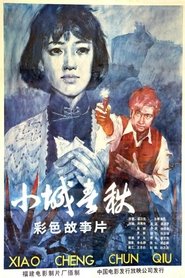
star 7Two unknown voices accompany us in a path through archival footage that reveals the consequences of the human hand's actions, whether these are good, or bad...Xiao cheng chun qiu
1981
Xiao cheng chun qiu
1981
Cultural-historical Manoeuvre At Night
1991
It is a parable about the contradiction between the "chronicle of wars", as a historical concept and the comprehensive approach of cultural history * for graduates and modern illiterates.Maynila
1946
Maynila
1946
Ruta gloriosa
1925
Ruta gloriosa
1925
Korespondent Bryan
2010
Korespondent Bryan
2010
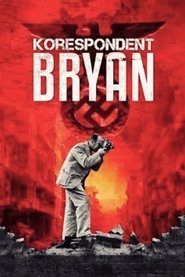
star 8The film is based solely on footage shot in Warsaw in 1939 by Julien Hequembourg Bryan. This American filmmaker and photographer documented life in Poland, the Soviet Union and Nazi Germany between 1935 and 1939. Following the outbreak of the Second World War, he arrived in Warsaw, where he shot a number of films documenting the city under siege, and is said to be the only foreign correspondent in the Polish capital at the time. Bryan also took the first colour photographs of wartime Warsaw.The Fleet That Came to Stay
1945
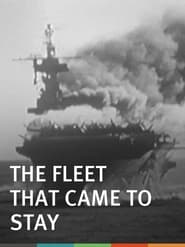
A propaganda short film produced by the US Navy in 1945 about the naval engagements of the invasion of Okinawa.Free City
1958
Free City
1958
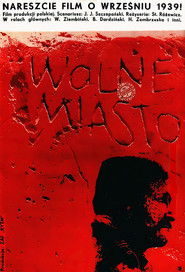
star 6.8The heroic struggle of Polish post office workers in Gdańsk on the first day of World War II.Wendy 1968
2012
Wendy 1968
2012
A young hippie woman goes to this Legion to find the pilot of the Mosquito fighter-bomber in which her father was the navigator during WWII. The woman's father, who recently died, has sent her to give this pilot a letter. The letter contains a surprising revelation.My General's Wives
1951
My General's Wives
1951
star 6.9The encounter with an old lover puts a revolutionary general in great danger of death.La Esmeralda 1879
2010
La Esmeralda 1879
2010
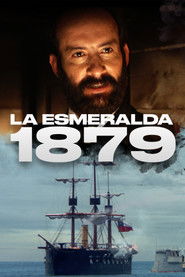
star 6.8Revolves around the naval Battle of Iquique between the Peruvian ironclad monitor 'Huáscar' and the Chilean wooden corvette 'Esmeralda'.Liberata
2005
Liberata
2005
star 5.5March 1943. In the middle of the Italian occupation of Corsica, two Communist resistance brothers strategically link up with two Italian trouffions in order to get the information necessary to organize the parachute drops on the Balagne. A real friendship is born between these men, the first steps of the reversal of the situation and of the alliance that followed the Allied landing in Ajaccio in September of the same year.Qui Vive
2019
Qui Vive
2019
star 7August 1914. Germany invades Belgium and terrorizes the population. Despite her pregnancy, Louise takes care of the farm, her little boy, and the harvest all by herself.Alerik
2013
Alerik
2013
Alerik, a dreamy 16-year-old boy, lives with his grandfather in a country that is at war. When the old man is killed in a bomb attack, Alerik becomes obsessed by the wish to take revenge. From now on, the war has him firmly in its clutches.The War Prayer
2005
The War Prayer
2005
"In 1904, disgusted by the aftermath of the Spanish-American War and the subsequent Philippine-American War, Mark Twain wrote a short anti-war prose poem called "The War Prayer." His family begged him not to publish it, his friends advised him to bury it, and his publisher rejected it, thinking it too inflammatory for the times. Twain agreed, but instructed that it be published after his death, saying famously: None but the dead are permitted to tell the truth."Storm over the Alps
1945
Storm over the Alps
1945
Marcel Ichac captures the mountain warfare of the French Alps in World War II, the highest battles to take place during the war. The film also features footage of the liberation of Torino, Italy.They Fight by Night
1944
They Fight by Night
1944
Des enfants dans les arbres
1994
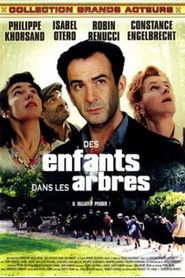
An old farmhouse in southwestern France, not far from the Spanish border, serves as a refuge for Jewish refugees during World War Two.The Real Heroes of Telemark
2003
Sixty years ago, four men parachuted onto a Norwegian glacier, carrying only the most basic equipment. Their mission was to prevent the Nazi regime from building an atomic bomb. Now wilderness expert Ray Mears tells the true story of this gruelling campaign, showing how these men's ability to survive in extreme conditions influenced the outcome of the Second World War.