Popular War Movies - Page 474

The Bearslayer
1930
The Bearslayer
1930
star 7The Latvian epic "Lāčplēsis" resounds through time and parallels the struggles of a Latvian soldier and his love before, during and after WWI.Irish Destiny
1926
Irish Destiny
1926
star 5.5An IRA man races to Dublin to warn his colleagues of a forthcoming raid, but he is captured by British forces.Darbe
2015
Darbe
2015
star 3.3The film, which brings Turkey's recent political agenda to the big screen, highlights the effects of recent events on the present day and their traces in political life. The coup, which took place on February 7, 2012, when Hakan Fidan, the Undersecretary of the National Intelligence Organization (MİT), was summoned for questioning as a suspect in the KCK investigation, centers on the causes and consequences of the MİT crisis. The film will also address the placement of listening devices, known as "bugs," in the offices of some high-ranking officials, including the prime minister.The Law of The Sea
2016
The Law of The Sea
2016
An incredibly insightful animation provides a personal telling of a very important story from an often unheard perspective of the refugee crisis.Pietro Micca
1938
Pietro Micca
1938
An 1938 Italian historical war film that portrays the life and death of Pietro Micca who was killed in 1706 at the Siege of Turin while fighting for the Duchy of Savoy against France in the War of the Spanish Succession.Along the Sungari River
1947
star 6Unfortunate events beset a poor Chinese girl as she escapes from invading Japanese forces, narrowly avoids being raped, and seeks solace in a neighboring village.One Day is the World
1944
One Day is the World
1944
Tamás, on leave from the front line, and Mária, a red-cross nurse, spend an unforgettable night together in the aftermath of Tamás's disappointment at the unfaithfulness of his fiancée.A Face of an Angel
1971
A Face of an Angel
1971
star 6Story of 11-year old Tadeusz, a prisoner in a children's concentration camp in Nazi-occupied Poland.The Green Guerillas: The Fight For The Philippines Rain Forest
1994
Filmed in a village of the indigenous Mandaya people, located in a mountainous area of southeastern Mindanao, the country's second largest island, the documentary portrays the struggle of the Communist Party of the Philippines and its armed wing, the New People's Army, for the rights of indigenous Filipino peoples and the environment, which are constantly under threat from landowners, large logging companies and agribusiness.There Will Be No More Night
2021
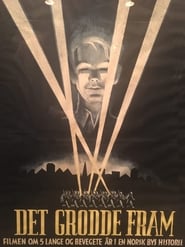
star 6.8Images from helicopters. Video recordings from the American and the French military forces in Afghanistan, Iraq and Syria. The intervention is taking place right before our eyes. How far can the desire to see lead to, when it has no limits?Det grodde fram: Trondheim 1940-1945
1947
star 7.7Documentary filmed during and after WWII about the occupation of Trondheim, Norway by German forces. Some scenes are re-enactments filmed in 1947 with the original participants.The Abandoned Field: Free Fire Zone
1979
star 6.3In Dong Thap Muoi during the days of the Vietnam War, Ba Do, Sau Xoa and their little child live in a small shack in the middle of an abandoned wetland zone. They are entrusted with the mission of maintaining Viet Minh's lines of communication in the area. Daily life goes on as the small family looks out for death from above.Silent Wings: The American Glider Pilots of World War II
2007
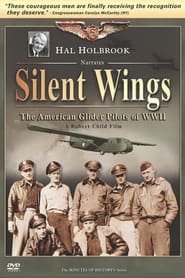
From the early race to build gliders to the D-Day invasion at Normandy and Nazi Germany's final surrender, "Silent Wings - The American Glider Pilots of WWII" narrated by Hal Holbrook, reveals the critical role gliders played in World War II offensives. Through rare archival footage and photographs, the film places the audience right at the center of the action in the dangerous world of the American glider pilot. During WWII, 6000 young Americans volunteered to fly large unarmed cargo gliders into battle. For these glider pilots every mission was do-or-die. It was their task to repeatedly risk their lives landing the men and tools of war deep within enemy-held territory, often in complete darkness. Thousands of lives were saved and battles won because of their efforts. In fact, one pilot interviewed said - the 'G' in their emblem didn't stand for glider; it stood for 'guts.' Features include: - Virtual walk-through tour of the Silent Wings Museum in Lubbock, TexasAugustus: The First Emperor
2003
Old and ill, Augustus, the man who changed the fortunes and destiny of an empire by completing Julius Caesar's project, recounts the two most important phases of his life: his rise to power and his fight against the pressure of his family.I don't eat strawberries, I don't like the color
2022
Man and boy play a futile game of chess in the middle of nowhere. An internal struggle between what is and what can no longer be.We All Came Home
2020
We All Came Home
2020
star 8In 1974, a soldier, having now returned home, is haunted by shadows from the past, but are they just in his mind?Alfa Tau!
1942
Alfa Tau!
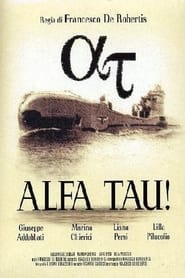
1942
star 6.2The submarine Enrico Toti returns to its base at the end of a mission. After a brief leave, the crew members, who have embraced their families, return to sea. They encounter a British submarine, HMS Triad, ram it, and sink it. The main character in the film was actually a submarine commander: Lieutenant Commander Bruno Zelich, who would die shortly after filming while commanding the submarine Sciré.Thaaye Unakkaga
1966
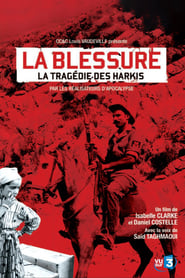
An Unhealed Wound - The Harkis in the Algerian War
2010
star 10It's the unforgivable story of the two hundred thousands harkis, the Arabs who fought alongside the French in the bitter Algerian war, from 1954 to 1962. Why did they make that choice? Why were they slaughtered after Algeria's independence? Why were they abandonned by the French government? Some fifty to sixty thousands were saved and transferred in France, often at pitiful conditions. This is for the first time, the story of this tragedy, told in the brilliant style of the authors of "Apocalypse".