Popular History Movies - Page 132

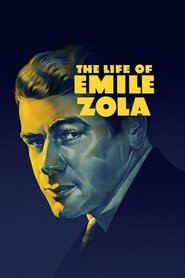
The Life of Emile Zola
1937
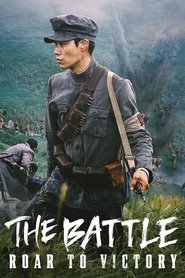
star 6.7A fictionalized account of famous French writer Emile Zola and his involvement in the Dreyfus Affair. After struggling to establish himself, Zola wins success writing about the unsavory side of Paris and settles into a comfortable upper-class life. However, Zola's complacency is shaken when Jewish officer Alfred Dreyfus is imprisoned for being a spy. Realizing that Dreyfus is an innocent victim of anti-Semitism, Zola boldly pens a newspaper article exposing the truth, is charged with libel and must defend himself in a dramatic courtroom testimony.The Battle: Roar to Victory
2019
star 7.4Over a 4 day period, a fierce battle takes place between Korean independence militias and imperialist Japanese forces in Manchuria, China. The militia includes a master swordsman and an expert marksman.St. Louis
2019
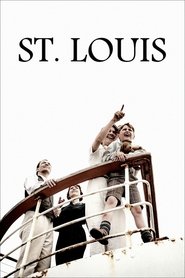
St. Louis
2019
star 7Hamburg, Germany, 1939. Getting a passage aboard the passenger liner St. Louis seems to be the last hope of salvation for more than nine hundred German Jews who, desperate to escape the atrocious persecution to which they are subjected by the Nazi regime, intend to emigrate to Cuba.Henry IV
1995
Henry IV
1995
star 8Henry Bolingbroke has now been crowned King of England, but faces a rebellion headed by the embittered Earl of Northumberland and his son (nicknamed 'Hotspur'). Henry's son Hal, the Prince of Wales, has thrown over life at court in favour of heavy drinking and petty theft in the company of a debauched elderly knight, Sir John Falstaff. Hal must extricate himself from some legal problems, regain his father's good opinions and help suppress the uprising.Kidnapped
2005
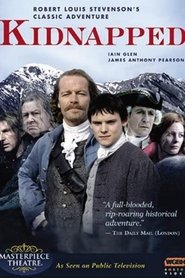
Kidnapped
2005
15-year-old Davie Balfour is poised to receive a vast inheritance when he's lured onto a cargo ship, knocked unconscious, and kidnapped by his malevolent uncle Ebenezer, who devises a scheme to sell him into slavery. But Davie's unforeseen rescue at the hands of a Scottish rogue, Alan Breck, leaves them racing across the Scottish moors, with English bounty hunters in hot pursuit.Ettore Fieramosca
1938
Ettore Fieramosca
1938
star 6.3ETTORE FIERAMOSCA was based on a widely-read literary action epic by Massimo D'Azeglio, published in 1833. Translated to the screen in 1938 by the most important director of the Italian fascist period, Alessandro Blasetti, it was intended to boost current patriotic fervor and pride in the Italian nation, and it contributed to a revival of Italian nationalism.Das Boot Revisited: An Underwater Success Story
2021
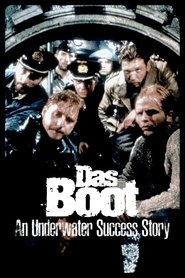
star 7.2In 1981, a film about the misadventures of a German U-boat crew in 1941 becomes a worldwide hit almost four decades after the end of the World War II. Millions of viewers worldwide make Das Boot the most internationally successful German film of all time. But due to disputes over the script, accidents on the set, and voices accusing the makers of glorifying the war, the project was many times on the verge of being cancelled.The Sword and the Cross
1956
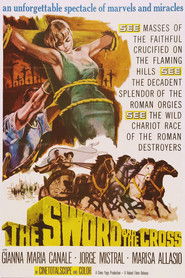
star 4.8Sold as slaves to a wealthy Roman, Lea and Esther, two Carthaginian sisters, are offered as gifts to the ambitious daughter of a proconsul and end up involved in spite of themselves in a dangerous game of power.Blood'less' Revolution
2024
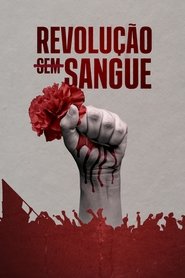
star 6In 1974, a group of men lost their lives in what is still called today the Bloodless Revolution of Portugal.The Painting
2019
The Painting
2019
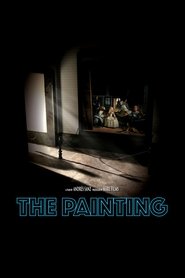
star 7.5For three and a half centuries, from the same day that Diego Velázquez (1599-1660) applied his last brushstroke to the canvas, the enigma of “Las meninas, o La familia de Felipe IV” (1656) has not been deciphered. The secret story of a painting unveiled as if it was the resolution of a perfect crime.The Somme: From Defeat to Victory
2006
Based on diaries, records and eyewitness accounts, this is the story of the two Battles of the Somme from the perspective of British and German soldiers. It shows how the major lessons learned by the British Army leadership after the disastrous first attacks of July 1916 were turned into victory at the second attempt in September 1916, arguably the turning point for the First World War.Chronicle of the Years of Fire
1975
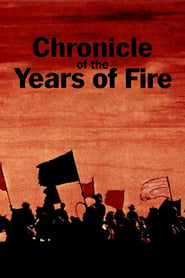
star 6.4A meticulous chronicle of the evolution of the Algerian national movement from 1939 until the outbreak of the revolution on November 1, 1954, the film unequivocally demonstrates that the "Algerian War" is not an accident of history, but a slow process of suffering and warlike revolts, uninterrupted, from the start of colonization in 1830, until this "Red All Saints' Day" of November 1, 1954. At its center, Ahmed gradually awakens to political awareness against colonization, under the gaze of his son, a symbol of the new Algeria, and that of Miloud, half-mad haranguer, half-prophet, incarnation of Popular memory of the revolt, the liberation of Algeria and its people.Die Pilgerin
2014
Die Pilgerin
2014
star 5.3In the 14th century, a young merchant's daughter from southern Germany sets off on the adventurous Way of St. James to faraway Santiago de Compostela to fulfill her father's last wishes and bring his heart there. Disguised as a man, the pilgrim is hunted by pursuers set on her by her conniving brother.Jinnah
1998
Jinnah
1998
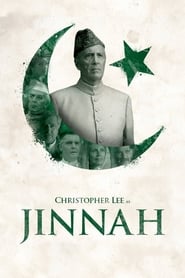
star 6.6Biography of Mohammed Ali Jinnah, the founder of modern Pakistan is told through flashbacks as his soul tries to find eternal rest. The flashbacks start in 1947 as Jinnah pleads for a separate nation for the Muslim minority, infuriating Lord Mountbatten. Mountbatten then tries to enlist Gandhi & Nehru to persuade Jinnah to stop his efforts. Gandhi sides with Jinnah, which upsets Nehru. However, Jinnah turns down the offer to become prime minister and the film takes another slide back to 1916, which reveals all of the political implications that have occurred.Gwiazda Piołun
1988
Gwiazda Piołun
1988
star 5.5The final stage of the great artist's life, a stage in which Witkacy decides to destroy himself. A growing sense of danger, the futility of all actions, and fear of what is to come accompany him constantly during his escape from Warsaw to the East at the outbreak of World War II. Everyday facts and events are intertwined in the film with reminiscences and images from his life, supported by the artist's inner monologue. The style of narration and the way of filming make the film a poignant study of the writer's inner disintegration. By emphasizing the painterly quality of the image and introducing dreamlike themes, Kluba captures on screen the characteristics of both Witkacy's playwriting and painting.The Fight for Rome II - The Betrayal
1969
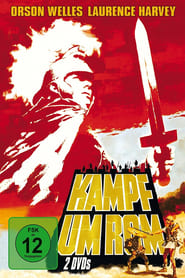
star 7.5The devious general Cethegus plays the Byzantine and Gothic forces against each other for his own gain.Chico Rei
1985
Chico Rei
1985
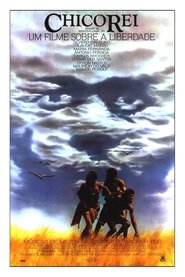
Galanga, king of Congo brought to Brazil as a slave, finds gold in Vila Rica, in the State of Minas Gerais, and buys his enfranchisement, the properties of his former owner, and his companions' freedom, becoming Chico Rei, the first black man to own lands in Brazil.Brutus vs Cesar
2020
Brutus vs Cesar
2020
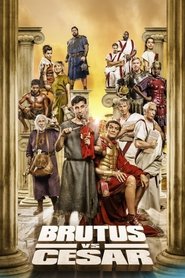
star 4Faced with the tyranny of Caesar who acts as absolute master over Rome, Senators Rufus and Cassius form a plot to assassinate him.The Beach Boys: An American Band
1985
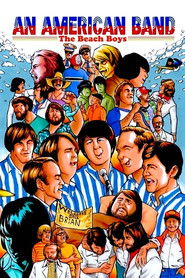
star 8A biography of the American rock band The Beach Boys, with interviews, concert footage and clips from movies and television shows they appeared in.Jokowi
2013
Jokowi
2013
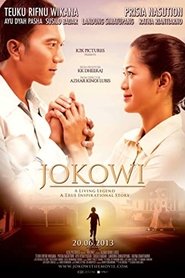
star 7This film was released on, June 20, 2013 the day before 52nd birthday of Jakarta Governor Joko Widodo, June 21, 2013, which coincides with the 486th anniversary of Jakarta City. Which tells of a carpenter's son named Joko Widodo, who lived in a small home side of river-banks. Childhood are far from sufficient. But it did not dampen the spirit of children's village duck egg hunter to continue school to higher education. His love of Rock music which persisted until the time he became a great leader of Indonesia future, as was able to motivate the spirit of life. Love story with Iriana, a simple girl, His sister school friend became encouragement's future leader to face various challenges.