Popular History Movies - Page 161

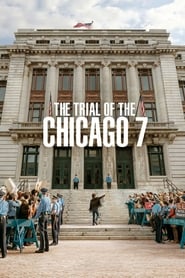
The Trial of the Chicago 7
2020
star 7.7What was supposed to be a peaceful protest turned into a violent clash with the police. What followed was one of the most notorious trials in history.In Old Chicago
1938
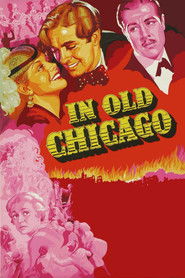
In Old Chicago
1938
star 6.6The O'Leary brothers -- honest Jack and roguish Dion -- become powerful figures, and eventually rivals, in Chicago on the eve of its Great Fire.Perceval
1978
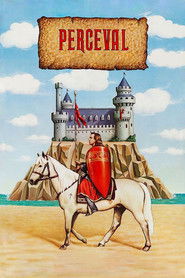
Perceval
1978
star 7.2The film chronicles Perceval's knighthood, maturation and eventual peerage amongst the Knights of the Round Table, and also contains brief episodes from the story of Gawain and the crucifixion of Christ.Hebe
2019
Hebe
2019
star 7.1Hebe Camargo is one of the most emblematic entertainments in Brazil. At her 60s, she went on to control her own career and, despite the criticism, the dreadful husband and the powerful and sexist bosses, she revealed herself to the public as an extraordinary woman, capable of overcoming any personal or professional crisis.Lilly
2025
Lilly
2025
star 6.2Based on the inspiring true story of Lilly Ledbetter, an ordinary Alabama tire factory supervisor who discovers she's being paid less than her male peers. Her fight for fair pay takes her to the Supreme Court and Congress, while powerful forces try to shut her down. Lilly refuses to accept the status quo and has the courage to fight for what is right.Tibak
2016
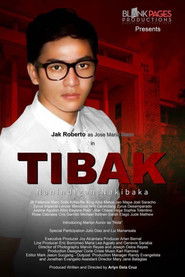
Tibak
2016
The film is based on the progressive and nationalist youth organization “Kabataang Makabayan” (KM), founded in 1964. Kabataang Makabayan was led and co-founded by Prof. Jose Ma. Sison, four years before they also reestablished the Communist Party of the PhilippinesKornblumenblau
1989
Kornblumenblau
1989
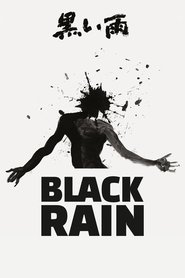
star 6.8Based on a true story of a Polish musician who survived the concentration camp only because he could play on the accordion the title melody.Black Rain
1989
Black Rain
1989
star 7.5Shigematsu Shizuma, who lives with his family in a village near Fukuyama, was in Hiroshima with his wife and niece just after the devastating atomic bombing, a tragedy that cruelly took the lives of thousands of people and forever marked the harsh existence of the survivors.A Tale of Samurai Cooking
2013
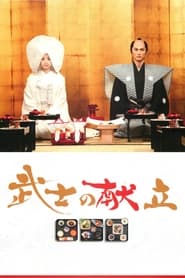
star 7.2In this love story set in the Edo period, 27-year-old Oharu is a genius in the kitchen. Oharu attracts the attention of the master chef of the Kaga Domain, who arranges for her to marry his son and heir, 24-year-old Yasunobu. But, Yasunobu is cold to his new wife, and he's more interested in swordplay than cookery.Eternal Fire
1985
Eternal Fire
1985
The movie is based on a popular tale from the Basque Country and tells the story of a woman that becomes a widow the same day she gets married, and decides to keep living with the husband's dead body for 6 years.Marakkar: Lion of the Arabian Sea
2021
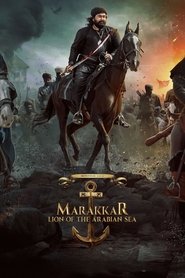
star 5.7‘Marakkar Lion of the Arabian Sea’ portrays the courageous life-events of a rebellious naval chief, Kunjali Marakkar the fourth, who fought against the Portuguese in the ancient times. He was the fourth naval chief of the Calicut Zamorin. The film revolves around him who was also the first Indian Naval Commander and Indian freedom fighter for the war against the Portuguese. He is said to have won 16 such battles with his impeccable strategies and fighting skills.The Twenty Six Comissars
1966
star 7.2The film is about dramatic revolutionary events happened in 1918 in Baku.The First Gentleman
1948
The First Gentleman
1948
star 6The story of a romance between the daughter of the Prince Regent and Prince Leopold of Saxe-Coburg.The Mongols
1973
The Mongols
1973
star 7.4A director of a television series on the history of cinema, who has been grappling with the screenplay of his first feature film, receives an assignment to oversee the installation of a television relay station in a remote region of Zahedan province. He has already hired Turkmen tribespeople for his film and selected his filming location. Meanwhile his wife, who is working on her Ph.D. dissertation about the Mongol invasion of Iran, attempts to dissuade him from accepting the assignment. One night, while working on his history of the cinema series, the director fantasizes a diegetic world that consists of clever juxtapositions of his different worlds: the history of cinema, the history of the mongol invasion, his own film idea and his imminent assignment to the desert.The Birdmen
1973
The Birdmen
1973
star 7.5During WWII an American soldier sent to Norway to help with the escape of a scientist working on the atomic bomb for the Germans. Before they can escape they are captured and sent to a POW prison camp in an alpine castle. Cook must find a way to escape with the scientist before the Gestapo discover the Norwegian's true identity and convinces the other prisoners to build a two person glider in which they plan to escape.Triumph of the Heart
2025
Triumph of the Heart
2025
star 6.6The extraordinary true story of St. Maximilian Kolbe, a Polish Catholic priest who volunteered to die in place of another man in Auschwitz during World War II.Beethoven privat
2020
Beethoven privat
2020
To mark Beethoven's 250th birthday, the documentary sheds light on the composer's private side, linking his writings with his music in an original way. Beethoven's many letters and notes tell of his temperament, his love affairs, his humanism and his struggles, especially with the early onset of deafness.Language Matters with Bob Holman
2015
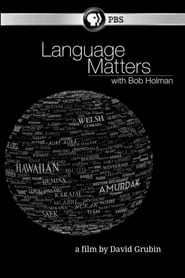
star 10There are over 6,000 languages in the world. We lose one every two weeks. Hundreds will be lost within the next generation. By the end of this century, half of the world's languages will have vanished. Language Matters with Bob Holman is a two hour documentary that asks: What do we lose when a language dies? What does it take to save a language?The Law
2014
The Law
2014
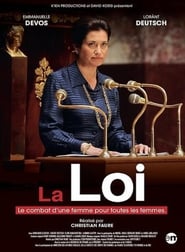
star 6.4Directed by French Director Christian Faure and released in 2014, The Law brilliantly traces three days, in late Fall 1974, of stormy debate in the French National Assembly, around a bill which would make "voluntary termination of pregnancy" legal. Behind this bill stands a lone woman brilliantly played by a remarkable Emmanuelle Devos (also in The Other Son): Simone Veil the Minister of Health in the Jacques Chirac government during the presidency of Valéry Giscard d'Estaing. During these three days of violent debate Veil, a Jew and Holocaust survivor, is spared nothing: political negotiations, solitude, sparring arguments, insults and violence to her family. In spite of all of this, Veil never wavers.