Popular History Movies - Page 300

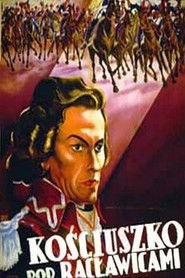
Kosciuszko at the Battle of Raclawice
1938
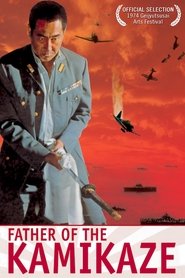
An exiled leader returns to Poland to lead an uprising against the Russian occupiers.Father of the Kamikaze
1974
Vice Admiral Takajiro Ohnishi could see that Japan's defeat in WWII was inevitable. He came to realize that the only way to force a negotiated solution was to convince the Americans that invading Japan would cause massive casualties on both sides. The cold logic of suicide attacks, where one man and one plane could kill hundreds, seemed the only solution. In one of the cruel ironies of fate, Ohnishi actually succeeded; he convinced the Americans that invading Japan would be too costly in lives. But what he could not foresee was that America had another way of ending the war.The Stars Don't Fade
1971
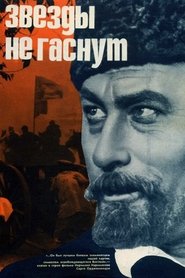
The Stars Don't Fade
1971
star 9The film consists of several novels reproducing the most vivid pages of the biography of the first Chairman of the Council of People's Commissars of Azerbaijan Nariman Narimanov (1870-1925).Will to Conquer
1970
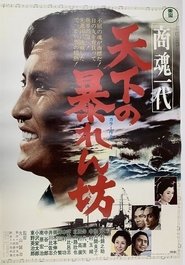
Will to Conquer
1970
The struggles of a low-ranking samurai (Nakamura) coming to terms with the end of the Tokugawa shogunate and the end of Japan's feudal age with the 1868 Restoration.The Importance of Being Earnest on Stage
2015
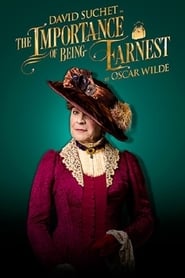
star 9National treasure and Poirot star David Suchet starred as the formidable Lady Bracknell in Oscar Wilde’s much loved masterpiece The Importance of Being Earnest. Directed by Adrian Noble, (Amadeus, The King’s Speech, Chitty Chitty Bang Bang) Wilde’s superb satire on Victorian manners is one of the funniest plays in the English language. Two bachelor friends, the adorable dandy Algernon Moncrieff (Philip Cumbus – regular player at Shakespeare’s Globe) and the utterly reliable John Worthing J.P., (Downton Abbey’s Michael Benz) lead double lives to court the attentions of the exquisitely desirable Gwendolyn Fairfax (Emily Barber) and Cecily Cardew (Imogen Doel). The gallants must then grapple with the riotous consequences of their deceptions, and with the formidable Lady Bracknell.Pinwheel Hamakichi’s Spell 2
1982
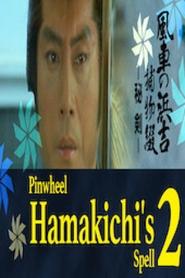
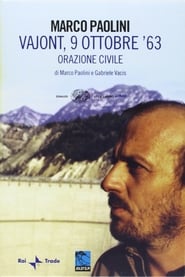
Hamakichi, who used to be a detective is now a toy merchant. His former boss has a grudge against the Yakuza family, which leads to the murder of a policeman in Edo. This places Hamakichi between the rock and a hard place.Vajont 9 ottobre '63
1997
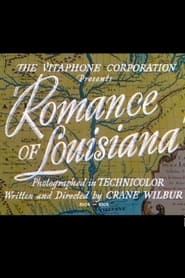
Romance of Louisiana
1937
Mihai Viteazul: Prințul intrat în legenda Europei
2022
star 9Voivode Michael the Brave travels through time, together with his wife, discovering, deeply touched, the new world.Ambrose Bierce: Civil War Stories
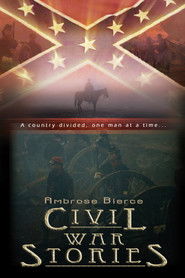
2006
star 4.3Legendary writer Ambrose Bierce was known to be brilliant, cantankerous and romantic in all his life's passions, and was revered as one of the top storytellers of the late 19th Century. In 1890, he presented his recently published collection of Civil War Stories to novelist Gertrude Atherton and fledgling young publisher William Randolph Hearst during an infamous meeting in Sonol, California. This meeting sets the forum for the presentation of three of Bierce's most popular stories including "One Kind Of Officer", "Story Of A Conscience" and "An Occurrence At Owl Creek Bridge." This acclaimed collection features epic battle sequences, deeply conflicted drama and the signature "surprise endings" that characterized most of the short stories by Ambrose Bierce.Hail Columbia
1934
Hail Columbia
1934
This short film provides highlights from American history, focusing on George Washington's farewell to the troops to the War of 1812.Forever and Ever
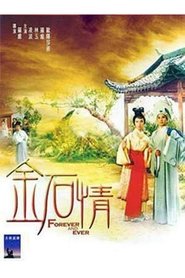
1968
Forever and Ever
1968
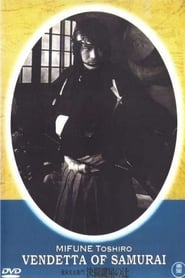
In 1966, like in The Love Eterne, Ling Bo took up the male lead in Forever and Ever, despite Shaw Brothers' earlier plan of having her as the female lead. Facing opposition from fans, they finally arranged for her to star as a male student named Xiaowen. Wicked rich man Liu, portrayed by Lo Wei, the director of this film, wants Xiaowen to marry his daughter (Lin Yu) who is suffering from leprosy, thinking that marriage will take away her disease. Although Xiaowen discovers Liu's plan, he is still in love with her and hopes that a miracle will cure her disease...Vendetta of a Samurai
1952
star 6.8Mataemon Araki, a renowned swordsman, helps a young man find vengeance.Amarantos
2010
Amarantos
2010
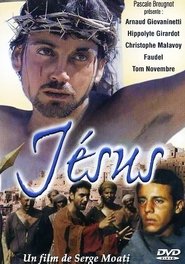
Amarantos is a meditation on history and the shifting relevance of temporal and spiritual values. Inspired by the Kölner Dom during Karneval 2010.Jésus
1999
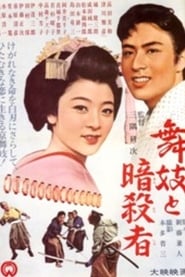
Maiko and the Assassin
1963
19th century Japan, at the end of the Edo period. A samurai falls in love with a young woman while taking up arms to overthrow the local shogunate.The Lake of Sighs
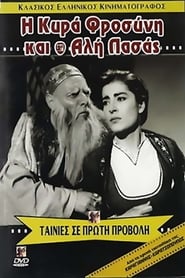
1959
The Lake of Sighs
1959
star 4.8Ioannina, in the beginning of the 19th century. The whole Greece is under Turks. Ioannina is governed by the fierce and vulgar Ali Pasas. Ali’s eldest son, Muchtar, falls in love with a young Greek widow, Frosyni. The problem is, he’s married to the vindictive and cruel Chanife. And the muslim penalty for having an affair with a married man is death…Moscow Skies
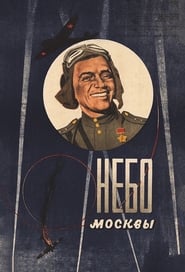
1944
Moscow Skies
1944
star 6.8Based on the play of the same name by Georgi Mdivani. In September 1941, lieutenant Ilya Streltsov, who graduated from the flight school, was assigned to the fighter aviation regiment guarding the sky of Moscow. He meets in part the nurse Zoya, with whom he grew up in the same yard and with whom he has long been in love. During the first training flight on the "Seagull", lieutenant Streltsov shot down a German plane and received the nickname "Lucky." Streltsov is jealous of the squadron commander to nurse Zoya, believes that he is finding fault with him. For a whole month he is not allowed to fly sorties. In October 1941, lieutenant Streltsov made his first sortie, he shot down one plane and rams the second. For this battle, he is awarded the title Hero of the Soviet Union.