Popular History Movies - Page 302

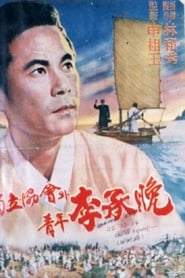
Independence Association and Young Rhee Syngman
1959
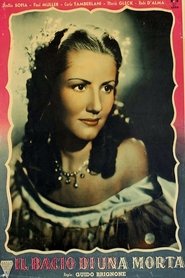
star 5The life of Lee Seung-man, a freedom fighter who struggled to liberate Korea from Japanese rule.Il bacio di una morta
1949
Italy, 1848. Clara, daughter of a rich Milan trader, is in love with Enrico, a political dissident, but she is forced to marry Count Severi.Appleland Story
1992
Appleland Story
1992
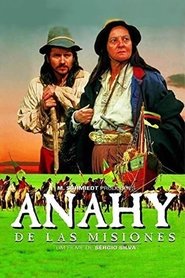
star 1In 1905, Vergille Strauss is a young thief living in the small country of Apfelland. With the help of a local inspector named Fleischer, he rescues a girl from a group of foreign thugs. Her name is Frieda and she may be the key to a secret that is of great interest to other nations.Anahy de las Misiones
1997
star 4.4Told by gauchos from Brazil, Argentina and Uruguai, the legend says that Anahy de las Missiones wandered around the Plata Basin during the time of Cisplatina War (1825-1828), stealing the dead.Time of the Giants
2020
SPK Complex
2018
SPK Complex
2018
star 6.2The anti-psychiatric Socialist Patients' Collective (SPK) was founded in Heidelberg in 1970 and attributed individual suffering to society’s capitalist structures. It began as a self-organised experiment in group therapy led by doctor Wolfgang Huber with psychiatric patients, featuring Hegel readings and individual agitation, before subsequently radicalizing, which ended in criminal proceedings against its members, some of whom went underground with the Red Army Faction.Gloomy Morning
1959
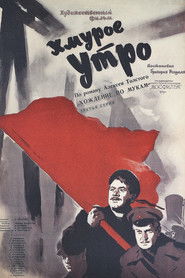
Gloomy Morning
1959
The third film in the trilogy ("The Sisters", "The Eighteenth Year", "The Gloomy Morning") based on the novel by Aleksei Tolstoy "The Road to Calvary". About the fate of the Russian intelligentsia against the background of the collapse of the Russian Empire and the civil war, which turned the lives of all the heroes of the film narration. Defending Tsaritsyn, the red commander Telegin was seriously wounded. At the hospital, he meets Dasha. After his recovery, the young spouses go together to the Red Army.Detective Hibari: Secret of the Golden Coin
1958
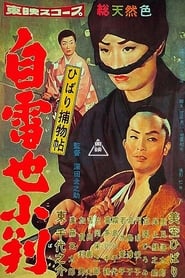
A princess finds life behind the protection of her brother and the high walls of the mansion to be quite dull, so she takes on another identity and lives in a small house in Edo pretending to be a singer but all the while she is actually a Shogunate Detective. Framed by a crooked magistrate for a crime she did not commit, Oshichi must clear her name of false charges after a woman helps to lead a prison break of the notorious Oshu Remnants. Meanwhile the magistrate, Lord Kai, conspires to be rid of her brother, Clan Elder, Lord Abe Iyo. Her only clue is an ornate dagger with a handle made of golden coins.Silent Rebellion
2025
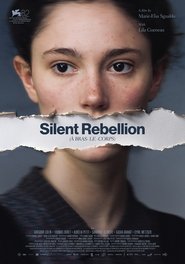
Silent Rebellion
2025
star 715-year-old Emma, pregnant after a rape, defies her repressive rural Protestant community to carve a path of self-determination, transforming trauma into a catalyst for emancipation while confronting the moral hypocrisy of the village and the spectre of World War II around her.The Holy Inquisition
1974
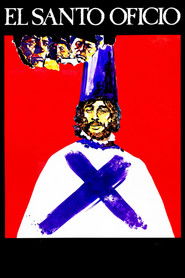
The Holy Inquisition
1974
star 5.9A plague is spreading through 16th century Mexico, and the Inquisition of the Roman Catholic Church is rooting out Jews, for they are believed to be its cause. At his father's funeral, a monk observes his family practicing Jewish burial rite, and he reports them, leading to devastating consequences for the whole family.Doris Day: It's Magic
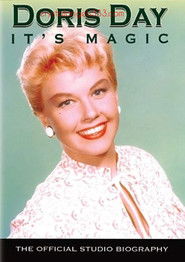
1998
When the cameras rolled, Doris Day wore a happy face, never hinting at the pain she endured in her personal life. This documentary brings viewers close to the real Doris Day through the eyes of her friends and family members and with the help of film footage, newsreels and photographs. What surfaces is a complex picture of an equally complicated woman who faced problems far more formidable than her cinematic image revealed.Railroad Guerrilla
1956
Railroad Guerrilla
1956
star 5.9This movie is based on the true story, which happened in Shan-Dong Province of China during World War II. It is based on a collection of memoirs of the guerrilla members. Due to the fact that it happened during World War II and there was not much secrets, this movie is that it was more realistic than other movies in that many real names were used, and the actual site was not changed either like other war movies of the time. The drawback of the movie was that in the latter stage of World War II, the guerrilla force was developed into an impressive 400 plus members from its original beginning of 3, and it launched many major offensives against the enemy, but this part was not shown. The movie only concentrated on the time there were only several dozen members.Zoku Shimizu Minato
1940
Zoku Shimizu Minato
1940
An actor, hit on the head, dreams that he has become legendary one-eyed gangster Mori no Ishimatsu.Jimmy
2024
Jimmy
2024
star 6In November 1948, James Baldwin left New York and, thanks to a fellowship grant, relocated to Paris. The 24-year-old writer would spend most of the next decade there, escaping American racism and his own social alienation, ensconcing himself in the city’s Algerian quarters and the community of Left Bank artists in Saint-Germain-des-Prés, and writing his first books. In his first feature, photographer and filmmaker Yashaddai Owens imagines Baldwin’s first experiences in Paris in impressionistic fashion. Shooting in black-and-white on 16mm film, Owens conveys a subjective feeling of wonder and freedom as Baldwin (Benny O. Arthur) observes and absorbs his new environment, and experiences newfound individuality and erotic liberation. A work of exhilaration, set to a lush original score by Paco Andreo, Jimmy is a portrait of the artist reconnecting with the world.Kepler's Laws
1974
Kepler's Laws
1974
Animated graphic symbols presented in a constant time frame are used to diagram and explain the laws of planetary motion devised by the Sixteenth-century astronomer Johannes Kepler. “Little Suite”, guitar and lute music composed by Galileo Galilei’s father Vincenzo, is performed by Laurindo AlmeidaLeyendas de Puerto Rico
1999
A film narrative on Puerto Rican playwright and journalist don Cayetano Coll y Toste. Three of his most famous stories are reenacted: "El Santo Cristo de la Salud", "El Espíritu del Carretero", and "La Garita del Diablo".The Price of Fame
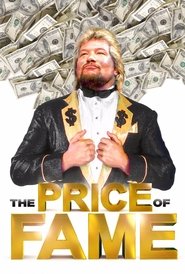
2017
The Price of Fame
2017
star 7Ted DiBiase Jr. takes a journey through pro-wrestlings past to tell the faith-based story of his father's rise, fall and redemption.Tattoos in Memory
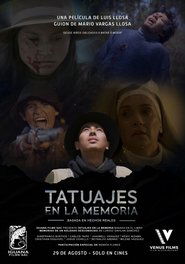
2024
Tattoos in Memory
2024
A boy from Ayacucho becomes an orphan and, following his older brother joins the Shining Path, where he is trained in violence. Captured by the Army, he finds a second chance as a soldier.America: The Story of Us
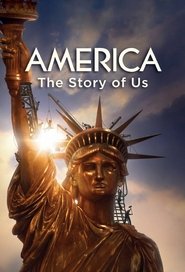
2010
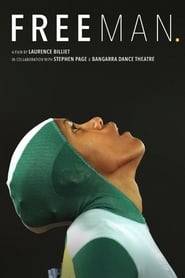
star 6.4A six-night miniseries presenting the history of how the United States was invented, looking at the moments where Americans harnessed technology to advance human progress -- from the rigors of linking the continent by transcontinental railroad to triumphing over vertical space through the construction of steel-structured buildings. The series also is a story of conflict, with Native American peoples, slavery, the Revolutionary War that birthed the nation, the Civil War that divided it, and the great world war that shaped its future.Freeman
2020
Freeman
2020
star 8The story of a nation coming together around Indigenous athlete Cathy Freeman who delivered when it mattered on the greatest stage on earth. 20 years on, Freeman sheds light on one of Australia's proudest moments. In 49.11 seconds, Cathy Freeman's win at the 2000 Sydney Olympics brought Australia together as a nation.