Popular History Movies - Page 307

Riot at the Rite
2005
Riot at the Rite
2005
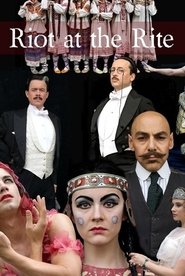
star 9In the spring of 1913, Parisian businessman Gabriel Astruc opens a new theater on the Champs Elysées. The first performance is the premiere of Igor Stravinsky's 'The Rite of Spring', danced by the Ballet Russes. The rehearsal process is extremely fraught: the orchestra dislike Stravinsky's harsh, atonal music; the dancers dislike the 'ugly' choreography of Vaslav Nijinsky. The volatile, bisexual Nijinsky is in a strained relationship with the much older Sergei Diaghilev, the Ballet Russes' charismatic but manipulative impresario. Public expectation is extremely high after Nijinsky's success in 'L'apres-midi d'un faune'. Finally, 'The Rite of Spring' premieres to a gossip-loving, febrile, fashion-conscious Parisian audience sharply divided as to its merits.Such a life
1997
Such a life
1997
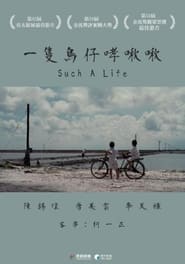
star 7.7'Such a Life' is quite a sad film. It is set in the sixties, in a village on the west coast of Taiwan, where many are succumbing to 'black foot', a disease caused by drinking contaminated well water. The only 'cure' is to amputate the afflicted limb, and to avoid drinking the contaminated water. Many in the village were already sick, and few could afford to have tap-water installed. At the center of the story is Ah Chung, who lives with his grandfather, who has already lost one leg to 'black foot'. In the same village also live an opera family, who are finding things increasingly difficult there, an oyster farmer, who complains that his oysters are being poisoned by a nearby pharmaceutical plant, and an assortment of children who enjoy swimming in the sea, and who bully Ah Chung. A significant portion of the action also takes place in the village school, where Ah Chung is having trouble keeping up with the fees.Taira no Kiyomori
1992
Taira no Kiyomori
1992
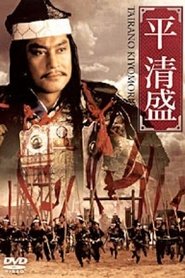
The tale of Taira Kiyomori who started as a young inexperienced warrior who led the Heike into the battle against the brutal pirates on Setouchi.Forbidden Killing
1970
Forbidden Killing
1970
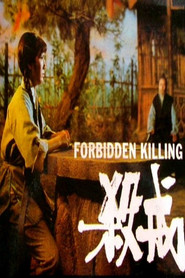
In "Forbidden Killing" Melinda Chen Man-Ling plays a highly trained swords woman who gets involve in a power struggle between two groups mandarins in the government.Black Thursday
2011
Black Thursday
2011
star 6.7Antoni Krauze reminds one of the darkest history of the cards with PRL. Spectacular reconstruction of the dramatic events in Gdynia, ended a brutal pacification of demonstrators by troops and militia in 1970.Woman Gambler and the Nun
1968
Eighth film in the long-running series Daiei Studio's Woman Gambler with Kyoko Enami starring where she plays the woman gambler Ogin.Rákóczi's Lieutenant
1954
Rákóczi's Lieutenant
1954
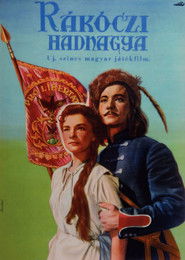
star 8.21708 János Bornemissza became the master of stras of Blind Bottyán from a raiding Kuruk. His weapon is driven by patriotism and love for Anna Bíró, the most beautiful girl in réthe. The captured Count Starhemberg takes the Labanc general to the Prince himself, and thus becomes Rákóczi's lieutenant. In the meantime, Réthe falls into the hands of a Laban for treason, and Anna is sent to the stocks. Suhajda, the lecherous hajdú, now thinks he can get the girl for himself. Anna sends a message to John with her brother, and at the call of the prisoners, Rákóczi's army marches. They encounter the enemy along the Váh. The Kuruks celebrate their victory with the wedding of Anna and János.Advance Democracy!
1938
Advance Democracy!
1938
A housewife galvanises her docker husband to take an interest in more important matters than the football pools.The Doctor's Pupil
1984
The Doctor's Pupil
1984
star 4.3An enterprising young man who practices medicine, striving to win the affection of his beloved, vows to cure her mother of a serious illness. To truly learn the secrets of medicine, he has to pretend to be deaf and mute and hire himself out as an assistant to the best doctor. Will the hero be able to keep his promise?Empire
2023
Empire
2023
star 6.6As a “free colored” woman, Anna Elizabeth Heegaard is wealthy and owns her own slaves when she begins a love affair with the Danish colony’s governor-general Peter von Scholten. During communal feasts, they discuss social reforms while a slave boy hangs above the table and cools the diners with a feather. And in the shadows, whispers begin of a slave revolt.新選組!! 土方歳三 最期の一日
2006
新選組!! 土方歳三 最期の一日
2006
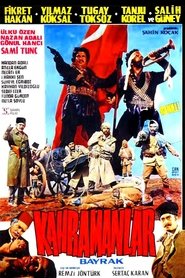
star 7Follows the final days of the shogunate and Shinsengumi's Vice-Comander Hijikata Toshizo along with his fellow anti-imperialist group.Kahramanlar
1974
Kahramanlar
1974
Shivrayancha Chhava
2024
Shivrayancha Chhava
2024
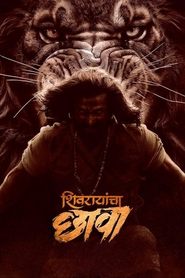
star 7Aurangzeb wished to turn Burhanpur into the capital city and appointed Bahadur Khan as the Subhedar who made the lives of its residents miserable. Unable to tolerate this, Chhatrapati Sambhaji Maharaj raids the city and saves the people from the unjust rule.Tanz auf dem Vulkan
1938
Tanz auf dem Vulkan
1938
star 6Paris, 1830: Jean-Gaspard Debureau performs on the stage and delights his audience with song, wit and charm. He is, however, very unpopular with King Charles X, who is the target of much of Debureau's scornful jests. That would be a somewhat tolerable situation if it weren't for the fact that Debureau has fallen for a countess, who happens to be the King's mistress.Mary of Nazareth
2012
Mary of Nazareth
2012
star 6.8The film begins with the Annunciation: Mary, a young Galilean, virginal conceived the Messiah, the Son of God. Her husband Joseph, a humble carpenter, decided to stay by his side throughout. When Caesar Augustus ordered the Jews to register people, the couple embarks on a journey to Bethlehem, where Jesus was born. Meanwhile, Maria Magdalena, a young woman from the same town that Mary, turns away from God and placed in the palace of King Herod, Herodias where convinces her to lose her innocence in the arms of the king's son.The Burgos Trial
1979
The Burgos Trial
1979
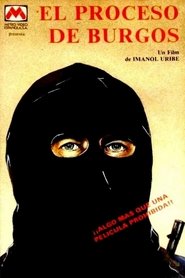
star 6.8Documentary about the court martial held following the assassination of Melitón Manzanas, commissioner of the Political-Social Brigade of Guipúzcoa, in an attack carried out by ETA on August 2, 1968. The film includes a series of interviews and testimonies from those imprisoned and prosecuted in that court martial. Following the attack, a state of emergency was declared in Guipúzcoa and hundreds of people were arrested.The Month of Dreams
2017
The Month of Dreams
2017
It is 1680 – the time of dreamt snow after the Turkish invasion. In the deserted plains of Bácska a living soul cannot be found in a few-days’ walk. Three former prisoners returning from their Turkish captivity – Long-Legged, Lame and One-Eyed – appear among the crumbling walls of a huge abandoned church without a roof. They are looking for their long lost home. How to revive a disappeared civilization? What is the survivors’ personal duty? Without a roof, a collapse is inevitable. The Old Man – a master of ancient knowledge – and his daughter come and with sharing sowing seeds they try to save the community of dispersion. No spiritual leader, no aims. Driven by rapacity, One-Eyed kills the Old Man, rapes his daughter and while looking for the remaining seeds he kills Long-Legged with a sudden anger. At the end of the film, the survivors need to face with dramatic encounters and special temptations. Their redemption under the leadership of Lame’s young son is tIshimatsu of the Forest
1949
The tale of a feudal swordsman who cynically takes no responsibility for anything, relegating it to others, and then taking the credit.The Mid-Nightmare
1962
The Mid-Nightmare
1962
star 5.5Essentially an adaptation of Gaston Leroux's classic The Phantom of the Opera, Mid-Nightmare is set in a Huangmei diao teahouse theatre, which an embittered and horribly disfigured ex-performer ‘haunts', looking to extract revenge on his enemies and falling in love with a talented and beautiful, but ultimately unattainable, ingénue.Her Majesty Yeonghwa
1964
Her Majesty Yeonghwa
1964
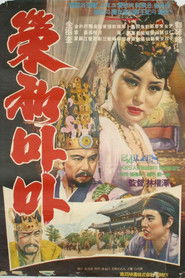
At the close of the reign of Sin the Great in Goguryeo (B.C.37-A.D.668), royalist Uso is executed by a false incrimination made by a treacherous retainer Yangsin and his sister Jangssi. His daughter becomes a royal concubine of King Nammu, and called Her Majesty Yeonghwa. She revenges herself on the party of Yangsin. After the king passes away, she makes his brother Yeonu accede to the throne and has the whole country under her thumb. But she has no child. When the king begets a son from another woman, she dies of jealousy at last.