Popular History Movies - Page 317

Bell Witch of Leith
2009
Bell Witch of Leith
2009
An experiment in style over substance. It attempts to present the actual medium of film as the focus as opposed to the bland subject matter. The film looks to gain the viewers interest by drawing attention to the fact they are watching a film. It is a comment on the quick cutting and style prevalent in popular film.Tupperware!
1994
Tupperware!
1994
star 7The remarkable story of Earl Silas Tupper, an ambitious but reclusive small-town inventor, and Brownie Wise, the self-taught sales-woman who built him an empire out of bowls that burped. Brownie was an intuitive marketing genius who trained a small army of Tupperware Ladies to put on Tupperware parties in living rooms across America in the 1950s. She rewarded her sales force with minks and modern appliances at extravagant annual jubilees which the company filmed. her saleswomen earned thousands, even millions, selling Tupperware. And the experience changed their lives.A Violent Desire for Joy
2018
star 4.1Region of Occitania, France, 1792. As the storm of revolution devastates the country, young monk Gabriel and his companions live peacefully in the Franciscan monastery of Saorge, near the Italian border. But everything changes with the arrival of the beautiful Marianne and a military detachment.A Talking Picture
2003
A Talking Picture
2003
star 6.6A meditation on civilization. July, 2001: friends wave as a cruise ship departs Lisbon for Mediterranean ports and the Indian Ocean. On board and on day trips in Marseilles, Pompeii, Athens, Istanbul, and Cairo, a professor tells her young daughter about myth, history, religion, and wars. Men approach her; she's cool, on her way to her husband in Bombay. After Cairo, for two evenings divided by a stop in Aden, the captain charms three successful, famous (and childless) women, who talk with wit and intellect, each understanding the others' native tongue, a European union. The captain asks mother and child to join them. He gives the girl a gift. Helena sings. Life can be sweet.Amazing Grace
2007
Amazing Grace
2007
Amazing Grace, a powerful Homecoming gathering, hosted by Bill and Gloria Gaither, offers a timeless treasury of the great hymns of the church that will continue to survive for generations to come.Secrets of the Titanic
1986
star 7Dr. Robert Ballard of Woods Hole Oceanographic Institute and his research team become the first undersea explorers to locate, photograph, and explore the wreckage of the ill-fated HMS Titanic, which sank on its maiden voyage 2 1/2 mile deep in the icy waters of the Atlantic in 1912, taking 1500 passengers and crew with it to a watery grave. Utilizing dazzling state-of-the art equipment and cutting edge expertise they record the decaying remains of the ocean liner once thought "unsinkable."The Decameron
1971
The Decameron
1971
star 6.9A young Sicilian is swindled twice, but ends up rich; a man poses as a deaf-mute in a convent of curious nuns; a woman must hide her lover when her husband comes home early; a scoundrel fools a priest on his deathbed; three brothers take revenge on their sister's lover; a young girl sleeps on the roof to meet her boyfriend at night; a group of painters wait for inspiration; a crafty priest attempts to seduce his friend's wife; and two friends make a pact to find out what happens after death.Le Prince de Hombourg
2014
A French adaptation of Heinrich von Kleist's play "The Prince of Homburg", staged by Giorgio Barberio Corsetti.The Pharaoh in the Suburb: Uncovered
2018
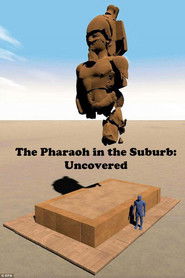
star 8A chance find in a suburb of Cairo has shed new light on an all but forgotten Pharaoh, Psamtik I. Discovered in 2017, an eight-tonne fragment of a statue has led experts to believe that he was, in fact, one of Egypt’s greatest leaders, as this documentary revealsOscar. The color of destiny
2008
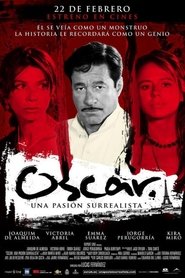
star 1"Óscar. The Color of Destiny" is a revealing portrayal of a forgotten icon of French Surrealism: Spanish painter Óscar Domínguez, contemporary of Picasso. The film rediscovers the life of a talented artist who was ignored after he committed suicide, fifty years ago, victim of a serious illness which had disfigured his body: the Elephant Man's disease. The film is stirring and touching and compels admiration for the bohemian painter whose fate was self-destruction, after a wild crazy life. Lucas Fernández turns the life of a debauchee, who regarded himself a monster because of his disfiguring disease, into a universal story where art is the product of love and loneliness, of sex and violence before, during and after the Nazi invasion of Paris.The Wonderful Lies of Nina Petrovna
1929
star 7This silent-screen classic, like many others produced near the end of the silent era, was both a theatrical extravaganza boasting an original orchestral score and an item which languished in obscurity for many years. When Carlo Piccardi took what was left of the score by Maurice Jaubert and re-created it, the existing footage was restored and paired with a new orchestral performance which was shown in Paris in 1988. The film's story concerns the travails of a woman who has been living quite comfortably as the mistress of a colonel in the Tsar's army in Russia. However, she eventually encounters a penniless young lieutenant and falls madly in love with him, as he does with her. Despite her best intentions of remaining with the colonel, and his intention to avoid trouble with his fellow soldiers, they cannot forswear this relationship, and tragedy is the inevitable result. The title refers to a moving incident in the story, and translates as "the wonderful lie of Nina Petrovna."Captain of the First Rank
1958
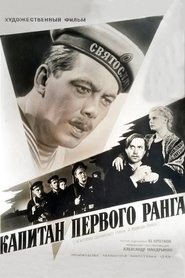
star 6Zakhar Psaltyrev went through many ordeals in the royal fleet, where massacres and bullying of people became a custom. Only thanks to his natural intelligence and perseverance, the illiterate peasant boy managed to avoid the fate of many of his comrades, who became drunkards and lost their human dignity. Captain 1st Rank Lezvin, commander of the cruiser "Svyatoslav", himself suffocating in the difficult atmosphere of the tsarist autocracy, fatherly fell in love with his messenger for his simple Russian soul, quick-witted mind, love for the homeland and hatred of oppression. Zakhar learned a lot from Lezvin, but soon they had to part. Zakhar becomes an active underground Bolshevik.Song of Raiyantsuuri
1994
Song of Raiyantsuuri
1994
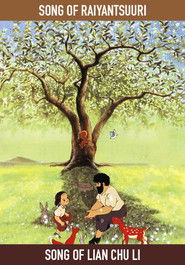
An indentured Chinese laborer, brought to Japan to work in a coal mine during WWII, manages to escape his captors. He hides out in the Japanese countryside, so far from human habitation that he does not realize when the war ends, with ultimately tragic results.Eight Hundred Heroes
1975
Eight Hundred Heroes
1975
star 6.6As battle rages in Shanghai, a single battalion of soldiers led by Xie Jinyuan is ordered to hold back the Japanese forces at the Sihang warehouse. Girl scouts risk their lives to deliver food and medicine to the defenders.Hang Jebat
1961
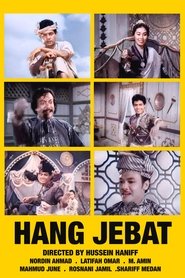
Hang Jebat
1961
star 6Inspired by a Malay legend about two friends whose relationship is tested by conflicting loyalties.Carol I
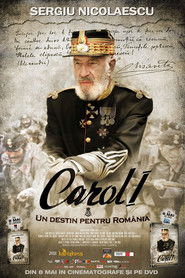
2009
Carol I
2009
star 8.2The last days of the first Romanian king, Carol I of Hohenzollern-Sigmaringen, and the tough decisions he had to make in the summer of 1914 in order to please both Romanian Parliament and his relatives from the German Empire.Sharpe's Revenge
1997
Sharpe's Revenge
1997
star 7.1Sharpe is framed as the thief who stole Napolean's gold, and he must clear his name to avoid execution. Meanwhile his wife Jane - urged on by a friend - makes some questionable choices.Disco Europe Express
2019
Disco Europe Express
2019
star 7Despite its Afro-American origins, the history of disco music, the soundtrack of the seventies, would be inconceivable without a handful of legendary European music producers who conjured up some of the biggest world-wide hits in the anonymity of their studios.Napoleon, the Man of Destiny
1909
star 4.2Part two of Blackton's "The Life of Napoleon". After Waterloo, Napoleon reminisces. His triumphs are seen in flashback. The film ends with the exiled Napoleon overlooking the beach of St. Helena.