Popular History Movies - Page 319

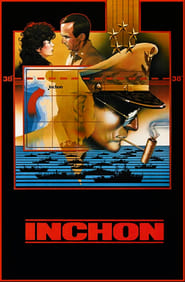
Inchon
1981
Inchon
1981
star 3.4Gen. Douglas MacArthur leads a Korean War campaign, and the war tests a married couple's relationship.Vasilisa
2014
Vasilisa
2014
star 4.8He is a nobleman, and she is a serf. They are not meant to be together. Perhaps this love story would have ended there, had it not been for the war. Napoleon invaded the Russian Empire, and that day changed the usual way of life and class prejudices. The world would never be the same again. War writes a new love story.Battle of Xiangjiang River
2017
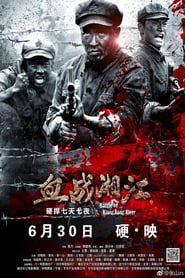
star 6From November 27, 1934 to December 1, the Red Army fought with the Kuomintang army in Xing'an County, Quanzhou County and Guanyang County in the territory of Guangxi province for 5 days, finally, the Red Army through Xiangjiang in the border of Quanzhou County and Xing'an County, they broke through the blockade of the Kuomintang army.Hacı Bektaş-ı Veli
1967
Hostage
2014
Hostage
2014
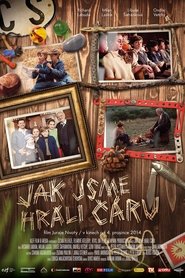
star 7.5Tragicomic family film about the world of children heroes - particularly the son of a local communist officer and his friend, a little hostage of the regime, whose parents emigrated to the West, few years before "Prague Spring" and the occupation of Czechoslovakia. Camaraderie, the first big discoveries of love, enemy gang fights and naive ideas are confronted with the reality of adult's world. The film is about the first contacts with bizarre and absurd reality of relationships and attitudes of adults, politics, emigration, but also betrayal and death and about how all those things form and transform the lives of small boys, who are forced to grow up too quickly.Odwagi, ja jestem
1987
JFK: Seven Days That Made a President
2013
star 6'JFK: Seven Days That Made a President' investigates the seven key days in JFK's life that helped shape his character and have come to define him.Your Day Is My Night
2014
Your Day Is My Night
2014
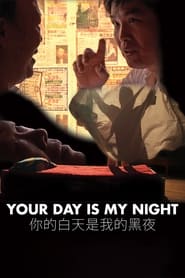
star 5.5Immigrant residents of a “shift-bed” apartment in the heart of New York City’s Chinatown share their stories of personal and political upheaval. As the bed transforms into a stage, the film reveals the collective history of the Chinese in the United States through conversations, autobiographical monologues, and theatrical movement pieces. Shot in the kitchens, bedrooms, wedding halls, cafés, and mahjong parlors of Chinatown, this provocative hybrid documentary addresses issues of privacy, intimacy, and urban life.La Commune (Paris, 1871)
2003
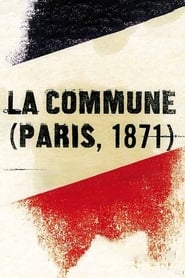
star 7.7We are in the year 1871. A journalist for Versailles Television broadcasts a soothing and official view of events while a Commune television is set up to provide the perspectives of the Paris rebels. On a stage-like set, more than 200 actors interpret characters of the Commune, especially the Popincourt neighborhood in the XIth arrondissement. They voice their thoughts and feelings concerning the social and political reforms.A War Over Reality
2018
A War Over Reality
2018
star 6We will soon be facing the greatest threat ever known as we are feeding and nurturing the monster of our own destruction. Welcome to your future.One Step to Hell
1968
One Step to Hell
1968
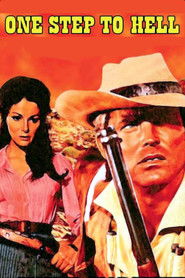
star 6A British colonial policeman in Africa, circa 1900, pursues a band of escaped killers across territory so wild, it lies just "one step to hell."Walt Disney e l'Italia - Una storia d'amore
2014
star 7.5No other country in the world has the same kind of affection and admiration toward Walt Disney and his art and characters as Italy. His movies are legendary and his stories belong to the collective imagination of generations of Italians who grew up with his world of dreams and hopes. This documentary explores this love story.Where the Yellow Lemon Blooms
2006
star 6By the end of 1915, during the second half of World War I, which had started by the Austro-Hungarian Empire's attack on a small Kingdom of Serbia, Serbian people, its army, and the state found themselves in the greatest tribulation in its long history. Serbia is attacked by the combined militaries of Austro-Hungarian Empire, Germany, and Bulgaria. Defending every road, every hill, every creek, during the time when every village, every plato, every crossing was becoming a historical landmark, Serbia, relying on the Allies, moved its people, its government, and its remaining troops to Kosovo--the only unoccupied part of the Serbian territory, but soon had to cross Albania in the hopes of reaching the Allies' ships in the Mediteranian.Snow in Midsummer
2023
Snow in Midsummer
2023
star 7.5For 49 years, Ah Eng and Dou E were trapped in the "513" timeline. In 1969, post-election tensions gripped Kuala Lumpur when the Cantonese street opera "Snow in June" showcased Dou E, portrayed by the troupe master. Amid a riot, Ah Eng and her mother sought refuge with the troupe, losing contact with her brother and father. In 2018, Ah Eng returned to Kuala Lumpur and unexpectedly encountered "Dou E" at the cemetery.Cotolay
1965
Cotolay
1965
star 7.2A loose retelling of the 13th century Galician legend of the boy Cotolay who helped three pilgrims establish the Convent of San Francisco near Santiago de Compostela.Chinese Chariots Revealed
2017
star 8For over 1,000 years, chariots were indispensable weapons in ancient China. The art of chariot driving and special warfare were used there for longer than anywhere else. Their contribution to the unification of the Chinese empire is undisputed. New archaeological discoveries reveal how the Chinese developed and perfected this sophisticated weapon. In the Bronze Age, over 3,000 years ago, chariots and other war equipment arrived in China from Central Asia via the Hexi Corridor. In addition to trade and new alliances, their spread was mainly due to the Zhou dynasty's incessant military campaigns against rebellious vassal states and the constant attacks by the mobile cavalries of its northern neighbors. Manned with spearmen or archers, the chariots were a decisive weapon in battle.Läs detta brev och darra
2025
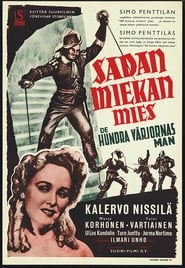
A one-man show about the Swedish nobleman Axel von Fersen and his life.Sadan miekan mies
1951
Sadan miekan mies
1951
star 4Captain Kaarnoja finds himself caught up in intrigues and a dispute between the noblewoman Elisabeth and her cousin, Captain Gyllenskiöld. Kaarnoja comes into possession of a mysterious letter, which leads him and his loyal companion Sergeant Erkinpoika into battles, ambushes, and sword fights.Minamoto Yoshitsune
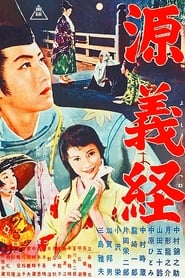
1955
Minamoto Yoshitsune
1955
A historical scroll depicting the story of the tragic fate of the young samurai Minamoto Yoshitsune, based on the novel by Genzo Murakami. The action of the first part takes place in the late Heian period, when the Taira clan came to power, and Genji was oppressed. The great dream and ambitions of Genkuro Yoshitsune in his youth are depicted, he joins forces with his older brother Yoritomo to raise an army to defeat the Taira clan, and the second part depicts the fall of the clan, persecution and murder.