Popular History Movies - Page 338

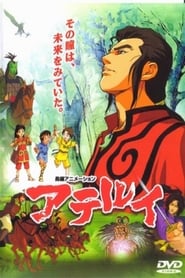
Aterui
2002
Aterui
2002
A pseudo-historical movie that follows a modern day elementary schooler as he's tossed back into time to observe Aterui--a real leader of the Ainu (indigenous Japanese) who fights against the Imperial Court.Devi Ahilya Bai
2002
Devi Ahilya Bai
2002
Ahilyabai was born on May 31, 1725 in the village of Chaundi, in the present-day Ahmednagar district in Maharashtra. Her father, Mankoji Shinde, was the patil of the village, a member of the proud Dhangar community. Women then did not go to school, but Ahilyabai's father taught her to read and write.No Goodbyes
2018
No Goodbyes
2018
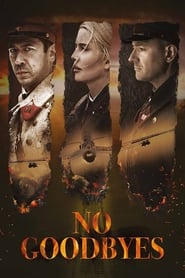
star 5October 1941. Thousands of fascists troops are advancing on Kalinin to capture the city and therefore open a direct route to Moscow. There are two thousand people able to defend the city and they are without tanks or artillery. The only hope of holding the enemy off is in the fifth infantry division convoy, who are about to pass through Kalinin station. But saboteurs intend to do everything to keep this from happening. The head of the Kalinin garrison, Major Sysoyev, struggles to keep order and calm in the city, and himself falls under suspicion of involvement with the subversive enemy group.The Knight in the White Night
2018
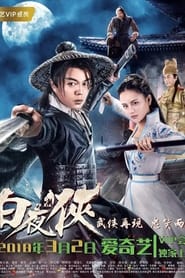
star 10During the Ming dynasty, Japan invaded China with an army equipped with guns. The union chief of the martial arts clans revealed in his deathbed that there is a rare book containing secrets that will make a person immune to gunfire. His last words sparked the clans to contend with each other to find it. Also in search of the book were the Japanese who dispatched a team of ninjas to go after the book. The imperial court also secretly intervened in this dispute. The emperor secretly dispatched a Kung fu Master and ordered him to find the book within seven days.Speeches That Shook the World
2013
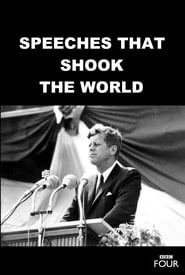
Speech-making is the art of persuasion. Well-honed rhetoric appeals not just to the mind, but to the heart and, deeper down, in the guts. Examining the speeches that provoked radical change, surprised pundits or shocked listeners, poet Simon Armitage dissects what makes a perfect speech. Simon gets the inside story behind some of the famous speeches of the modern age, talking to Tony Blair's speechwriter, to Earl Spencer on his controversial address at his sister's funeral and the woman who challenged the rioters in Hackney. We hear how Peter Tatchell confronted the BNP, Paul Boateng on how Enoch Powell's divisive speech personally affected him as a child, and Colonel Tim Collins, whose charge was to motivate his troops on the eve of the Iraq war. Simon discusses the nuts and bolts of speech writing with Vincent Franklin, aka the blue-sky thinking guru Stuart Pearson from The Thick of It, and gets tips on powerful delivery from actor Charles Dance.El conde de Maravillas
1927
star 4.5The Count of Maravillas receives an unusual proposal from a masked woman: to kidnap the valido of King Carlos IV.Sandesaya
1960
Sandesaya
1960
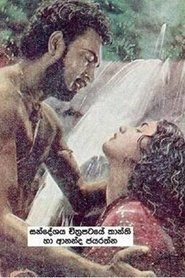
Sandesaya (Sinhalese language word meaning The Message) is a 1960 film. The film based on the war between the Sinhalese people and the Portuguese invaders in Sri Lanka. It was directed by Sri Lankan film director Lester James Peries. It was produced by K. Gunaratnam on behalf of the Cinemas Company on the request of Raj Kapoor.The Blizzard
2019
The Blizzard
2019
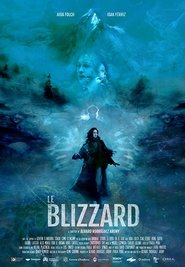
star 7.2Second World War. Marie wakes up wounded and disoriented in a Blizzard. In front, a mysterious forest separates her from her daughter.Doce de Pebrero
2025
Doce de Pebrero
2025
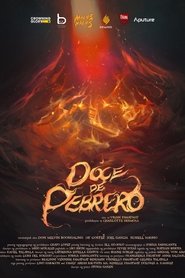
Thirty years after the massacre of Doce de Pebrero in 1945, an aging survivor struggles to maintain his quiet life as he is haunted by the shadows of his past-memories of violence and fear that refuse to fade, forcing him to confront the lasting scars of his trauma.Gilberte de Courgenay
1941
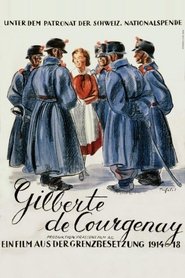
star 5.5Gilberte Montavon was a legend in her own lifetime. As a young woman, she was confidante to hundreds of thousands of Swiss-German speaking soldiers during the First World War, and remembered most of their names. She was still a teenager when the war began, and was immortalised by a song written during the war years by the Swiss-German bard and lute player, Hans Inn der Gand.Prem Kahani
1975
Prem Kahani
1975
An apolitical poet abandons his love to become a freedom fighter — only for fate to bring them face-to-face again years later.Eight Views of Samurai
1958
star 6Bright samurai movie innovatively adapted from a classic story. A traveling masterless samurai is asked by a daughter of an established samurai family to pretend they are a married couple, and gets involved in the troubles of the samurai clan.Double Headed Eagle: Hitler's Rise to Power 1918-1933
1973
star 8Presents a unique and disturbing look at the rise of the Nazi party. The documentary, directed by Lutz Becker, attempts to remain as objective as possible, serving as a neutral observer of the years 1918 through 1933 in Germany. Via newsreel footage and clips of features from the era, the film offers a kaleidoscopic view of the many elements that fueled the rise of the Socialist Nationalist Party, including post-WWI poverty. Hitler occupies a central place in the documentary.Harsens Island Revenge
2025
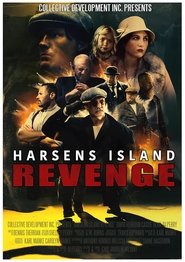
WWI veterans on Harsens Island square off against the infamous 'Purple Gang' over illegal liquor in the 1920s.Who Killed the Federal Theatre?
2003
Part journalistic investigation and part performance documentary, "Who Killed The Federal Theater?" tells the story of the Federal Theatre Project within the context of a volatile period in the political, social and cultural history of the United States. The film features interview segments with playwrights, including Arthur Miller, and with actors, directors, designers, and historians. It also incorporates rare archival materials and dramatic sequences, including professionally re-created scenes from Federal Theatre productions that transport viewers back in time to a bygone era in American history and entertainment.Trenck, der Pandur
1940
Trenck, der Pandur
1940
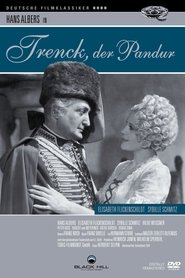
star 5.2Film about the fictitious adventures of Franz Freiherr von Trenck, who lived during the times of empress Maria Theresia of Austria garnished with espionage and twisted love affairs.Sangokushi: The Yangtze Is Burning!
1993
star 6.3Covering roughly 13 years, from Cao Cao's victory over Lu Bu in 198 CE, through the Battle of Red Cliffs in 208 CE, and the aftermath up until 211 BCE. As other players are swept from the board, the story focuses on Liu Bei and his increasingly desperate attempts to prevent Cao Cao from seizing all of China. The turning point is Liu Bei's recruitment of the best strategic mind of that generation, Zhuge Kongming, the Crouching Dragon.The Life of Kagawa Toyohiko: I Die Daily
1990
Toyohiko Kagawa was a great religious leader, thinker, novelist, scientist, social activist, and the founding father of agricultural cooperatives, consumer cooperatives, and medical cooperatives. His life was filled with indescribable turmoil, befitting a world-renowned figure born in Japan. This work depicts his extraordinary life.