Popular History Movies - Page 390

Mondo Ford
2000
Mondo Ford
2000
Dir. Scott Calonico's film purports to solve the assassination of President Kennedy, pointing the finger at President Gerald Ford...as well as bigfoot, Stonehenge, pyramids, and extraterrestrials.Elton John: Live at Dodger Stadium
1975
Documentary originally from The Russell Harty Show chronicling Elton John’s iconic two-day concert at Dodger Stadium in 1975.Lermontov
1943
Lermontov
1943
star 6.1Chronicle of the life of Russian poet Michail Lermontov, from the final days of Alexandr Pushkin to the fatal destiny of the poet himself.Marko Paşa
1967
Marko Paşa
1967
In this satirical comedy, Sadri Alışık portrays Marko Paşa, a fictionalized version of the esteemed Ottoman physician and humanitarian Marko Apostolidis. The film humorously explores the character’s role as a compassionate listener to the public’s woes, reflecting the real-life saying “Tell your troubles to Marko Paşa”.Dinosaurs in the Outback
2016
star 6Dinosaurs in the Outback features the often dramatic evidence which proves that Australia was once a place where dinosaurs roamed in vast numbers.The Faithful City
1952
The Faithful City
1952
The Israeli-made Faithful City stars Jamie Smith as an American in Tel Aviv just after World War II. Smith makes the acquaintance of a group of orphans, Jewish refugees of the concentration camps. It takes some doing, but Smith wins the love and trust of these displaced youngsters. Like most government-funded Israeli productions of the early 1950s, Faithful City is designed more to instruct and inform than entertain. That it happens to be entertaining in the bargain is all the more reason to seek out this extremely rare film.Day of Rulers
1986
Day of Rulers
1986
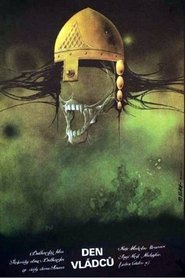
star 7The protagonist in this picture is legendary Bulgarian Khan Krum - a ruler in the beginning of IX century. In this period, Bulgaria ranked third in Europe in terms of territory and military power. It is Khan Krum who contributed to the union of Bulgarians and Slavs. He enforces unseen to that day laws against calumniators, thieves, violators. It stirs discontent among his closest men. The ruler is smart and just, but isn't he too severe? At what cost can one ensure order and progress in a state?Appleland Story
1992
Appleland Story
1992
star 1In 1905, Vergille Strauss is a young thief living in the small country of Apfelland. With the help of a local inspector named Fleischer, he rescues a girl from a group of foreign thugs. Her name is Frieda and she may be the key to a secret that is of great interest to other nations.25 Fireman's Street
1973
25 Fireman's Street
1973
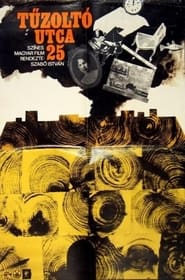
star 5.1On one hot summer night, the residents of a Hungarian apartment house slated for demolition restlessly revisit their haunted pasts as they face an uncertain future. In a gently turning kaleidoscope of dream imagery, regret-laden nostalgia and painstakingly intimate detail, the looming wrecking ball pales in significance to the accumulated experiences each dreamer revisits. Pre-war prejudice, occupying Nazis and Stalinist deprivations all come and go as each tenant’s backward glance yields moments of aching sensuality, infectious exuberance and catastrophic loss.Días de mayo
2009
Días de mayo
2009
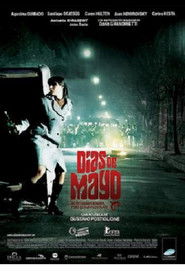
star 7.3During the Rosariazo of 1969, two young people, a university activist and theater student and a freelance photographer and cameraman for a TV channel, fall in love.The Book of Oath
1983
The Book of Oath
1983
The tragic events in Georgian history, spanning from the 16th to the 18th centuries, culminated in the signing of the Treaty of Georgievsk in 1783, which placed Georgia under Russian protection.March of Happiness
1999
March of Happiness
1999
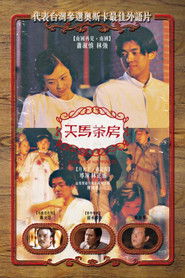
star 5.81945-1947, Taiwan. A teenage couple were deeply in love despite objections from the girl’s family. Their tragic story is played out in travelling troupes, tea-houses and western-style cafes, with the backdrop of Japanese occupation and the 28 February Incident.The Fencing Master
1962
The Fencing Master
1962
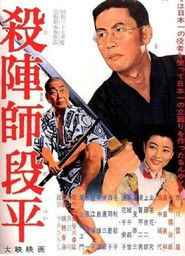
star 5.5The Fencing Master tells the story of a man trying to survive as the only world he knows is becoming increasingly irrelevant. Danpei Ichikawa lives for swordfighting – he was once a renowned kabuki swordfight choreographer, and as the Chairman of the New National Theatre Company, he wants nothing more than to choreograph the swordfights for the modern plays put on by the company.The Netherlands and Orange
1913
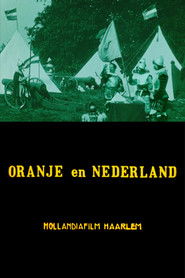
A collection of short scenes portraying highlights of Dutch history, from the Eighty Years' War to King Willem I's return from exile. This film was made to commemorate the centenary of the Dutch royal family.The Undaunted: Sir Humphrey Gilbert
1983
A drama documentary about the life of explorer Sir Humphrey Gilbert.12 September: Clash of Colors
1998
Turkish democracy got over the 27th of May and the 12th of March and set off again, but the storm did not subside and the mutual reckoning was not over. On the contrary, new fronts were opened in the country and blood began to flow like a gutter. Finally, on September 12, there was a knock on the door again. Those who came that day changed everything, everything. Nothing would ever be the same again, nothing would be the same as before.Marshal Zhukov
1984
Marshal Zhukov
1984
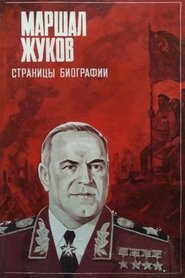
The life story of Marshal Georgi Zhukov, hero of the First World War and commander of the Red Army during World War II, as told by actor Mikhail Ulyanov, who often portrayed him on film.Revenge of the Sword
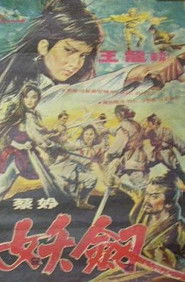
1971
Revenge of the Sword
1971
Príbeh o Fatime a Omarovi
1975
A television production based on the legend of the well at Trenčín Castle. In the 16th century, the lord of Trenčín Castle was Štefan Zápoľský - Duke of Transylvania, known for his hardness. He built Trenčín Castle as a fortress against the Turks, which, however, could be easily defeated because it had no water. The Turks wanted to take advantage of this fact. Zápoľský, as a good tactician, did not wait for the Turks to attack and attacked their own camp. He won and took a large number of prisoners, including the beautiful Fatima, the wife of Duke Omar. Omar decided to ransom Fatima from captivity. Zápoľský knew only one price - water at Trenčín Castle. Omar undertakes to fulfill the condition and dig a well. He keeps his word and takes Fatima and the other prisoners from Trenčín Castle.Zakhar Berkut
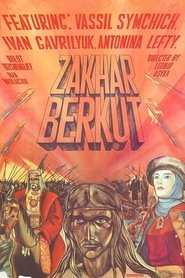
1972
Zakhar Berkut
1972
star 4.9This film is based on the classic novel of the same name by writer Ivan Franko, one of the most famous figures of Ukrainian literature. It is set during the 1200s and the invasion of the medieval Ukrainian-Russian state of Rus' by Chengis Khan's Golden Horde. Due to its having been produced during the Soviet era, the story's aspect of class-conflict between the "heroic" peasantry and the "decadent" noble particularly emphasized here.