Popular History Movies - Page 408

Women in the Shadows
1991
Women in the Shadows
1991
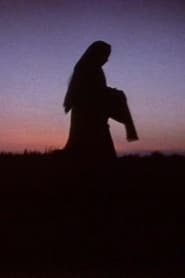
Filmed on location in Saskatchewan from the Qu'Appelle Valley to Hudson Bay, the documentary traces the filmmaker's quest for her Native foremothers in spite of the reluctance to speak about Native roots on the part of her relatives. The film articulates Métis women's experience with racism in both current and historical context, and examines the forces that pushed them into the shadows.Nelson
1926
Nelson
1926
star 1Recounts some highlights in the career of Admiral Nelson, including his battles with the French fleet under Napoleon, and his dalliances with Lady Hamilton.We Shall Not Die Now
2019
We Shall Not Die Now
2019
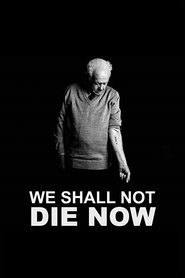
A chronicle of the Holocaust, told by the resilient survivors who lived through it.Brothers at War
2009
Brothers at War
2009
star 5BROTHERS AT WAR is an intimate portrait of an American family during a turbulent time. Jake Rademacher sets out to understand the experience, sacrifice, and motivation of his two brothers serving in Iraq. The film follows Jake’s exploits as he risks everything—including his life—to tell his brothers’ story.The Opium War
1943
The Opium War
1943
The Opium War is a 1943 black-and-white Japanese film directed by Masahiro Makino. "Ahen senso" in Japan refers to the First Opium War. The story of the film concerns this war.Sachertorte
2017
One Sweet Night
2020
One Sweet Night
2020
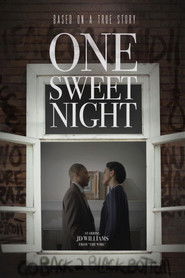
The tragic true story of Doctor Ossian and Gladys Sweet, a prominent young Black couple in 1920s Detroit.Sharpe's Waterloo
1997
Sharpe's Waterloo
1997
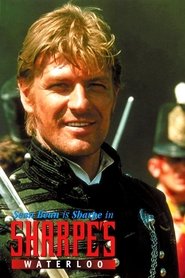
star 7.3Based on the novel by Bernard Cornwell, "Sharpe's Waterloo" brings maverick British officer Lt. Col. Richard Sharpe to his last fight against the French, in June of 1815.Caligula's Spawn - Part 1
2009
star 3.5The beautiful and dangerous lesbian slave trader Druscilla practices all the customs of Ancient Rome - everything in Excess. But even excess can have its limits and the punishments can be very severe if she crosses the line and risks falling out of favor.Janko Kráľ
1972
Janko Kráľ
1972
Beyond the Blue Border
2024
star 6.4GDR, August 1989: Hanna and Andreas became a target of the secret police and had to give up their plans for their future studies and desired professions. Instead, they face arbitrariness, mistrust and reprisals. Their only chance for a self-determined life lies in fleeing across the Baltic Sea. Fifty kilometres of water separate them from freedom - and only a thin connecting rope around their wrists saves them from absolute loneliness.The Train Robbers
1995
The Train Robbers
1995
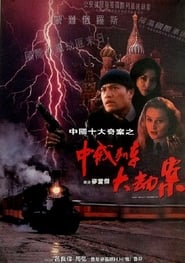
star 4Special agent Xiang Cheng and his men are sent to Russia toinvestigate a Chinese crime ring.Israel: Clash of the Tribes
2023
star 7Ashkenazi, Mizrachi, ultra-Orthodox, Israeli Arabs... The different groups that make up Israeli society seem irreconcilable. Who are they? Can their complicated history explain the current situation in the country?Rumble Festival
1960
Nainsukh
2011
Nainsukh
2011
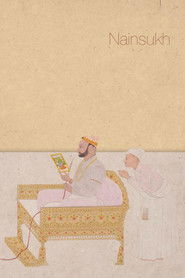
star 6.6The 18th-century Indian painter Nainsukh of Guler receives a poetic, visually stunning tribute from a young Indian filmmaker employing an arresting pictorial language. Shot in the region where Nainsukh produced his most celebrated work, this is a meditative and meticulous recreation of the world of an artistic genius.Years of Pilgrimage: The Wandering Soul of Franz Liszt / Fashionable Empire
2022
star 6YEARS OF PILGRIMAGE: Franz Liszt was a virtuoso pianist that took early nineteenth-century Europe by storm. He conquered the Parisian salons with passionate performances marked by excellent technique and handsome features that became the downfall of many women. But what was he truly after? The musical narrates the story of Liszt's early years, and his pilgrimage across Europe in an attempt to find a place where his soul could belong, focusing on the romance with the Countess Marie d'Agoult, and his greatest friend and rival, Chopin. FASHIONABLE EMPIRE: A revue that transforms the stage into the "Empire" where the pioneering fashionistas of our time gather. The stylish array of scenes will enchant the audience, at times with the cool atmosphere, and at times with the hot beats. While focusing on the sophisticated and metropolitan appeal of top star Yuzuka Rei this revue also shows off the unique, scintillating members of Flower Troupe through many groovy scenes.The Valkyrie Legacy
2008
The Valkyrie Legacy
2008
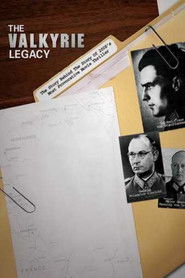
star 6Created as a companion documentary to the film "Valkyrie," this documentary details the true story behind the plot to assassinate Adolph Hitler.The Wedding Day
1956
The Wedding Day
1956
star 6Master Maeng is very proud that an influential family will soon be his esteemed in-laws when his loving daughter, Mi-yeon, marries their son. A few days before the wedding Maeng hears a rumor that his future son-in-law has a cripple leg. Regretting that he can't give his lovely daughter to a cripple, he decides to marry his maid to him instead. Unexpectedly the future son-in-law shows up at the wedding hall and he is not a cripple, but a healthy and handsome youth. Feeling embarrassed, there is no way but to wed the maid to him. The Wedding Day is a recreation of A Happy Day of Jinsa Maeng, a comical play by Oh Yeong Jin. The first Korean film to win an international film award, the Best Comedy Award at the 1957 edition of the Asian Film Festival (now Asia Pacific Film Festival).Exitus: Il passaggio
2019
Exitus: Il passaggio
2019