Popular History Movies - Page 435

Maksym Osa: The Gold of Werewolf
2022
star 5.8Ukraine - 1636. Someone has attacked a battalion of cossacks that were transporting the gold of the Polish king. A cossack - Maksym Osa - tries to find the missing gold, but soon becomes one of the main suspects.Qian Tang River
2025
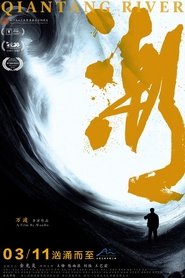
Qian Tang River
2025
One river, three generations, countless failures. In the late 1950s, a group of people living along the Qiantang River fought against fearsome tides for their respective beliefs.Elisabeth: Rondo of Love and Death
2018
star 10Takarazuka Revue Moon Troupe 2018 production of the Viennese musical 'Elisabeth'Filip
2025
Shippu no Seitarou
1955
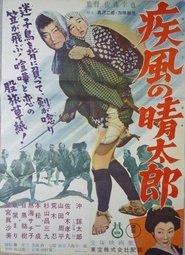
Shippu no Seitarou
1955
A historical drama directed by Yukiya Sato, and co-written by Rokuhei Susukita and Jiro Okuzawa. Seitarou, who travels from trip to trip, was asked by Fujisuke, who was killed in a mess at the Shinshu Oil Shop's gambling house, to deliver his child Shinkichi to his mother Megumi in the old Iwanjoya in Shiojiri, Shinshu. Megumi was crying day and night, worrying for her child. Masagoro, the boss of the land who had been aiming for the replacement of Iwanjoya, forced Megumi to marry his son Hyokichi. On the way, Seitarou and Shinkichi helped Rohno, who was looking for his fiancee....I wasn't Beautiful then
1968
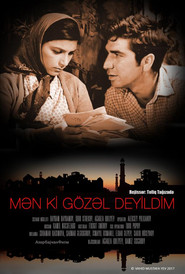
After the novel of the same name of B.Bayramov. The film is about life during war, about postwoman.Punishment Committe
1997
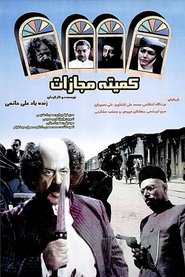
Punishment Committe
1997
star 6.5In Tehran 1916 during first world war a group of patriots make a punishment committee to punish the traitors. With the lead of Abolfatooh Mirza, Reza Tofangchi begins the assassinations.Ambikapathy
1957
Ambikapathy
1957
The Great Escape
2017
The Great Escape
2017
star 8.5On March 24, 1944, in the heart of Nazi Germany, 76 British, Canadian, Norwegian and French pilots who were held in Stalag Luft III, a prison camp of the Luftwaffe, escaped. Unique testimony from the last survivors, recreations and today’s digital images sheds new light on the audacious escape.Frontline: The Tank Man
2006
star 8On June 5, 1989, one day after Chinese troops expelled thousands of demonstrators from Tiananmen Square in Beijing, a solitary, unarmed protester stood his ground before a column of tanks advancing down the Avenue of Eternal Peace. Captured by Western photographers watching nearby, this extraordinary confrontation became an icon of the fight for freedom around the world. FRONTLINE investigates the mystery of the tank man — his identity, his fate, and his significance for the Chinese leadership.Kinderblock 66: Return to Buchenwald
2012
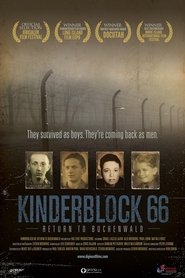
Kinderblock 66 is the story of four men who, as young boys, were imprisoned by the Nazis in the notorious Buchenwald concentration camp and who, sixty-five years later, return to commemorate the sixty-fifth anniversary of their liberation. The film tells the story of the effort undertaken by the camp's Communist-led underground to protect ad save Jewish children who were arriving in Buchenwald toward the end of the Holocaust. Kinderblock 66 also tells the story of Antonin Kalina, the head of the block who was personally responsible for saving 904 boys in Buchenwald.Execution Day
1990
Execution Day
1990
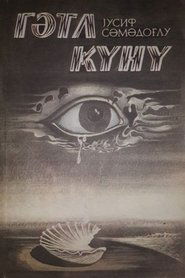
star 2After the novel of the same name of Yusif Samadoghlu. The film is about three intervals in time: the distant past, yesterday and today, about innocent victims, about repression, and conquest of different countries.World War II: Against All Odds
2001
The story of Fighter Command during World War Two. Presented by Max Bygraves. This film depicts "The Few". The men and women and the aircraft of the R.A.F's Fighter Command during World War II who flew with glory on their wings. Winston Churchill said "The fighters are our Salvation."König Löwenherz - Ein König in der Falle
2019
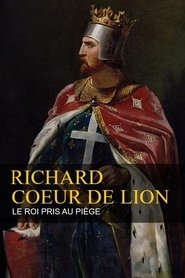
star 8Out of power politics, offended vanity and a desire for revenge, Hohenstaufen Emperor Henry VI and the King of France became accomplices in an unheard-of act: the hostage-taking of the English King Richard the Lionheart. It was the kidnapping of the century.The Cruel Sea
1944
The Cruel Sea
1944
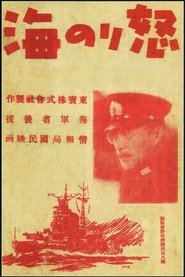
It is 1921 and a town has a newspaper which prints urgent bulletins as required. The Washington-based CITES treaty, in which Japan participates, puts a limit on the number of warships any country can possess. As a result, Japan has to decommission a ship to its makers' disappointment. An institute of technology's laboratory designs a new ship. Due to less ships, sailors have to retire and are also disappointed. The laboratory's manager and an admiral are visiting a patient at a hospital and meet coincidentally. The former has a daughter who worries about her father's workload. She asks him to accompany her to a concert. Father has little time, but is convinced for her sake. He is inspired for a ship's design at the performance. The film is inspired by the life of Jo Hiraga.Les derniers romains
2007
Les derniers romains
2007
Naval Sham Battle at Newport
1900
star 2.8Showing the attacking forces drawn up in line of battle. They immediately commence firing on the shore batteries. The batteries return the fire with telling effect, but are at last silenced by the overwhelming forces of the enemy. In the distance can be seen the ruins of a bridge destroyed by the invading forces. The smoke thickens as the firing becomes general, and the effect is superb.The Movie Orgy
1968
The Movie Orgy
1968
star 6.4Clips from assorted television programs, B-movies, commercials, music performances, newsreels, bloopers, satirical short films and promotional and government films of the 1950s and 1960s are intercut together to tell a single story of various creatures and societal ills attacking American cities.London: A Tale of Two Cities
2012
star 8The 17th century saw London plunge into a series of devastating disasters. The Civil War, a murderous plague, and the destruction of the great fire should have all but destroyed the small medieval city, but somehow it not only survived - it thrived. Dan Cruickshank explores how London survived the travails of the 17th century.