Popular History Movies - Page 441

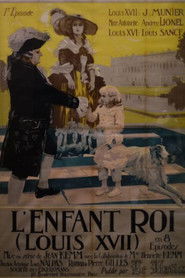
The Child King
1923
The Child King
1923
An eight part ciné-novel (episodic film) set during the French Revolution, telling the story of the Dauphin's childhood in Versailles, his life at the Conciergerie during the Revolution, and his untimely death.The Emperor of Time
2016
The Emperor of Time
2016
star 5.9The strange and sordid tale of Eadweard Muybridge, the man who accidentally invented motion pictures. The film is told from the point of view of Muybridge's abandoned son and viewed completely through a nineteenth century early cinema contraption called a mutoscope.Stranded: I've Come from a Plane That Crashed on the Mountains
2008
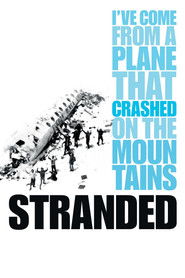
star 8.2The story, told by the survivors, of a group of young men, members of a Uruguayan rugby team, who managed to survive for 72 days, at an altitude of almost 4,000 meters, in the heart of the Andes Mountains, after their plane, en route to Chile, crashed there on October 13, 1972.The Last Days of Immanuel Kant
1996
star 6.5A brief, fictionalized time period in the life of Professor Kant. The story is set in his hometown, Konigsberg, chronicling his last few years prior to his death in 1804 at the age of 79.Garoojigi: Stud the Beginning
2017
star 5.3A stud in a village living in a rice paddy is like a fellow who lives next door. So, the first night of two people starts, and the clinging rope does not exceed one minute and it is shut up as it is. The story of such a steal spreads in the neighborhood in a moment, and the knot that got to know it decides to leave the neighborhood in shock. The knot that has fallen in disrepair has helped an elderly person who is tired of hunger. In fact, the old man was a legendary old man. Kang will receive special expense training for the elderly. After that, he finds confidence and goes back to town …The Last Emperor
1986
The Last Emperor
1986
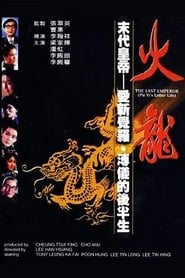
A 1986 film directed by Li Han-Hsiang. Nominated for Best Film in the 6th annual Hong Kong Film Awards.Lucy Worsley's Christmas Carol Odyssey
2019
star 9Lucy Worsley reveals the surprising stories behind our favourite Christmas carols. From pagan rituals to religious conflicts, French dances and the First World War, carols reflect our history.Elie Wiesel Goes Home
1997
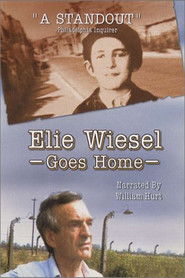
A documentary chronicling the adolescent years of Elie Wiesel and the history of his sufferings. Eliezer was fifteen when Fascism brutally altered his life forever. Fifty years later, he returns to Sighetu Marmatiei, the town where he was born, to walk the painful road of remembrance - but is it possible to speak of the unspeakable? Or does Auschwitz lie beyond the capacity of any human language - the place where words and stories run out?Through the Weeping Glass: On the Consolations of Life Everlasting (Limbos & Afterbreezes in the Mütter Museum)
2011
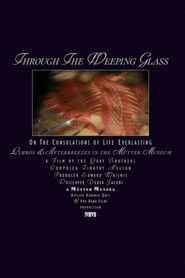
star 6.3A documentary on the subject of the collections of books, instruments and medical anomalies at The College of Physicians of Philadelphia and the Mutter Museum housed there. This short film represents the first to be made by the internationally recognized Quay Brothers in the United States. While not a stop-motion animation film, a form for which the Quays are best known, the entire film is vibrantly constructed and 'animated'. Musical score by composer Tim Nelson and voice-over provided by Derek Jacobi.Kojiki Taishô
1952
Kojiki Taishô
1952
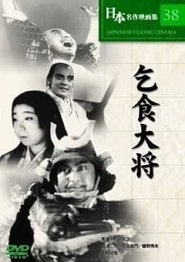
Gotō Matabei is the most able and fierce samurai of the Kuroda clan. However, he gradually dislikes the ruthless personality of Kuroda Nagamasa and leaves the clan. Seven years later, he joins Toyotomi Hideyori's army. Filmed in 1945 and released in 1952.Naval Cadets 1787. War
2023
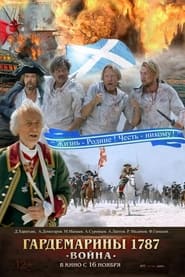
star 3The action of the film begins in the Crimea in 1787. Representatives of the Western powers once again begin their intrigues against Russia, but the main characters, former midshipmen, who have already reached a respectable age by this time, and their adult children, stand up to defend their homeland. They have to sail to the Crimea from Malta and there take part in the war with Turkey; in particular, to take part in the battle of Kinburn under the command of Suvorov.Today's Robin Hood
1988
Today's Robin Hood
1988
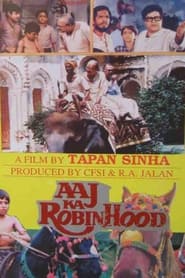
star 7.5Drama set during the British rule in India has Jatin Chatterjee, a young revolutionary on the run from authorities, take refuge in the home of Shyam Jadhav, who hires Jatin to teach his sons, Ram, Ramdas, and Ramdulaare. What happens when Jatin instructs his students about the legendary bandit Robin Hood?The Flying Fox of Snowy Mountains
1978
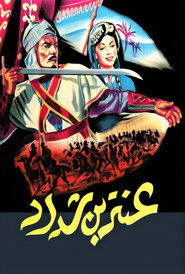
Adapted from Louis Cha's novels Fox Volant of the Snowy Mountain and The Young Flying Fox.Antar The Black Prince
1961
star 4.7Based on the life and legend of Antarah ibn Shaddad, a 6th century poet and hero whose poetic works are considered among the greatest in the Arab language.The Trios of the Peach Garden
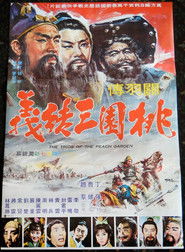
1968
A film based on the Oath of the Peach Garden which is a fictional event in the 14th-century Chinese historical novel Romance of the Three Kingdoms by Luo Guanzhong.Breathing Fire: Secret Weapon of the Somme
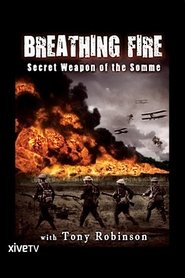
2012
This film follows a team of experts as it excavates a famous WW1 battlefield in search of a top secret tunnel and a legendary 60-foot flame-thrower. Built for use during the opening day of the bloodiest clash of WW1, this weapon fired a blast of flaming oil over 100 yards long. Historian Peter Barton hopes to recover the machine and with help from British Royal Engineers, build a working replica.Mrs Dickens' Family Christmas
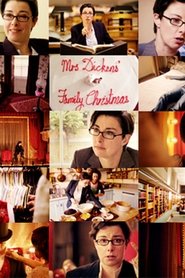
2011
star 2Looking at the marriage of Charles Dickens through the eyes of his wife Catherine, Sue Perkins exposes the lesser-known reality of the Dickens family Christmas.Dramatic Passion of Algabert and Elisberth of Rodembourg
1912
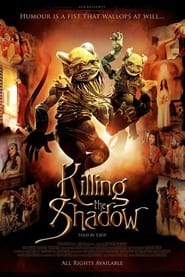
star 4.5Prince Algabert, upholding the traditions of his forefathers, wages a ceaseless feud against the house of Rodembourg, whose reigning lord has one daughter, Elisabeth. One day, the Princess Elisabeth is captured by Algabert's vassals and, forgetful of feuds and quarrels, the Prince falls under the spell of her beauty. Prince Algabert, having released the Princess, goes to her father and begs for her hand, which is, however, haughtily refused. So the breach between the two houses widens. Elisabeth decides to take the veil. On the day of her renunciation Algabert makes an ineffectual attempt to see her. Then, in despair, he provokes the Rodembourgs. He meets them single-handed in the convent cloister and receives his death stroke. Elisabeth till the day of her death mourns her lover and daily tends his grave.Killing the Shadows
2006
Killing the Shadows
2006
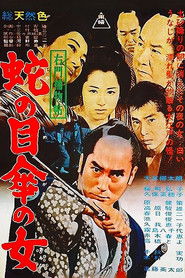
star 7Killing The Shadows is a bawdy comic fable set in the Ottoman Empire during the mid-14th century based on two legendary figures in Turkish folkore, the jester Hacivat (Beyazit Ozturk) and the nomad Karagoz (Haluk Bilginer), men who apparently lived and died by their sense of humour.Cases of Umon: The Woman with an Umbrella
1963
Ryutaro Otomo as the Edo magistrate Umon Kondo is out to solve a crime that centers around the murder of a jail guard & the escape of a criminal who is later himself killed. His dying words in Umon's arms were, "I didn't kill the guard." The murdered criminal had been a safe-cracker & only his girlfriend knows where he hid a fortune. She is kidnapped, so the plot gets thicker & thicker.