Popular History Movies - Page 442

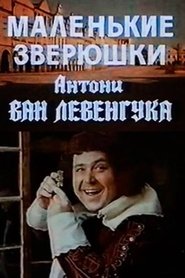
The Little Animals of Anthony van Leeuwenhoek
1975
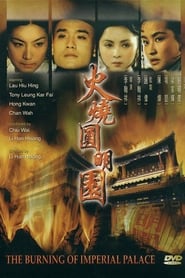
star 7Anthony van Leeuwenhoek, a Dutch naturalist of the 18th century, the founder of scientific microscopy, makes a lens in his workshop. He is visited by an English scientist, a member of the Royal Society of London. Leeuwenhoek shows the scientist his "microscope". A scientist examines a flea, mold on bread, and other objects through a "microscope." He recommends that Leeuwenhoek write about his invention to the Royal Society of London. Leeuwenhoek refuses. The scientist writes the letter himself. Leeuwenhoek examines different objects through a "microscope". He is visited by a friend of Google, with whom he shares his observations. Leeuwenhoek and Google talk about the origin of the "little animals" in the water. Leeuwenhoek takes samples of rainwater and pond water. The simplest microorganisms, taken through a microscope. Leeuwenhoek writes a letter in which he outlines the results of his research.The Burning of the Imperial Palace
1983
star 6.3Dramatization of events from the Second Opium War which culminated in the looting and destruction of imperial estate "Yuan Ming Yuan", AKA the Old Summer Palace by invading English and French troops.Bread
1988
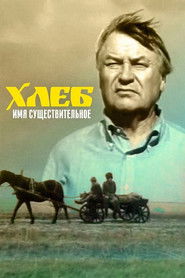
Bread
1988
star 5.9Set around the Volga river, the story begins around 1900, when Russian peasants are let free and allowed to own their farmlands. But soon they suffer from losses during the 1917 Russian Revolution and the following Civil War. Then, the major national catastrophe is started by Stalin: his communist government kills millions of farmers and steals all their food supplies, causing the longest and deadliest famine all over central Russia during the 1920s and 1930s.Return to Sandakan
1995
Return to Sandakan
1995
During World War II there were nearly 2,500 Allied prisoners held in Sandakan POW camp in British North Borneo. Along with the ravages of war and the struggle to survive abject conditions, only six of these POW's were found alive when the war finally ended. In the years that followed, the horror stories of human depravity and the atrocities committed by the Japanese at Sandakan POW camp would come to light, considered by many as one of the most devastating chapters of the Pacific War.The Peter Tchaikovsky Story
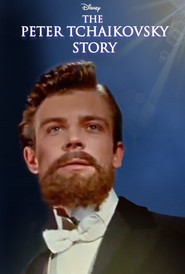
1959
star 7The story of young Tchaikovsky through the premiere of his "Sleeping Beauty" ballet.School of Fine Arts
1990
School of Fine Arts
1990
An animated film in two parts, about the tragic fate of Estonian artist Ülo Sooster and about his work.Fallen Blossoms
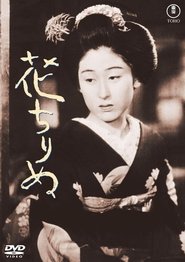
1938
Fallen Blossoms
1938
star 4Set against the backdrop of an imperial victory in the civil war leading up to the Meiji Restoration, Fallen Blossoms tells the story of the sorrows of women in a geisha house in Kyoto by recounting the relationships of its inhabitants.Secrets of the Neanderthals
2024
star 6.7This documentary delves into the mysteries surrounding the Neanderthals and what their fossil record tells us about their lives and disappearance.Jiraiya
1937
Jiraiya
1937
Based on the old tale of Jiraiya, this 1937 version is essentially a revenge story with fantastic visuals.Wilt Chamberlain: Borscht Belt Bellhop
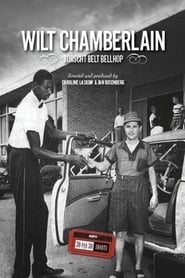
2013
In 1954, before his senior year of high school, Wilt Chamberlain took a summer job that would change his life, working as a bellhop at Kutsher's Country Club, a Jewish resort in the Catskill Mountains. An unexplored and pivotal chapter in the life of one of basketball's greatest players, and a fascinating glimpse of a time when a very different era of basketball met the Borscht Belt in its heyday.The Crisis
1916
The Crisis
1916
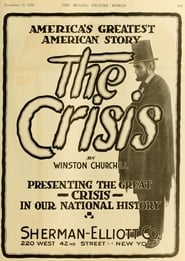
star 5.3Stephen Brice, a young lawyer in Civil War-era St. Louis, falls in love with Virginia Carvel, the daughter of his benefactor. But she is loyal to the South and Brice is committed to Lincoln's cause. In the course of the war, their convictions separate them, and Virginia becomes engaged to her cousin Clarence Colfax, a Confederate officer. Brice becomes an officer under General Sherman, and eventually finds himself faced with the captured Colfax, facing execution for spying. Brice must decide whether or not to intercede in his rival's behalf.The Age of Stupid
2009
The Age of Stupid
2009
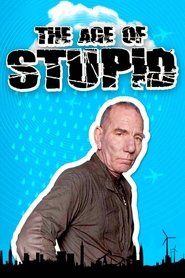
star 6.5Pete Postlethwaite stars as a man living alone in the devastated future world of 2055, looking at old footage from 2008 and asking: why didn’t we stop climate change when we had the chance?Storm
1957
Storm
1957
In the winter of 1918, a provincial Russian town is faced with a shortage of food, firewood, and medicine. Discontent is brewing in the Red Army regiment stationed in the town, as former Tsarist officers sow seeds of discord in an attempt to organize a counter-revolutionary rebellion.El balcón abierto
1984
El balcón abierto
1984
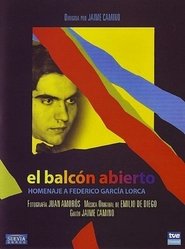
star 9Film homage to the great Spanish poet Federico García Lorca, in which they dramatize fragments of his poems and the play "La casa de Bernarda Alba". From his texts, the voice of the poet himself weaves the plot. His characters come to life: El Amargo, which runs from a poem taken from "El Cante Jond" to the "Romancero Gitano". The Woman, blurred and present in so many of his poems. The Mother, a living synthesis of his play-writing. The balcony is open from the hidden Granada to exciting New York. From the rider of tireless riding to the mysterious baroque of Holy Week. From the first babble of the poet to his violent death. Spain is behind its lyric. Also in many images and tensions of the film. The argument of this one wants to approach the argument of a poet. His life and his work, united irremediably.Maria Pentagiotissa
1957
Maria Pentagiotissa
1957
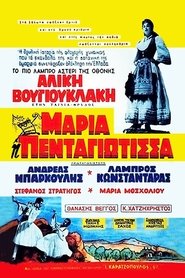
star 3The hopeless love between Maria Pentagiotissa and a man belonging to a different social class.The Turkish Gambit
2005
The Turkish Gambit
2005
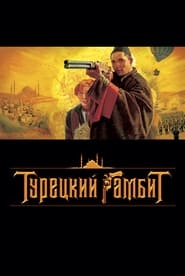
star 6.4The film is based on the second book from the Adventures of Erast Petrovich Fandorin series of novels written by the Russian author Boris Akunin. The film takes place in 1877 during the Russian-Turkish war. Erast Fandorin has just escaped from Turkish prison and is trying to get on the Russian side as soon as possible to give important information about the upcoming attack of the enemy. On his way he meets Varvara Suvorova, a young lady who is going to see her fiancée - a soldier of the Russian army. Erast also knows that there is a spy somewhere in the Russian army, everyone is under suspicion.The Village Tattooed Man
1935
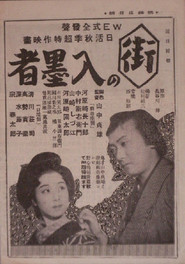
A tragic period film about a gangster who comes out of prison and finds it hard to find a place again in society. Considered a lost film.Quiet Flows the Don
1957
Quiet Flows the Don
1957
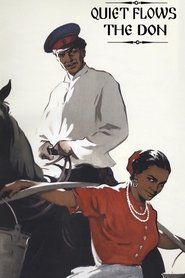
star 6.2Based on the novel of the same name by Mikhail Sholokhov, about the fate of people broken by the First World War, the October Revolution of 1917 and the Civil War in Russia (1917-1922), about the collapse of the foundations and ideals of the Don Cossacks of Russia at the beginning of the XX century, about the personal tragedy of the protagonist — Grigoriy Melekhov.Meu Nome é Gal
2023
Meu Nome é Gal
2023
star 6.7Film about the Bahian singer dives into the moment when shy Gracinha becomes Gal Costa, during the violent, innovative and mind-blowing years that helped shape Brazil's greatest singer.