Popular History Movies - Page 447

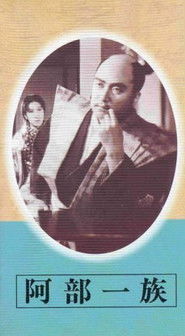
The Abe Clan
1938
The Abe Clan
1938
“19 vassals of Lord Hosokawa ask permission to commit harakiri with him, as a demonstration of their loyalty. Only Yaichiemon Abe is refused permission, forced instead into the vassalage of his lord’s successor. Humiliated and derided, Yaichiemon eventually commits harakiri without permission. His eldest son is then punished for Yaichiemon’s suicide, and when he resists, is sentenced to death. The entire Abe clan rebels upon the son’s execution, and the clan is annihilated.” --Alan Poul, Japan SocietyGarh Nasimpur
1968
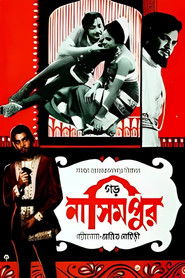
Garh Nasimpur
1968
Depicted on the backdrop of 1651 when the emperor was Shahjahan and the subadar of Bengal was Shajada Suja. Amidst the conspiracies of the royalty, a young man decides to expose the schemes and reunite with his lover after the Nasimpur territory of Bengal gets occupied by a Mughal prince.Spring on Leper's Island
1940
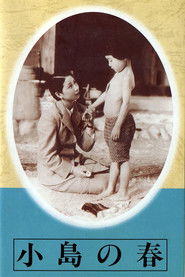
star 6.3A female doctor's story of her life in an isolated leper colony.The Power of Accumulated Merit
2012
While on a road trip to the country side, a group of students find themselves at a police station, where they learn valuable lessons about history. This is among nine films commissioned by Thailand's King Bhumibol Adulyadej for the 2012 Terdglao Project.Gracze
1995
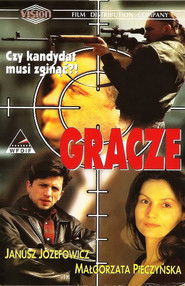
Gracze
1995
star 5.2A political film with sensationalist plots, set during the 1990 presidential elections.The protagonist is Jan Gracz, a filmmaker, oppositionist, honest and noble man. When almost all the intelligentsia sides with Mazowiecki, he decides to head Walesa's presidential campaign. Meanwhile, the KGB plans an attempt on his life. The political game is mixed with sensationalism and eroticism.Victory
2024
Victory
2024
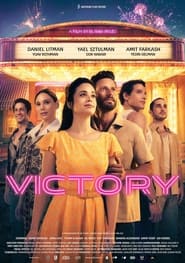
star 6In the height of Israel's post-"Six-Day War" euphoria, an up-and-coming actress is torn between her new glistening career and her husband's post-trauma.Champions Chic
2024
Champions Chic
2024
star 8Sportswear dominates everyday street wear; but so does haute couture: what began a hundred years ago as functional clothing for playing tennis or golf has revolutionized the way people dress.The Adulteress
1963
The Adulteress
1963
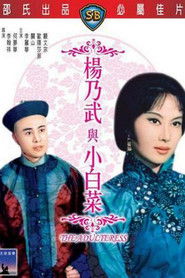
star 10The noted actress Li Li-hua, star of more than sixty films since 1947, beautifully portrays the drugged, then disgraced wife of a peddler in the waning days of the Ching Dynasty. To make matters worse, she’s soon framed for her husband’s murder by her rapist - the son of the local magistrate! And even that isn’t the end of her woes. It’s best to have a box of tissues nearby as two expert directors ratchet up the emotional suspense in this consummate tearjerker.25 do 4 em 99
1999
25 do 4 em 99
1999
Lessons of the Hour
2019
Lessons of the Hour
2019
star 8Isaac Julien's visionary film Lessons of the Hour explores the incomparable achievements of Frederick Douglass, America’s foremost abolitionist figure. After escaping slavery in Maryland, Douglass gained prominence on the abolitionist circuit as an extraordinary orator, becoming the most photographed American of the 19th century. Julien’s project is informed by some of Douglass’s most important speeches, such as Lessons of the Hour, What to the Slave Is the 4th of July?, and Lecture on Pictures, the latter being a text that connects picture-making and photography to his vision of how technology influences human relations. Julien's work gives expression to the zeitgeist of Douglass’s era, his legacy, and the ways in which his story may be viewed through a contemporary lens. The presentation also includes photographs and tintypes produced in conjunction with the film.Last Minute
2010
American Socialist: The Life and Times of Eugene Victor Debs
2018
star 7The historic story of Eugene Victor Debs, an American Socialist leader and union organizer during the Progressive era, 1900 to 192, who ran for US President on the Socialist Party ticket (SPA) five times, even once while he was in prison for speaking out against the US involvement in World War 1.Rey de todos los mares
1993
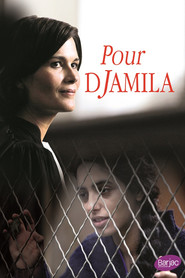
Childhood memories. A torture interrogation scene during Argentina's last dictatorship.Pour Djamila
2012
Anthrax War
2009
The Story of Heroine Fan Lei-fa
1968
Centring on the legend of the four ancient Chinese heroines, the film was a novelty for audiences at the time, as the singing performance was in Cantonese and used huangmei operatic rhythms—a popular trend in the 1960s, yet it retained traditional flavours by using operatic luogu percussion in the battle scenes. ‘Movie-fan princess' Connie Chan Po-chu not only sings Cantonese song and huangmei tone solos in the film, she also wows the audience by taking up the doumadanrole for the first time as the Tang dynasty female general Fan Lei-fa, showing off her superb operatic martial skills, together with Shum Chi-wah, inherited from Peking opera master Fen Ju Hua. Yu Kai's weaponry prowess and renowned female comedian Tam Lan-hing cross-dressing as a male general are also brilliant in this gem.The Sleeping Lion
1977
The Sleeping Lion
1977
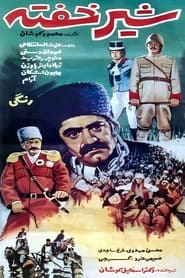
The actions of the Russian and British embassies and the security forces of the central forces have made the people miserable. Mahmoud Khan, who is the secretary of the British Embassy, resigns from his job in the British Embassy and joins the people and incites them against the British and the Central Powers ...Eneida
1991
Eneida
1991
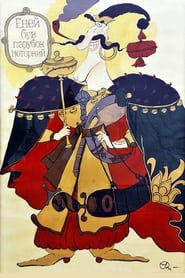
star 7.7A mock-heroic 1798 poem Eneida is magnum opus of the first modern Ukrainian writer Ivan Kotliarevsky. It's a parody of Virgil's Aeneid, where Kotliarevsky transformed the Trojan heroes into Ukrainian Cossacks.