Popular History Movies - Page 462

Aracy: Der Engel von Hamburg
2022
star 8The Brazilian Aracy de Carvalho moves to Hamburg with her son in 1934. Despite the Nazi dictatorship, Germany is a refuge for her as a single woman. But through her work at the Brazilian consulate, Aracy is confronted with the persecution of Jews in the Third Reich. She helped countless of them to leave the country in the years before the Second World War. For the refugees and their survivors, who have their say in the film, she becomes the angel of Hamburg. The docudrama tells the story of a woman who did not want to be a hero, but who saved the lives of countless people.Jhorapalok
2022
Jhorapalok
2022
Popularly called "Rupashi Banglar Kabi", Jibanananda Das is the most read poet after Rabindranath Tagore and Kazi Nazrul Islam in Bangladesh and West Bengal.Appointment in Tokyo
1945
Appointment in Tokyo
1945
star 5.8Produced by the Army Pictorial Service, Signal Corps, with the cooperation of the Army Air Forces and the United States Navy, and released by Warner Bros. for the War Activities Committee shortly after the surrender of Japan. Follow General Douglas MacArthur and his men from their exile from the Philippines in early 1942, through the signing of the instrument of surrender on the USS Missouri on September 1, 1945. Preserved by the Academy Film Archive in 2013.The End Of The Line: Rochester's Subway
1995
star 10"The End of the Line - Rochester's Subway" tells the little-known story of the rail line that operated in a former section of the Erie Canal from 1927 until its abandonment in 1956. Produced in 1994 by filmmakers Fredrick Armstrong and James P. Harte, the forty-five minute documentary recounts the tale of an American city's bumpy ride through the Twentieth Century, from the perspective of a little engine that could, but didn't. The film has since been rereleased (2005) and now contains the main feature with special portions that were added as part of the rereleased version. These include a look at the only surviving subway car from the lines and a Phantom tun through the tunnels in their abandoned state, among others, for a total of 90 minutes of unique and well preserved historical information.God Knows Where I Am
2016
God Knows Where I Am
2016
star 6.4Well-educated, New Hampshire mother, Linda Bishop, was determined to stay free of the mental health system after her early release from a 3 year commitment to New Hampshire State Hospital. Instead, she became a prisoner of her own mind, a fate which she documents in one of the most evocative and chilling accounts of mental illness and of our systemic failure to protect those suffering from it.Reformation: Europe's Holy War
2017
star 8Historian David Starkey tells the story of the Protestant Reformation and how it transformed the face of modern Europe, unleashing fundamentalism, terror and religious violence.Riphagen the Untouchable
2016
star 6.5Amsterdam, Netherlands, 1944, during World War II. Andries Riphagen, a powerful underworld boss, has made his fortune by putting his many criminal talents at the service of the Nazi occupiers. But the long battle is about to end and the freedom fighters, who have been persecuted and murdered for years, are abandoning their hideouts to mercilessly hunt down those who have collaborated with the killers.Gulfam
1961
The History of the Pink Trunk
2005
star 5.4In 1945, in the train station of Bogota, Colombia, a dead girl is found in a trunk. The case is assigned to Detective Mariano Corzo, he has to deal with an inquisitive journalist Hipólito Mosquera while trying to solve the mysterious case. Nobody knows who the girl is, or who put her in the trunk. The things turn bad when Mosquera publish the news in the local newspaper. With the help of a bartender Martina Quijano, Corzo will find an answer for the question: Who killed the girl and why?Who was Hitler
2017
Who was Hitler
2017
star 5.7Hitler's biography told like never before. Besides brief historical localizations by a narrator, only contemporaries and Hitler himself speak: no interviews, no reenactment, no illustrative graphics and no technical gadgets. The testimonies from diaries, letters, speeches and autobiographies are assembled with new, often unpublished archive material. Hitler's life and work are thus reflected in a unique way in interaction with the image of the society in the years 1889 to 1945.Pornotropic
2020
Pornotropic
2020
star 7When French writer Marguerite Duras (1914-96) published her novel The Sea Wall in 1950, she came very close to winning the prestigious Prix Goncourt. Meanwhile, in Indochina, France was suffering its first military defeats in its war against the Việt Minh, the rebel movement for independence.Kutsukake Tokijiro
1929
Kutsukake Tokijiro
1929
A traveling gambler becomes duty-bound to the wife and child of the yakuza he had slain and desires to leave the criminal life for good. However, with no other skills but his sword, he is forced to hire himself out in the midst of a gang war.The Hippie Revolution
1996
Back in the stone aged we all went to San Fransisco to escape our parents and the Vietnam war. To laugh, dance and love each other. To make love not war. Music bt Country Joe & The Fish, Quicksilver Messenger Service, The Steve Miller Band and Mother Earth.The LEGO® Story
2012
The LEGO® Story
2012
star 6.4As toy maker LEGO heads into its 80th year, Lego present this newly launched animated short film, which looks at the history of the iconic brand. A nicely produced look back at the brand LEGO.Løven - Henrik Ibsen
2006
Løven - Henrik Ibsen
2006
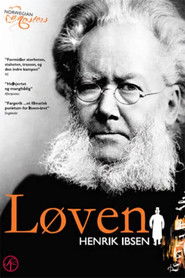
We follow Henrik Ibsen throughout his life. From early shame over his father's bankruptcy, via bitterness over the then conservative public life, to his older years as a national institution that tourists gathered to watch on their way to their very punctual, daily lunch at the Grand Café in Oslo.Prometey
1936
Prometey
1936
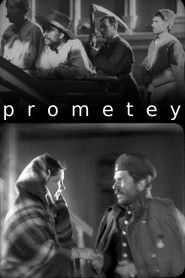
star 4.7The life was cruel with Ivas. The landlord sent him at war, and his girlfriend – in the house of ill fame. In the troops an ordinary peasant gets acquainted with an ideological revolutionary and becomes inspired with the feeling of inequity to the existing social structure. And when the time comes to return to the native village, he will make the sir pays by his blood for all wrong-doings against the peasants. A film based on works and biography of the Ukrainian poet Taras Shevchenko (1814 - 1861).The King: The Story of King David
2001
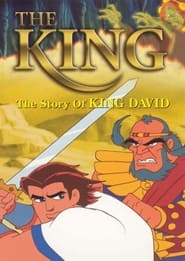
One of the greatest heroes of the Bible, King David of Israel has stood as a beacon of strength through the ages. Long before Jesus Christ was born, the ancient Kingdom of Israel was ruled by David. This wonderfully animated story depicts the hardships, battles (including the young David's legendary face-off with giant Goliath) and love lost and recaptured during the eventful life of Israel's most honored king.Wine Road of the Samurai
2006
Wine Road of The Samurai is a feature film based on a true story about a delegation of 34 samurai to Europe in 1863, known as the Second Japanese Embassy to Europe (1863). It was first aired in Japan on March 21, 2006.