Popular History Movies - Page 463

A Star
1961
A Star
1961
Iron Mountain
2013
Iron Mountain
2013
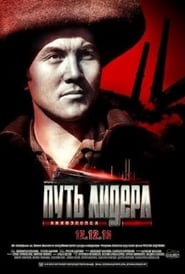
star 10The third part of the epic "The Way of the Leader" tell about the student years of Nursultan Nazarbayev, about the most important stages of his personality formation against the background of key events in the history of the country, when the future of Kazakhstan's industry was being built in the steppes.If the Sun Never Returns
1987
star 5.8In a remote Swiss mountain village, the self-proclaimed prophet and sorcerer Anzevui foretells that the sun will never return, plunging the community into eternal winter. As fear and panic spread among the villagers, most succumb to despair. However, a young woman named Isabelle courageously resists the collective hysteria, ultimately rallying a group to ascend above the fog-covered valley in search of the elusive sun.Hind Di Chadar-guru Ladho Re
2025
n 1664, Sri Guru Tegh Bahadur Ji was anointed as the Ninth Light of Guru Nanak. At that time, Emperor Aurangzeb’s rule cast a shadow across India — his mission was to turn the land into Dar-ul-Islam. When the oppressed Brahmins, led by Pandit Kripa Ram, came to the Guru seeking protection, he was deeply moved by their suffering. In an act of divine grace Sri Guru Tegh Bahadur Ji chose to stand as their voice — not with armies or weapons, but with truth. He journeyed to Delhi, accompanied by his beloved disciples, Bhai Mati Das, Bhai Dayal Das, and Bhai Sati Das. What followed was not merely a confrontation but a defining moment in India’s moral history — the supreme sacrifice that echoes through eternity A timeless symbol to dharma, truth, the courage the defence of religious feedon and human rights.Toyo's Camera
2009
Toyo's Camera
2009
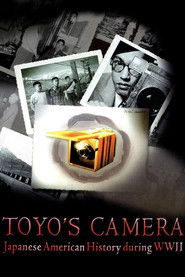
Even though bringing in cameras to the internment camps was prohibited, one man managed to smuggle in his own camera lens and build a camera to document life behind barbed wires, with the help of other craftsmen in the camp. That man was Toyo Miyatake, a successful issei (first generation immigrant) photographer and owner of a photo-shop in the Los Angeles Little Tokyo district, and of one of the many Americans who was interned with his family against his will. With his makeshift camera, Miyatake captured the dire conditions of life in the camps during World War II as well as the resilient spirit of his companions, many of whom were American citizens who went on to fight for their country overseas. Miyatake said, "It is my duty to record the facts, as a photographer, so that this kind of thing should never happen again."Guardian or a Guard: Episode 2
1983
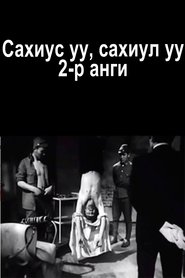
A film showing the activities of the Mongolian Chekists in the form of an adventure. Chekists means spies.Hard Hat Riot
2025
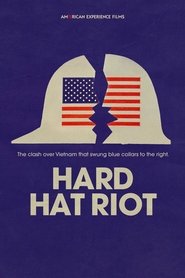
Hard Hat Riot
2025
On May 8, 1970, construction workers violently clashed with students demonstrating against the Vietnam War in lower Manhattan. The workmen, who came to be known as “hardhats,” were at the cutting edge of a new kind of class war. With the war in Vietnam raging on, it was the sons of the working class who were doing most of the fighting. Workmen saw the protesting students as privileged “draft dodgers” disparaging the country and those who fought for it. On the other side, many student activists saw the workers as pawns, unwilling to see the changes that America needed. Hard Hat Riot tells the story of a struggling metropolis, a flailing president, a divided people, and a bloody juncture when the nation violently diverged ― culminating in a new political and cultural landscape that radically redefined American politics and foreshadowed the future.Ghost
2016
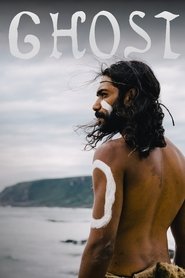
Ghost
2016
Based on a true story, Ghost is a re-imagining of convict William Buckley's first contact with the indigenous Australians.The Children of 209 Saint-Maur Street
2017
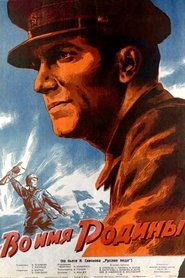
star 7.8After selecting a building at random in a Jewish neighborhood in Paris, French director Ruth Zylberman meticulously reconstructed its community of inhabitants during the German occupation. What results is the spellbinding 209 RUE SAINT-MAUR, an experimental historiography that tells the emotional story of lives uprooted and destroyed under the Nazis.In the Name of the Motherland
1943
star 4.5The film deals with a Russian battalion under siege by the Germans during the Second World War.The Rose and Women of Versailles
1980
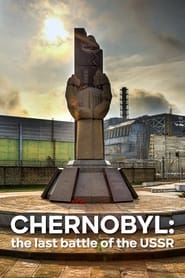
In its 22 minutes, the TV special briefly covers the influential women involved in the series, such as DuBarry, Polignac, Rosalie, Jeanne La Motte, Maria Antoinette, and Oscar. All the scenes used are taken from the series.Chernobyl: The Last Battle of the USSR
2021
star 8.4Three decades after the nuclear explosion, almost everything has been said about this ecological and sanitary disaster that made Pripiat a part of History. How did the greatest industrial disaster change the course of History, disrupt global geopolitics and, directly or indirectly, redistribute the balances and power relations of the twentieth century? The world will never be the same again. By retracing the incredible battle waged by the Soviet Union against radiation, this film proposes to retrace and enlighten an extraordinary story, while exploring the historical stakes in the medium and long-term…Downpour
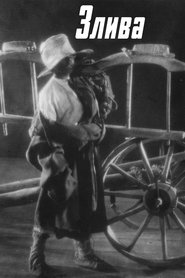
1929
Downpour
1929
The lost film about the peasant rebellion of the 18th century in Ukraine, led by Maksym Zalizniak and Ivan Honta. The history of the haydamak movement became a trigger for authors to have experiments in the field of film language: shooting against the background of black velvet, focus on the static character of the picture, the sculptural nature of composition mise-en-scène solutions, replacement of dramatic collisions with cinema engravings depicting the historical past.Sultan Beybars
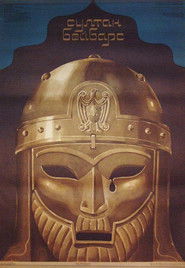
1989
Sultan Beybars
1989
The second part of a historical film dilogy based on the story “Emshan” by Maurice Simashko. XIII century. Equal to God, Sultan Beybars — the ruler of Egypt, who has the largest fleet in the Mediterranean, crushed the Crusader troops and countless hordes of Genghis Khan's descendant – recalls the life path he passed before ascending to the throne of the ruler.Bread and Salt
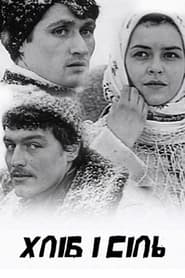
1970
Bread and Salt
1970
A group of peasant farmers in turn-of-the-century Ukraine leaves home in search of better luck in Siberia. The story follows those who stay behind and their dispute with the landowner, as well as a love triangle involving a local beauty and two young men.Тень врага
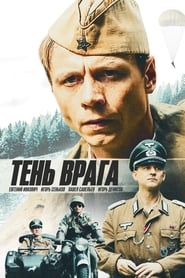
2017
Тень врага
2017
1943, territory occupied by German troops. The Soviet intelligence officer is given the task to get behind enemy lines and get secret documents. His task is complicated by the fact that he must complete this task alone and that an insidious and dangerous enemy in the person of the Abwehr counterintelligence captain, who considers it a matter of honor to personally catch a Russian saboteur, is on his trail.Titanic: How It Really Sank
2009
star 6.6The sinking of the Titanic was far more than a simple accident. It was a tragedy that could have been prevented. It was the result of a long chain of mistakes: a fatal series of avoidable human errors that sent the Titanic and more than half of her passengers to their watery graves. Based around the official inquiry held immediately after the event, plus evidence that's come to light since the wreck of the Titanic was discovered in 1985, National Geographic, in this drama-documentary special, answers the question: Who Sank the Titanic?This Is How Mayakovsky Began
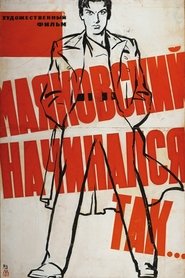
1959
Based on the autobiographical book "Ya -sam" (I-myself) by Vladimir Mayakovsky the leading Russian Futurist poet of the beginning of the 20th century. He was born in 1893, into a Russian Cossack family in the Transcaucasian kingdom of Georgia, then part of Russian Empire. There he spent his childhood and boyhood attending a grammar school in Kutaisi. Mayakovsky moved to Moscow at the age of 14, after his father's death. He became a poet, an artist, an actor, a writer/director and public speaker.