Popular History Movies - Page 464

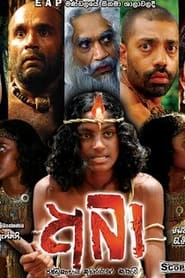
Abá
2008
Abá
2008
star 8The childhood story of king Pandukabhaya (474 BC - 367 BC), the 6th monarch of Sri Lanka.Operation Foxley: The Assassination of Hitler
2017
Throughout his time as head of the Nazi party, Adolph Hitler evaded numerous attempts to assassinate him. However the secret Operation Foxely came the closest to succeeding. Based on declassified World War II documents from the British secret service, this award-winning film reconstructs the detailed plan that nearly resulted in the murder of the notorious German Fuhrer, and why it failed.Prepare to Launch
2022
Prepare to Launch
2022
A look into the life of American astronaut John S. Bull from the original class of 19 astronauts chosen to go to the Moon in the 60's.The Giant
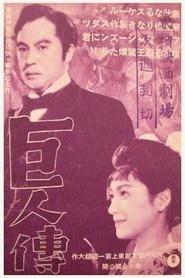
1938
The Giant
1938
star 6Japanese adaptation of LES MISERABLES. The last film of director Itami took inspiration from Les Miserables. Transpiring during the Southwestern War of 1877 in Japan, which was the last civil war in the country, a criminal escapes prison only to be found by a monk. The criminal decides to turn a new leaf based on their conversation and goes on to become a town's mayor. He hears news of a mistaken arrest and identity. The revelation of truth is the start of a series of miseries.Red Snow
2013
Red Snow
2013
A young lieutenant must persuade a captive resistance fighter to betray his comrades, or enforce a law which states that for every German soldier killed, one hundred civilians must be executed.Amalia
2011
Amalia
2011
Olympics! The French Games
2024
star 7.727 Olympic and Paralympic champions, aged 20 to 100, share their stories in this Mickaël Gamrasni documentary narrated by actress Marion Cotillard. As heirs to previous generations, they trace the incredible genealogy of French Olympism. The documentary revisits over a century of French participation in the Olympics, from their inception in 1896 to the recent feats that have elevated France to the summit. It’s a human adventure, brimming with memories, acts of bravery, and epic emotions: the collective narrative of France winning.Rabiha
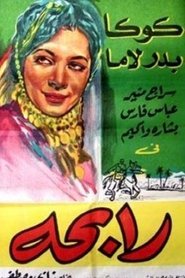
1943
Rabiha
1943
(Rabha) is a Bedouin girl from a fanatical tribe. She meets by chance a young man from the city while he is on a hunting trip. Love grows between them and they agree to marry. However, her tribe does not approve of their daughter’s marriage to a non-Bedouin young man, and they decide to marry her to her cousin, so Rabha escapes from the tribe to her lover. On her wedding day, her lover, Nabil, decides to kidnap her and let her live with him despite the social difference.Pulakapina
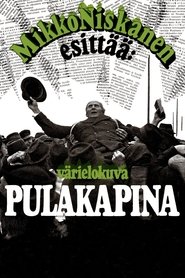
1977
Pulakapina
1977
Based on a true story about the so called 1932 Horse Rebellion in Nivala, Finland. The decision to put down a sick horse owned by a poor farmer rises the farmers in open rebellion against the authorities.Die Luther Matrix
2017
Die Luther Matrix
2017
star 4What connects a modern-day whistleblower with Martin Luther? Documentary and sophisticated crime entertainment merge in "The Luther Matrix" to create an exciting docu-thriller. Using historical locations and interviews with renowned Luther experts, a crime story is woven around a whistleblower in the Federal Chancellery and current assessments of and about Martin Luther are given.Dawn
1968
Dawn
1968
A historical feature film showing how the people's party led by D. Sukhbaatar, the leader of the People's Revolution of 1921 and the general of all military forces, destroyed the oppressors at home and abroad and brought the dawn of a free life to the country.The Mill and the Cross
2011
star 6.4What would it be like to step inside a great work of art, have it come alive around you, and even observe the artist as he sketches the very reality you are experiencing? From Lech Majewski, one of Poland's most acclaimed filmmakers, The Mill and the Cross is a cinematic re-staging of Pieter Bruegel's masterpiece "Procession to Calvary," presented alongside the story of its creation.Les Mains Libres
1965
Les Mains Libres
1965
star 10In 1964, Algeria, just two years after the end of the war of independence, found itself catapulted into new contradictions, a still rural territory which responded to the modernity brought by the revolution. Filmed during the winter of 1964-1965 by the young director Ennio Lorenzini, it is the first international Algerian production which paints a rare portrait in color of a multifaceted nation, far from the simplistic vision created by the press and the French army. Produced by Casbah Film, Les Mains Libres (initially titled Tronc De Figuier) bears witness to the stigmata of colonization and the future of free Algeria throughout the Algerian territory and reveals the richness of its landscapes and the diversity of its traditions . The documentary, using the aesthetics of militant cinema of the time, is made up of four scenes: Sea and Desert, The Struggle, The Earth, Freedom.Sucha Soorma
2024
Sucha Soorma
2024
An uncompromising folklore figure of the early 20th century faces a dilemma when his best friend and his sister-in-law are caught in an illicit relationship.Origins
1974
Origins
1974
star 1The family history (1917-1941) of a hereditary steelworker who began his career before the revolution at the factory of the German industrialist Heitel.Without Prejudice
1947
Without Prejudice
1947
star 7The film was made on the basis of the literary version of events in the life of the famous Russian ethnographer, anthropologist, biologist and traveler who studied the indigenous population of South-East Asia, Australia and Oceania.Hippocrates And Democracy
1972
star 6The father of medical in Kos, Hippocrates, believes that illnesses can be treated with medicines and herbs instead of prayers and comes into conflict with the medical establishment of the island. Leaving Kos, he goes to Athens, where he is called to face a plague for save the city.The Battle of Bang Rajan
1966
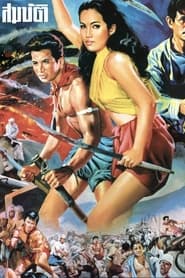
This movie is about Bang Rajan village. This village is located north of Ayutthaya, the old capital of Siam, predecessor state to modern Thailand. The village played a famous role related to its resistance against the Burmese in the war that saw the destruction of Ayutthaya city in 1767. Tap is a Siamese soldier leader. Siamese people have internal conflicts while they are also fighting with Burma.