Popular History Movies - Page 480

Close to Vermeer
2023
Close to Vermeer
2023
star 7.9In the year before he retires, Gregor Weber, a globally renowned Vermeer expert and flamboyant curator at the Rijksmuseum in Amsterdam, works on his big dream: the largest Vermeer exhibition ever. Together with Weber, a number of enthusiasts and experts go in search of what truly makes a Vermeer a Vermeer.Crimson Moon
2015
Crimson Moon
2015
Crown Prince Sado spirals down due to his own insanity and his father King Yeongjo's complex.The Return of She-Wolf
1990
star 3A young couple arrives to the palace, where years ago the Countess Julia, She-Wolf was terrorising its inhabitants. Soon the ghost of the Countess attacks the fiancée.Zwei Leben für Europa
2022
In the chaotic, highly emotional period after the First World War in 1918, the foreign ministers Gustav Stresemann (1878-1929) and Aristide Briand (1862-1932) put all their energies into trying to lead their countries, Germany and France, which were at enmity with each other, into a peaceful future and a united Europe. After their deaths, Europe has to go through a second hell before the plan of these two visionaries succeeds. The cinematic mix of archive footage and re-enactments shows two statesmen, full of facts and emotion, who give each other nothing in difficult negotiations, but at the same time hold on to their shared vision. Even if these two human lives were not enough to reap the fruits of their labor, they sowed the seeds for the next generation. In 1926, Aristide Briand and Gustav Stresemann were awarded the Nobel Peace Prize. It is a sign that the peoples of the world believe in a Europe at peace.The Dreyfus Affair
1908
The Dreyfus Affair
1908
star 5In this interesting picture we are given a vivid idea of the principal incidents connected with the Dreyfus case, which caused such a stir in military circles in the year of 1894. Alfred Dreyfus, an officer on the general staff, was charged with selling secrets to a foreign power. He was tried and judged guilty on flimsy evidence, and sentenced to imprisonment on Devil's Island, where he remained for eight years, until his influential friends, who took up his case in earnest, proved it was a plot formed by other officers, who subsequently confessed to having forged the documents.Red River Valley
1996
Red River Valley
1996
star 6.3At the turn of the century, a young Chinese girl escapes from a religious sacrifice, and is rescued by an honorable Tibetan herdsman. The two fall in love, but problems arise when she is ignorant of their time-honored traditions and runs into trouble with a glamorous and proud Tibetan princess. Meanwhile, a British expedition is planning to invade the sacred mountain. Facing the country's enemy, the three set aside their disputes and jealousy, and join the militia force to protect their homeland.On This Land
2025
On This Land
2025
In late 18th-century Russia, village life is shaped by a fusion of rural superstitions, pagan beliefs and traces of Orthodox Christianity. Twin girls are violently separated when one is believed to be possessed, accused of draining the vitality of her sister. Meanwhile, a young man, branded a freak and outcast, obsessively constructs mechanical wings in a desperate attempt to fly like Icarus. Overseeing this turbulent world are Europeanised feudal lords who maintain brutal, cynical control over the peasants, exacerbating class tensions.Telekinesis
2023
Telekinesis
2023
star 3Moscow, 1977. Scientists are studying paranormal phenomena in a full secrecy. A professor-physicist, an expert in telekinesis and hypnosis, encounters an inexplicable force, the existence of which is impossible to believe in. Сonsequently, his daughter Anna finds out she is gifted with a horrifying deathful power.Tragedy in the House of Habsburg
1924
The story tells of a family tragedy that is based (not always factually accurate) on a well-known tragedy involving the ruling family of Austria-Hungary in 1889. Various names have been changed.Elon Musk's Crash Course
2022
Elon Musk, the world's richest person, has claimed since 2015 that, for Tesla, technology for self-driving cars is a "solved problem," and made outlandish claims about Autopilot capabilities. But a New York Times investigation reveals the quixotic nature of Musk's pursuit of self-driving technology, and the tragic results.Zalongo, the Fort of Freedom
1959
star 4The heroic Souli have managed to repel the asker of Ali Pasha and his brave Malamos Dragon sends his mother to ask her hand Maro, niece of the captain Tzavelena. She ignores the hatred that separated years both Families and agrees to give her niece, but to know that Maro loves Kitsos Botsari. When the son of Fotos Tzavellas engage Maro with Kitsos, the Malamos drowns his pain and unleashes his rage against the Turks, who are trying again to get the Souli.Pierre de Ronsard, Gentleman from Vendôme
1970
We follow Ronsard to the Loire Valley, listening to him evoke his loves through odes and sonnets. Thus, Cassandre, Marie d'Angevine, Hélène de Surgères come back to life for a few moments for us. This evocation does not forget the friendship between Ronsard and another great poet of the 16th century, also born on the banks of the Loire, Joachim du Bellay. It takes us to the castles of Blois and Taley, to the manor of La Denysière, to Couture, Ronsard's birthplace, and to the priory of Saint-Cosme-les-Tours, where the poet died.The Pharaoh Who Conquered the Sea
2010
Over three thousand years ago, legend has it that Queen Hatshepsut, Egypt's first female pharaoh, sent a fleet of ships to the wonderful, distant land of Punt. A bas-relief in the temple where she is entombed in Luxor shows them bringing back extraordinary treasures. But did this expedition really happen? And if it did, where exactly is the land of Punt? Drawing upon recent finds, the archaeologist Cheryl Ward sets out to recreate the voyage, in a full-size replica of one of these ancient ships, sailing it in the wake of Hatshepsut's fleet, in search of the mythical land of Punt. A human adventure as well as a scientific challenge, the expedition proves that, contrary to popular belief, the ancient Egyptians had the necessary tools, science and techniques to sail the seas.The Kaptain: The Story of Francesco Silvestre
2025
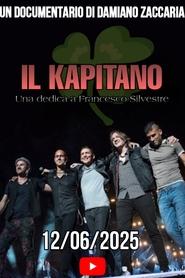
star 10Modà is one of the most famous Italian bands of all time, especially thanks to their amazing leader Francesco Silvestre, known as Kekko. This is their story, but most importantly, his story... A documetary approved by Kekko Silvestre himselfDe Nuremberg à Nuremberg
1989
star 5.9Frédéric Rossif and Philippe Meyer draw the terrible fresco of the Second World War of the rise of Hitler and the Nazi party until his ultimate defeat (1933-1945). While carefully describing the sequence of events, they go back to the genesis of fascism, and the picture they draw from this first half of the twentieth century is both lucid and frightening. A page of history illustrated by a large number of unpublished documents.Nefertiti: Resurrected
2003
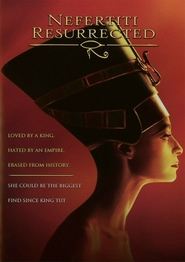
star 6.7Has the famed Egyptian beauty, Queen Nefertiti, been found in a secret chamber deep in the Valley of the Kings? A Discovery Channel Quest expedition led by Dr. Joann Fletcher and a team of internationally renowned scientists from the University of York Mummy Research Team hopes to find out. If they find her, it will be one of the greatest archaeological discoveries since Nefertiti's stepson, King Tutankhamen, was discovered in 1922. The "Great Royal Wife" of the renegade Akhenaten, Nefertiti was a mother of six who helped lead a religious revolution that changed Egypt and the world forever. Yet after her death, her enemies destroyed all evidence of her life. Now, drawing on 13 years of research, Fletcher and her team bring Nefertiti's turbulent reign to life like never before with cutting-edge computer animations to recreate ancient Egypt's great temples, x-rays to reveal the telltale signs of foul play on her mummy, and forensic graphics to recreate the mummy's face.Doctor Who: The Doctor's Meditation
2015
star 10The Doctor contemplates a journey to see an old acquaintance and digs a well. Released in cinemas alongside the 3D double-bill of Dark Water and Death in Heaven.Stephen, the King
1984
Stephen, the King
1984
star 7.3István, a király ("Stephen, the King") is a Hungarian rock opera written by Levente Szörényi (music) and János Bródy (lyrics), based on the life of Saint Stephen of Hungary. The storyline was based on the play Ezredforduló (Turn of the Millennium) by Miklós Boldizsár, who co-wrote the libretto. The opera was first staged in 1983 on an open-air stage in Budapest. This first performance was also made into a 1984 film, directed by Gábor Koltay, and its music released on an album. The musical became a smash hit and is still very popular in Hungary and among Hungarian minorities in neighboring countries.