Popular Documentary Movies - Page 464

A RAD Documentary
2025
A RAD Documentary
2025
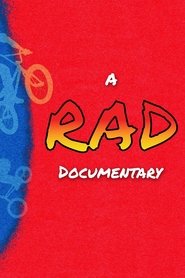
star 8.2The official documentary about the 1986 cult classic RAD. It features exclusive interviews with cast, crew and the BMX legends who performed the stunts, and revisits and explores iconic moments from RAD.The Chocolate Farmer
2011
The Chocolate Farmer
2011
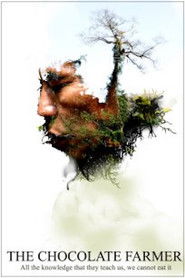
star 7For ancient Mayans, cocoa was as good as gold. For subsistence farmer Eladio Pop, his cocoa crops are the only riches he has to support his wife and 15 children. As he wields his machete with ease, slicing a path to his cocoa trees, the small jungle plot he cultivates in southern Belize remains pristine and wild. His dreams for his children to inherit the land and the traditions of their Mayan ancestors present a familiar challenge. The kids feel their father's philosophies don't fit into a global economy, so they're charting their own course. Rohan Fernando's direction tenderly displays a generational shift, causalities of progress in modern times and a man valiantly protecting an endangered culture. Breathtaking vistas of lush rainforests contrast with the urban dystopia that pulled Pops children away from him. Will one child return to carry on a waning way of lifeOutfoxed: Rupert Murdoch's War on Journalism
2004
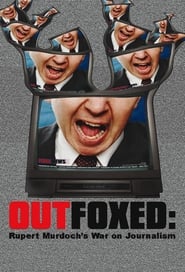
star 7.1This film examines how media empires, led by Rupert Murdoch's Fox News, have been running a "race to the bottom" in television news, and provides an in-depth look at Fox News and the dangerous impact on society when a broad swath of media is controlled by one person. Media experts, including Jeff Cohen (FAIR) Bob McChesney (Free Press), Chellie Pingree (Common Cause), Jeff Chester (Center for Digital Democracy) and David Brock (Media Matters) provide context and guidance for the story of Fox News and its effect on society. This documentary also reveals the secrets of Former Fox news producers, reporters, bookers and writers who expose what it's like to work for Fox News. These former Fox employees talk about how they were forced to push a "right-wing" point of view or risk their jobs. Some have even chosen to remain anonymous in order to protect their current livelihoods. As one employee said "There's no sense of integrity as far as having a line that can't be crossed."I Want to See
2008
I Want to See
2008
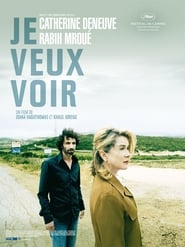
star 5.7July 2006. Another war breaks out in Lebanon. The directors decide to follow a movie star, Catherine Deneuve and a friend, actor and artist Rabih Mroue;, on the roads of South Lebanon. Together, they will drive through the regions devastated by the conflict. It is the beginning of an unpredictable, unexpected adventure...Celebrate Cinema 101
1996
Celebrate Cinema 101
1996
This film project was made in 1996 to commemorate the 100th anniversary of the birth of the cinema.Van Halen: The Van Halen Story
2003
star 7.2"The VAN HALEN Story: The Early Years", chronicles the rise of four young musicians from their formative years to their transformation into a worldwide phenomenon. Hear the group's gripping tale told by the people who were there when it all began childhood friends, fellow musicians, roadies, bodyguards, producers, and the band themselves. Rare footage and never-before-seen photos help to further document their remarkable story.Beautiful Mistake
2000
Beautiful Mistake
2000
This documentary film follows a group of Welsh musicians interacting and playing in the studio. Combining shots of the city with the music of John Cale as performed by Welsh stars such as Catatonia, Big Leaves and Manic Street Preachers.Song for Our People
2021
Song for Our People
2021
Song For Our People is an inspiring new documentary about a group of a professional musicians and artists who come together one day in a Brooklyn recording studio to create a powerful new anthem to honor the perseverance of their African-American ancestors, and to energize the on-going fight for a more just American society.A Vermelha Luz do Bandido
2009
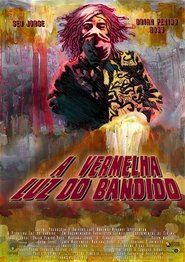
Experimental documentary short that debates over Rogério Sganzerla's Brazilian cult classic "The Red Light Bandit".Revenge of the Electric Car
2011
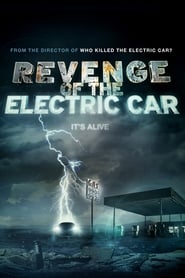
star 7.2A sequel to 2006's Who Killed the Electric Car?, director Chris Paine once again looks at electric vehicles. Where in the last film electric cars were dismissed as uneconomical and unreliable, and were under multiple attacks from government, the auto industry, and from energy companies who didn't want them to succeed, this film chronicles, in the light of new changes in technology, the world economy, and the auto industry itself, the race - from both major car companies like Ford and Nissan, and from new rising upstarts like Tesla - to bring a practical consumer EV to market.The Children are Watching
1999
Special following four families who are raising teenagers, and capturing candid, often disturbing situations which reveal the direct connection between parents' behavior and the ways their kids are mirroring or reacting to that behavior.Tom Felton Meets the Superfans
2015
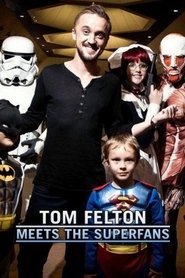
star 7.4In his directorial debut, Tom Felton, who played the villainous Draco Malfoy in the hugely successful Harry Potter films, meets the world's most committed fans in a bid to understand what drives them.Colosseum - Rome's Arena of Death
2003
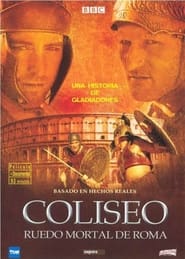
star 7.2Colosseum: Rome's Arena of Death aka Colosseum: A Gladiator's Story is a 2003 BBC Television docudrama which tells the true story of Verus a gladiator who fought at the Colosseum in Rome.DeKooning Passed
2020
Bruno & Bettina
2018
Bruno & Bettina
2018
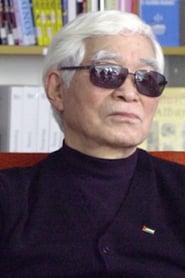
Masao Adachi, the author and director of experimental works and pinku-eiga in the 1960s, was a member of the Japanese New Left that shifted from being a filmmaker to a guerrilla fighter. In 1974, he joined the Japanese Red Army in Lebanon, which worked closely with the Popular Front for the Liberation of Palestine. Filmmaker Lutz Dammbeck met Adachi in Tokyo in 2018 and talked with him about a wide range of topics, including art, revolution, the influence of western avant-garde art and American underground; the Japanese Red Army; collaboration with secret services; the role of the Left after 1968; and the reasons for failures of leftist ideas and strategies.They Live by Night: The Twisted Road
2007
star 5Documentary short on the making of "They Live by Night" (1948).Caterpillars
2020
Caterpillars
2020
star 9.5Elvis Sabin’s assured debut follows Albert and André, two Central African Aka Pygmies, as they attempt to establish a new education system in their forest community. The last in their village still attending school, they are determined to pass their knowledge on, holding classes for other Aka children every afternoon. But their project requires funding and they are counting on the year’s caterpillar (known as “Makongo”) harvest to provide much needed income. Evocatively capturing the visual and sonic textures of the forest, Makongo is a layered ethnographic study of two men working to build a sustainable future for their community.Roger Rabbit and the Secrets of Toon Town
1988
star 5.8A behind-the-scenes documentary hosted by Joanna Cassidy on the making of Who Framed Roger Rabbit.Zechmeister
1981
Zechmeister
1981
star 5The authentic story of Maria Zechmeister who lived in an Upper Austrian village and was convicted of the murder of her husband. There was no evidence and no confession. Only rumors. Maria and the witnesses re-enact the trial before the camera. They tell about the marriage, the time the husband was a prisoner of war and his return from captivity. If he really had been poisoned or if she was a victim of injustice remains open. Maria Zechmeister was pardoned after serving 17 years in prison and lives in an isolated house at the outskirts of the village.A Hero Who Kicks
2022