Popular Family TV Shows - Page 163

Little Champ
2013
Little Champ
2013
Little Champ is a Philippine television drama that premiered on March 18, 2013 on ABS-CBN and worldwide on TFC. It stars Sen. Lito Lapid, Jhong Hilario, and JB Agustin.荒年全村啃树皮,我有系统满仓肉
2025
荒年全村啃树皮,我有系统满仓肉
2025
Who Does Housework Anymore?
2025
star 6Shiho Murakami is a housewife who struggles to raise her 2-year-old daughter and complete her housework. She happens to meet and interact with various people such as a working mother, an elite bureaucrat, who all have similar problems related to housework.Monica and Friends
2022
Monica and Friends
2022
star 8.8When popular Carminha Frufru's party is mysteriously sabotaged, Mônica and her friends become the main suspects, and they will need to overcome their insecurities and reveal their secrets to decipher the mystery.The Island Doctor
2018
Dani's House
2008
Dani's House
2008
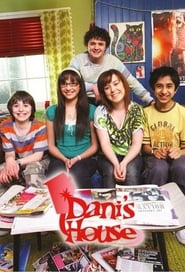
star 5.7Dani is a teenage actress and singer who is regularly left in charge of her younger brother Max, his friend Ben, and their youngest baby sibling, "the baby from hell" who is only shown in a cot. As they go about their lives, they encounter some bizarre situations. Meanwhile, two aliens known as Coordinators observe their actions.Nevinní
2011
Esther's Notebooks
2018
Esther's Notebooks
2018
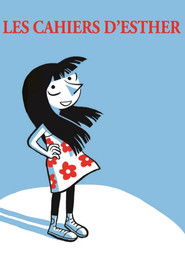
star 6Based on true stories told by Esther A.*, Esther’s Notebooks draw us into the daily life of a girl talking about school, friends, family, and pop stars. In these 52 episodes, Esther tells you about her life with a lot of humor and emotion and dresses a real today’s life society portrait, seen through the eyes of a 10 year old.Toad & Friends
2023
Toad & Friends
2023
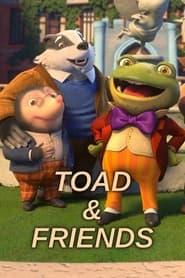
Kenneth Grahame’s literary classic ‘Wind in the Willows’ springs to life in this new series following the further adventures of the much loved characters: kind and considerate Mole, reliable Rat and of course incorrigible Toad. Situated on and around the river that is such a big part of their lives and landscape, they are now joined by irrepressible Hedge the Hedgehog, Kingfisher, Heron and Adder. And let’s not forget the scheming Weasels who still want to take over Toad Hall, for whomever controls Toad Hall controls the River. The series embraces all the values of the original book – endeavour, adventure, teamwork and kindness – and is set to become a modern classic.Little Women
1978
Little Women
1978
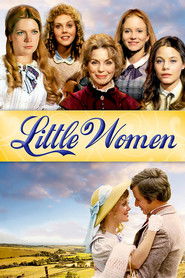
star 5.2The two part miniseries chronicles the lives and loves of the four March sisters – Jo, Meg, Amy and Beth – growing up during the American Civil War. While their father leaves for battle, the sisters must rely on each other for strength in the face of tragedies both large and small.Polka Dot Door
1971
Polka Dot Door
1971
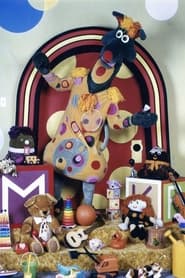
Polka Dot Door was a long-running Canadian children's television series produced by the Ontario Education Communications Authority from 1971–1993. PDD was created and developed by a team of employees from TVOntario hired and led by original series producer-director, Peggy Liptrott. Significant contributors to the creation and development of the series in 1971 included Executive Producer Dr. Vera Good who laid the conceptual foundation of the show, Educational Supervisor, Marnie Patrick Roberts, Educational Consultant L. Ted Coneybeare, Script Writers/Composers, Pat Patterson and Dodi Robb, Animator Dick Derhodge and Dr. Ada Scherman, a professor at the prestigious Institute of Child Study in Toronto who was consulted in the early stages of PDD's development and is responsible for giving the show its name.Gu Gu the Cat
2014
Gu Gu the Cat
2014
star 6About a lady and her cat. The lady's cat dies and she loses all inspiration to continue living, and doing her work from home job. One day when forced to get out of her house for a while she finds and orphaned kitten in the park. The kitten is sick and she takes the kitten to the vet. This kitten brings her out of her depression and gives her new hope.Anne of Green Gables: The Animated Series
2001
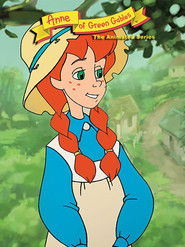
star 6.3Anne: The Animated Series was a half-hour animated television show produced by Sullivan Entertainment and created by writer/director/producer Kevin Sullivan. The series was developed for PBS and each episode contained an educational aspect. Each show had a problem for one or more of the show’s characters to face and solve. In conjunction with these problems, PBS “Ready-to-Learn” guides were created for teachers in America to use in the classrooms. The educational objectives of the show support a child’s development of his/her identity, reinforced through lateral thinking and the use of a child’s magnitude to absorb daily challenges, and it also appeared on some VHS tapes from Lyrick Studios, HiT Entertainment and Nest Family Entertainment. More recently, Sullivan Entertainment has re-written the “Ready-to-Learn” educational guides for the not-for-profit organization Free the Children. Free the Children will implement these Anne Lesson Plans in the Kenyan Schools they havePendlerkids
2012
Pendlerkids
2012
star 8.5Kasper's parents are divorced. Every other weekend he takes the train between Jutland and the capital with a group of other children. Kasper finds it difficult to make friends, but he has a talent for rapping and it gives him a strong connection with another outsider Tobias, who makes music on his computer. On the train the two boys make a rap CD for a pretty girl named Marie. It turns out that her father is a famous judge on a popular talent show on television. That opens up new opportunities for boys, but it also creates jealousy among the popular kids in the railway car.The Poor Rich Man
1991
The Poor Rich Man
1991
Hector's House
1967
Hector's House
1967
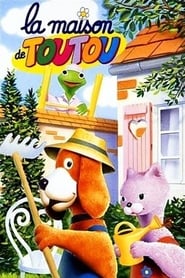
Hector's House is a children's television series using hand puppets. Like the better known The Magic Roundabout it was actually a French production revoiced for a British audience. A gentle, rather than subversive or outright bizarre, series, it was first broadcast in 1965. Its French title was La Maison de Toutou and the French version was written by Georges Croses. "La Maison de Toutou" translates as "The House of the Doggie" and in the French version, Zsazsa is known as ZouZou. In the UK, it was screened in the late 1960s and early 1970s for its 5-minute-long screenings on BBC 1 at 5.40 p.m. before the News. The main characters, affable Hector the Dog and cute Zsazsa the Cat, live in a house and beautiful garden. Kiki the Frog, dressed in a pink smock, is a constant and at times an intrusive visitor, through her hole in the wall. Despite Hector's willingness to endlessly help them out, Kiki and Zsazsa often played tricks on him to teach him a lesson, leading him to say his catchphrase at the end of the episodeEge'nin Hamsisi
2018
Haru and Natsu
2005
Haru and Natsu
2005
star 7.8As Haru emigrates from Japan with her family to the coffee plantations in Brazil, Natsu is left behind in the care of spiteful relatives. Losing all contact, each must make her own way in an unforgiving world. Hardships abound in the struggle to survive in war-torn Japan and in the face of anti-Japanese sentiment in Brazil, financial ruin, familial pressure, abandonment and lost love. However they also experience the precious joy of survival and success. Now, after 70 years, Haru comes back to Japan to find her estranged sister.La madre
1998
La madre
1998