Popular Reality TV Shows - Page 39

Everlasting Classics
2018
Everlasting Classics
2018
Risqué Business: Japan
2023
star 7.2Shin Dong-youp and Sung Si-kyung dive into adult entertainment in Japan, meeting people from all walks of life to demystify the "taboo" experience.A Chef at the Shack
2013
A Chef at the Shack
2013
Martin Picard and his crew share their madcap universe: the world of the Au Pied de cochon sugar shack!爆梗脱口秀
2024
爆梗脱口秀
2024
Homestead Rescue
2016
Homestead Rescue
2016
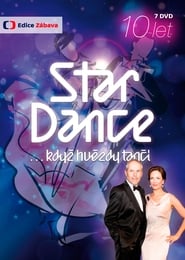
star 6.5Expert homesteader, Marty Raney, along with his daughter Misty and son Matt, give struggling families a second chance at surviving off-the-grid. The stakes are high, but the Raney family is determined to prepare these families for nature’s worst and set them up for success.StarDance
2006
NCT LIFE
2016
NCT LIFE
2016
star 9Variety show featuring South Korean boy band NCT and their life in the city at various locations around the world.Tournament of Champions
2020
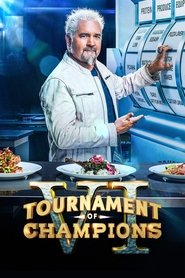
star 7.5Host Guy Fieri gathers the world's greatest chefs for the most-intense culinary competition ever held. Emotions run high in the single-elimination, sudden-death bracket tournament as the competitors face off in head-to-head battles to stay alive. As the pressure mounts, shocking surprises unfold both inside and outside the arena. All the chefs have the talent and skill to walk away with the ultimate championship title in food, but only one will win the Tournament of Champions.Michael McIntyre's The Wheel
2020
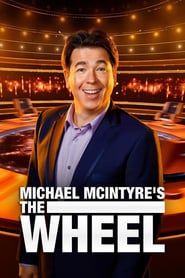
star 5.8Michael McIntyre hosts a gameshow packed with huge stars, big laughs and a giant spinning wheel. Can the contestants, guided by celebrity experts, answer their way to a fortune?The X Factor
2011
The X Factor
2011
star 4.8The X Factor was a singing competition on a mission to find America’s next undiscovered superstar. The X Factor, on FOX is going to give someone like you the chance to win a $5 million recording contract with Sony Music. What’s great about The X Factor is that it is open to anyone – vocal groups and solo singers, over the age of 12 – and there’s absolutely no upper age limit.Iron Chef
1993
Iron Chef
1993
star 6.9Iron Chef is a Japanese television cooking show produced by Fuji Television. The series, which premiered on October 10, 1993, is a stylized cook-off featuring guest chefs challenging one of the show's resident "Iron Chefs" in a timed cooking battle built around a specific theme ingredient. The series ended on September 24, 1999, although occasional specials were produced until 2002. The series aired 309 episodes. Repeats are regularly aired on the Cooking Channel in the United States and on Special Broadcasting Service in Australia. Fuji TV will air a new version of the show, titled Iron Chef, beginning in October 26, 2012.Roadkill
2012
Roadkill
2012
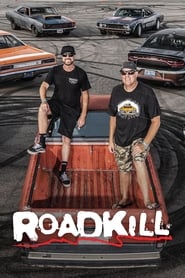
star 9.3Ride along with Hot Rod's David Freiburger and Mike Finnegan as they continue their love/hate relationship with hot rods, street machines and other highly strung performance vehicles. In Roadkill, Freiburger and Finnegan hit the road in everything from a 1968 Ford Ranchero to a 1500 horsepower Camaro called the F-Bomb. Just getting to their destination is an adventure.Robinson
1997
Robinson
1997
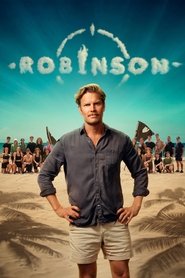
star 6Expedition Robinson is a Swedish reality television program in which contestants are put into survival situations, and a voting process eliminates one person each episode until a winner is determined. The format was developed in 1994 by Charlie Parsons for a United Kingdom TV production company called Planet 24, but the Swedish debut in 1997 was the first production to actually make it to television.Beat-Club
1965
Beat-Club
1965
star 8.3Beat-Club was a German music program that ran from September 1965 to December 1972. It is notable for being the first German show to be based around popular music, and featured artists such as The Equals, Grateful Dead, Zager and Evans, Cream, Frank Zappa, The Rolling Stones, Gene Pitney, Ten Years After, Rory Gallagher, Led Zeppelin, Jimi Hendrix, Ike & Tina Turner, The Who, Black Sabbath, Harry Nilsson, David Bowie, The Bee Gees, The Beach Boys, Chicago, The Doors, Kraftwerk and Robin Gibb in its seven-year run. In 1972, it was replaced by Musikladen.Whenever Possible
2024
Whenever Possible
2024
star 8.3We're looking for someone who has free time to hang out with us. Whenever Possible.Wow The World
2025
Wow The World
2025
star 8A squad of celebrity travel junkies forms the Global Vibe Tribe, tracing Earth's pulse to uncover its freshest hidden gems. Through wildly original journeys, they chase universal joy across the planet, one vibing destination at a time.Samschtig-Jass
1981
Samschtig-Jass
1981
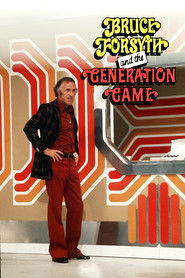
The Generation Game
1971
The Generation Game
1971
star 9The Generation Game was a British game show produced by the BBC in which four teams of two competed to win prizes. The programme was first broadcast in 1971 under the title Bruce Forsyth and the Generation Game and ran until 1982, and again from 1990 until 2002. The show was based on the Dutch TV show Een van de acht, "One of the Eight", the format devised in 1969 by Theo Uittenbogaard for VARA Television. Mrs. Mies Bouwman - a popular Dutch talk show host and presenter of the show - came up with the idea of the conveyor belt. She had seen it on a German programme and wanted to incorporate it into the show. Another antecedent for the gameshow was 'Sunday Night at the London Palladium' on ATV, which had a game called Beat the Clock, taken from an American gameshow. It featured married couples playing silly games within a certain time to win prize money. This was hosted by Bruce Forsyth from 1958, and he took the idea with him when he went over to the BBC.7 vs. Wild
2021
7 vs. Wild
2021
star 8.5Abandoned in the swedish wilderness seven candidates struggle to survive for seven days. Everybody has to get along with seven previously selected items and the clothes they are wearing. Who remains after seven days and collected the most points in the challenges of the day wins. No camera crew, no contact to the outer world, complete isolation.