Popular War Politics TV Shows - Page 90

March of Millions
2007
March of Millions
2007
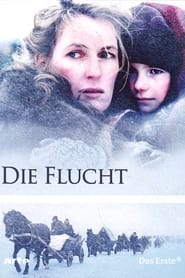
star 4.8In 1944 many Germans in Eastern Prussia believed like Lena von Mahlenberg, daughter of a local aristocrat, that Hitler would surrender and spare them from being invaded by the vengeful Russian Red Army. He didn't and they had to flee.The Color of War
2001
Najdłuższa wojna nowoczesnej Europy
1982
After the defeat of Napoleon, in whom the Poles had placed so much hope for the restoration of their country, a dark night of slavery descended. Poland was wiped off the map of Europe, but it lived on in the hearts and minds of the Polish people. The struggle for Poland continued in various ways and by various means, depending on which partition the former territories of the country found themselves under. In literature, drama, and later in film, the struggle of Polish patriots with weapons in their hands, e.g., in the November and January uprisings against the tsarist regime, found greater reflection and resonance. Relatively little is known and little was known to the general public about the struggle for the liberation of the people of Greater Poland, which was under Prussian rule. And yet it was the "longest war in modern Europe."Iron Curtain: Life Under Soviet Occupation
2024
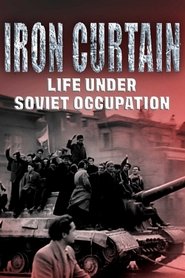
star 7How did the Soviet Union impose its communist ideology on the countries of Central and Eastern Europe after World War II? The story of how, from 1945 until the construction of the Berlin Wall in 1961, these countries were gradually subjected to the totalitarian Soviet yoke.The SS
2002
The SS
2002
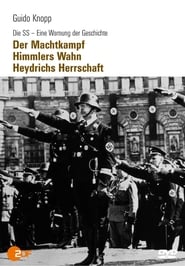
star 9SS — the two letters in old Germanic rune script represent the most effective and dangerous instrument of power of the Nazi dictatorship. The SS represented more than any other Nazi organisation the wild and deadly delusions of those who believed themselves part of the master race. It took only a few years for Hitler's Schutzstaffel to be transformed from an insignificant personal bodyguard to an all-powerful empire of evil. There are personal interviews with survivors and and with those men who served the inhuman SS system. Only now, as their lives draw to a close, are they prepared to speak up. In the world's first television series on the overall history of the SS, this documentary series takes a balanced view with many previously unpublished sources and with witnesses to the history of the SS: victims, perpetrators and opponents.Do krwi ostatniej
1981
Do krwi ostatniej
1981
Поклик кохання
2024
Поклик кохання
2024
Soldier's Lullaby
2019
Soldier's Lullaby
2019
This is a story about the soldiers of a cannon battery in the First World War that, like hundreds of thousands of others, made the glory of the Serbian army become immortal.WW2 Treasure Hunters
2017
WW2 Treasure Hunters
2017
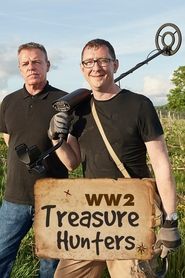
star 7.5WW2 Treasure Hunters pairs Britain's foremost amateur WW2 detectorist with Madness frontman Suggs, as they uncover historical finds from across the UK. Using state-of-the-art technology, original WW2 archives and maps, the pair work together to identify the best places to dig at forgotten sites, including former military bases, airfields, POW camps and barracks. Once located, they then go on to perform extensive digs to excavate the relics. As the artefacts are unearthed, the presenters turn detective, revealing the stories and people behind the finds. They meet with survivors, experts and historians to understand what happened at each of the locations.Putin: A Russian Spy Story
2020
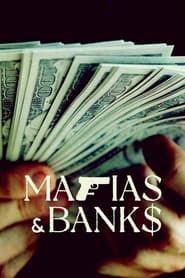
star 7.5How Vladimir Putin has used his experience as a spy to create and lead modern Russia: arrogance, anger and betrayal; military interventions, cyber-attacks and political assassinations.Mafias and Banks
2023
Mafias and Banks
2023
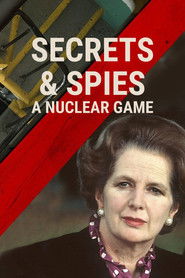
star 6.5How, from the 1920s to the present day, financial power has gradually strengthened a hidden alliance with criminal organizations around the world.Secrets & Spies: A Nuclear Game
2024
star 6.3Betray your country, save the world. Spies and traitors play a dangerous game in the 1980s as the Cold War brings two superpowers to the brink of nuclear war.Dayton
2023
风雪飘落的季节
2012
风雪飘落的季节
2012
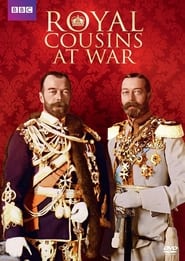
Royal Cousins at War
2014
Royal Cousins at War
2014
star 6.3At the time World War I broke out, the King of England, the Czar of Russia, and the Kaiser of Germany were first cousins. This two-part series looks at the role played by Tsar Nicholas II of Russia, Kaiser Wilhelm II of Germany and King George V of England, and their relationships with each other, in the outbreak of war. Mismanaging their countries and mishandling foreign policy, they failed to adapt to the forces of nationalism and democracy, and so brought tumbling down their own ideal of a Europe governed by the descendants of Queen Victoria. While it was war that delivered the final blow, this fascinating series shows how the problems had set in much earlier. A two part miniseries.Political Target
2006
Political Target
2006
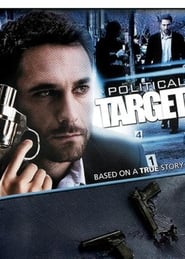
After the shocking assassination of a labor lawyer, an Italian anti-terrorism unit races against time to stop the new incarnation of the Red Brigades from killing their next target — and strike fear at the heart of the State.Embarqué
2014
La buona battaglia – Don Pietro Pappagallo
2006
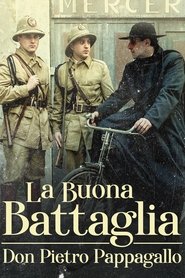
star 7La buona battaglia – Don Pietro Pappagallo is an Italian television miniseries based on the true story of Don Pietro Pappagallo, a Catholic priest and Italian anti-fascist who assisted victims of Nazism and Fascism in Rome during World War II and was arrested and executed in the Ardeatine Caves massacre on March 24, 1944. It was produced by 11 Marzo Cinematografica and Rai Fiction, directed by Gianfranco Albano, written by Stefano Gabrini and Furio Scarpelli, and stars Flavio Insinna as Don Pietro. It was first released in 2006 and is distributed by Radiotelevisione Italiana and RaiTrade.第五空间
2010
第五空间
2010