Popular Documentary TV Shows - Page 217

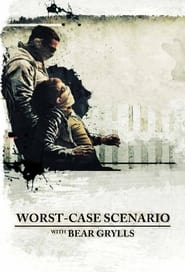
Worst-Case Scenario
2010
Worst-Case Scenario
2010
star 6.4Survival expert Bear Grylls puts himself into potentially life-threatening situations to show the how-to, hands-on, step-by-step instructions on everything you may need to know when faced with a worst case scenario.Most Evil
2006
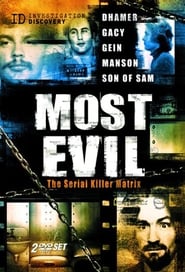
Most Evil
2006
star 7.9Most Evil is an American forensics television program on Investigation Discovery presented by forensic psychiatrist Michael Stone of Columbia University. On the show, Stone rates murderers on a scale of evil that Stone himself has developed. The show features profiles on various murderers, serial killers, mass murderers and psychopaths.Bios
2018
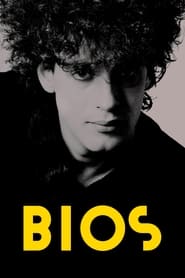
Bios
2018
star 2A fascinating journey through the life and work of many Latin American music idols, by the curious gaze of young chroniclers, with access to exclusive footage.Mystery Lab
2020
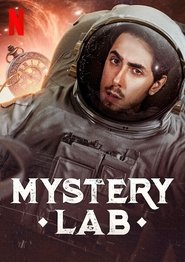
Mystery Lab
2020
star 7.2Host Felipe Castanhari explores science, history, mysteries and marvels, uncovering mind-blowing facts with help from his lab buddies.Blank on Blank
2012
Blank on Blank
2012
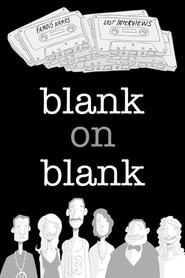
star 7Vintage interview tapes. New animations. The mission is simple: curate and transform journalists' unheard interviews with American icons. The future of journalism is remixing the past.Bróker Marcsi
2025
Nazi Hunters
2022
Nazi Hunters
2022
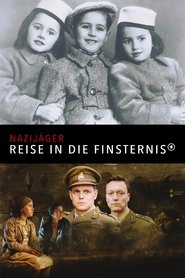
star 2.5Shortly after the end of the Second World War: In 1945 and 1946, the men of the British "War Crimes Investigation Unit" drove through northern Germany on the hunt for Nazi criminals. One of them is Captain Anton Walter Freud, the grandson of Sigmund Freud, the founder of psychoanalysis. Anton Walter Freud fled to London with his family from the Nazis in 1938. Now an intelligence officer, he's back to track down killers on Allied wanted lists: hitmen in pinstripes, brutal SS henchmen, and ruthless doctors who conducted medical experiments even on children. The soldiers who witnessed the liberation of the Bergen-Belsen concentration camp months earlier are not squeamish about it. 24-year-old Freud is a free spirit known for his unorthodox methods. He knows how to make war criminals talk. So he comes across a crime that has hardly been known before, the murder of 20 children in Hamburg in the last days of the war.Ultimate Supercar
2020
Ultimate Supercar
2020
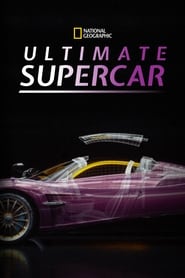
star 8.5Today's high-end high-performance Supercars are an amazing combination of art and science. Super Car Build finds out how they do it and goes behind the scenes at some of the most legendary automotive marques to discover the hidden engineering secrets and keys to each machine's success.千禧之旅
2000
千禧之旅
2000
Great Coastal Railway Journeys
2022
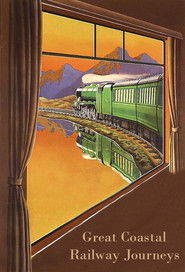
star 7.2From the sea lochs of Scotland to the Jurassic Coast of Dorset, seasoned train traveller Michael Portillo immerses himself in the magnificent scenery of the nation's coastal regions.The Evidence
2021
Kingdom of Plants
2012
Kingdom of Plants
2012
star 7.5Sir David discovers a microscopic world that’s invisible to the naked eye, where insects feed and breed, where flowers fluoresce and where plants communicate with each other and with animals using scent and sound.Cracking the Code
2022
Cracking the Code
2022
star 7From bizarre ancient markings to random numbers and letters, codes and ciphers have been used for millennia to send secret messages, hide identities and operate outside the law. Unravelling these codes can unlock military secrets, unmask deadly enemies and even decode lost civilizations. Now, Cracking the Code uncovers some of the world’s most famous – and infamous – encryptions. Revealing how they were decoded, the brilliant minds who cracked them and the mysterious secrets they were hiding…John Safran vs God
2004
John Safran vs God
2004
star 7.4John Safran vs God is an eight-part television documentary series by John Safran which was broadcast on SBS TV of Australia in 2004. It has been described in a media release as "John Safran's most audacious project yet". It had a much more serious tone than Safran's previous work Music Jamboree. The show was released by Ghost of Your Ex-Boyfriend Productions and SBS Independent, was co-written with Mark O'Toole, directed by Craig Melville, and produced by Selin Yaman. The series won the 2005 Australian Film Institute Award for Best Comedy Series. The show's opening theme is Hate Priest by the band Mozart on Crack. The opening sequence features John in a black suit breaking out of a patch of black scorched earth with his bare hands during a thunderstorm. The words "when the thousand years are over Satan will be released from his prison" are spoken in a low pseudo-ominous voice.An Optimist’s Guide to the Planet
2024
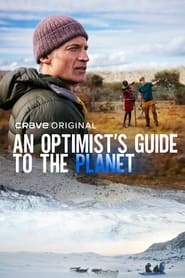
star 7.3Follow Nikolaj Coster-Waldau’s search for the people, ideas, traditions, and attitudes – the solutions – which will transform fear of the future into hope, climate angst into optimism and human disconnection into engagement. In each of the six episodes, Nikolaj and his affable team criss-cross the globe exploring humanity, witnessing its power for good and learning about some of the remarkable solutions (both old and new) that inspire his optimism for the future.All Mod Cons
1997
All Mod Cons
1997
How we decorated and redecorated our homes over the latter half of the twentieth century reflects our changing attitudes to domesticity, home ownership, gender roles, and children. Through interviews and the witty use of archive, an intimate and affectionate social history of British homes.Napoléon
2012
Becoming Frida Kahlo
2023
Becoming Frida Kahlo
2023
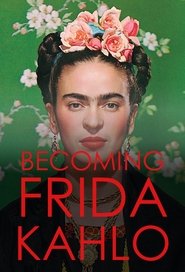
star 4.2A look into Frida Kahlo's world, revealing an artist driven by politics, power, sex and identity, with her epic love affair with Diego Rivera at the heart of it all.이종건 비평가의 건축학개론
2021
이종건 비평가의 건축학개론
2021