Featured Movies - Page 329

Salma!
2025
Salma!
2025
Hadi creates Salma Zahore to represent his personal struggles and love in the face of inner turmoil.The Dog
2025
The Dog
2025
A dog and its owner are wandering in the desert. Suddenly, an incident challenges both of them.The Way We Came
2025
The Way We Came
2025
This film is about a part of the living conditions of a person with a disability in society. The animation is from the perspective of a mother who wants to bring her daughter home from school.Axolotl
2025
Mask
2025
Mask
2025
Showing the atmosphere prevailing in the school, incorrect labeling of students, lack of attention to students' creativity.23 Kilograms
2025
Burden
2025
Burden
2025
A thin and thin person carries a heavy burden on their shoulders and walks with difficulty in the desert due to the weight of the burden. They face problems and difficulties on their path as well as the inner dimensions of the sorrows and fatigue of their life. They see sakura trees in the distance and continues on their path. After enduring many hardships, They reaches a gate with a back full of sakura trees. They are stunned by the beauty of the sakuras and the wind shakes the branches of the sakura trees. They slowly smile sadly, but in the end, despite enduring the weight of the burden and the difficulties of the path, They suddenly fall to the ground from the pressure of the burden and their bag is torn. It is full of sakura (cherry blossoms) falling out. Although They cannot pass through the gate, the wind blows some of them into the trees.Companion
2025
Companion
2025
In the story "Companion," two wounded and hungry wolves travel together in the cold of winter. At first, there is a sense of camaraderie and companionship between them, but living conditions become more difficult. In the end, the stronger wolf kills and eats the weaker wolf in order to survive. The camaraderie had meaning until hunger struck.Marut
2025
Marut
2025
A man who has suffered from psychotic illnesses due to the loss of his wife must now choose between letting go of the past and drowning in it.Cherished Land
2025
Cherished Land
2025
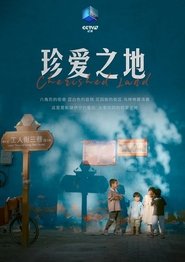
Walking into the historical and cultural block, Liu Xing Street in Yining City, northwest China's Xinjiang Uygur Autonomous Region, the streets and alleys resemble a hexagonal puzzle. In this community, residents from 13 ethnic groups, including the Uygurs, Kazakhs, Hans, Huis, and others, live together.Liquor
2025
Liquor
2025
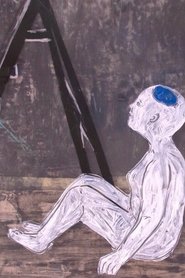
The mother suffers from an illness that threatens to drown her memories and emotions. She pleads with her daughter for help. Using her umbilical cord, she fashions a giant straw, with which the daughter attempts to suck excess water from her mother's head through her eye, hoping to save her. In the process, the daughter herself risks drowning.Can Circle Circles?
2025
Can Circle Circles?
2025
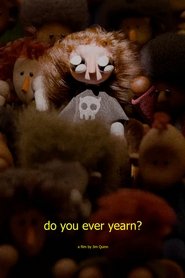
The text explores the balance between independence and interdependence in adulthood — how the desire for freedom can clash with the need for connection. It invites reflection on when independence fosters growth and when dependence becomes either dangerous or essential for survival.do you ever yearn?
2025
Tomtens vilda värld
2025
Tomtens vilda värld
2025
Pass the Salt
2025
Pass the Salt
2025
Set around a single dining table, a son struggles to reclaim his sense of normalcy as his mother’s delusions tighten their grip. Through quiet tension and buried longing, this intimate psychological drama exposes the fragile warfare of a mother-son relationship trapped between love, denial, and control.Seeing Staburags
2025
Seeing Staburags
2025
This documentary explores the historical and emotional significance of the Staburags cliff, combining personal memories, archival footage, photographs, and contemporary landscapes. Through people’s testimonies and visual material, viewers are invited to reflect on whether it is possible to reclaim what time and water have washed away. Once one of Latvia’s most popular sightseeing spots, Staburags has been widely celebrated in legends, folktales, and songs. Audiences will have the opportunity to see rare footage filmed 40 meters below the surface of the Daugava River, as well as follow a modern expedition during which special equipment was used to check whether the 18–20 meter-high Staburags cliff still remains in its place.Le dernier bar lesbien
2025
The filmmaker, starting a documentary research, interviews clients from the Champs bar to understand the importance of lesbo-queer bars for the community.Je suis
2025
Je suis
2025
Camille, at the bar, is in the process of reflecting on its identity. It feels cornered by its work, social norms and external expectations. But a dance performance combining drag artists, circassian.ne. s and other performeur.se. will shake its thinking: it is taken. By this new world that will allow it to drop its mask and discover itself personally.