Popular Music Movies - Page 270

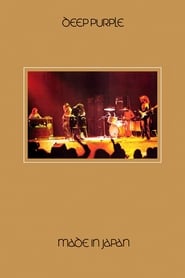
Deep Purple: Made In Japan
1972
star 10Made in Japan was recorded live over three nights during 15–17 August 1972 at Festival Hall, Osaka and at Budokan, Tokyo, Japan. Four of the tracks come from the album Machine Head which had been released earlier that year. The album was at first seen as somewhat unimportant by the band members, and only Roger Glover and Ian Paice showed up to mix it. The release in the US was delayed, until April 1973, because Warner Bros. wanted to release Who Do We Think We Are first. The three concerts recorded were later released as Live in Japan 3-CD box set (1993). According to the liner notes for that set, unlike many live albums, there are no overdubs or studio additions to the original album.Los Hermanos/The Brothers
2020
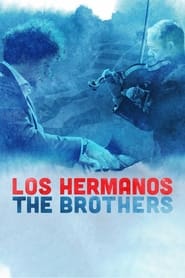
Virtuoso Afro-Cuban-born brothers—violinist Ilmar and pianist Aldo—live on opposite sides of a geopolitical chasm a half-century wide. Tracking their parallel lives in New York and Havana, their poignant reunion, and their momentous first performances together, Los Hermanos/The Brothers suggests what is possible when walls come down, and borders are crossed. A nuanced, intensely moving view of nations long estranged, through the lens of music and family. Featuring an electrifying, genre-bending score composed by Cuban Aldo López-Gavilán, performed with his American brother, Ilmar, with a guest appearance by violin maestro Joshua Bell and the Harlem Quartet.Argentine Nights
1940
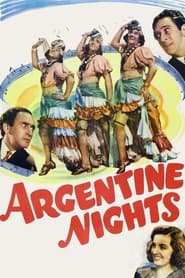
Argentine Nights
1940
An all-girl band flees to Argentina to avoid their creditors. Comedy with songs.Fleetwood Mac: Live in Boston
2004
star 7.2Live in Boston is a live performance by the band Fleetwood Mac, released June 15, 2004. The concert was filmed September 23 and 24, 2003 at the Fleet Center (now known as the TD Garden) in Boston, Massachusetts during the group's Say You Will Tour.MacBeth
2011
MacBeth
2011
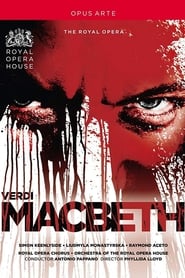
Macbeth, the Thane of Glamis, receives a prophecy from a trio of witches that one day he will become King of Scotland. Consumed by ambition and spurred to action by his wife, Macbeth murders his king and takes the throne for himself.Le Vagabond bien-aimé
1936
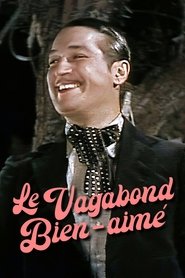
star 4.8Gaston, an artist in love with an upper class English girl, accepts to stay away from her when a wealthy rival offers to pay her father's heavy debt. Broken-hearted, he leaves for France with his young servant. They join a young girl as popular musicians and tour the countryside in their way to Paris, where his former love reappears.Dalida
2017
Dalida
2017
star 6.7Based on the true story of acclaimed music icon "Dalida" born in Cairo, who gained celebrity in the 50s, singing in French, Spanish, Arabic, Hebrew, German, Italian, playing in awarded Youssef Chahine's picture "Le Sixième Jour", and who later committed suicide in 1987 in Paris, after selling more than 130 million records worldwide.Manchali
1973
Manchali
1973
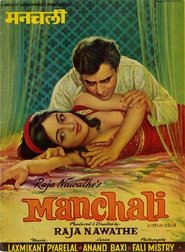
star 6One condition prevents young Leena (Leena Chandravarkar) from receiving her inheritance: She's unwed -- and until she marries, her uncle won't relinquish her legacy. When the frustrated Leena meets jobless Sanjeev (Sanjeev Kumar), the duo concocts a quid-pro-quo scheme: For a sum, Sanjeev will temporarily pose as her spouse. But once Leena has her fortune in hand, she's ready for "hubby" to make tracks.The Minstrel Boy
1937
The Minstrel Boy
1937
Štrnásty v rade
1975
Štrnásty v rade
1975
Animalen
1984
New Year’s Eve at the Mariinsky
2006
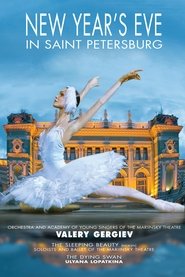
A truly remarkable New Year’s Eve in St Petersburg’s fabled Mariinsky Theatre, with Valery Gergiev and the Mariinsky (ex-Kirov) Ballet. It was at the Mariinsky Theatre in St Petersburg that the ballet The Sleeping Beauty premiered in 1890, with a score by Tchaikovsky and choreography by Marius Petipa. This New Year’s Eve programme revolves around Act III, in which Princess Aurora is brought out of her long sleep by the prince of her dreams and marries him. In addition, prima ballerina Uliana Lopatkina dances Camille Saint-Saëns’ famous Dying Swan, first performed by Anna Pavlova. In conclusion the soloists of the Mariinsky Theatre’s Young Singers’ Academy perform the finale of Rossini’s Journey to Rheims in a joyous celebration of the coming of the New Year.Beats
2019
Beats
2019
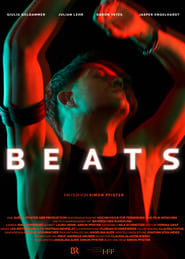
A series of attacks terrorize Munich. Max, having survived the first shots fired at the audience in the electro club Beats, hides in a storage room with his new friend Sefi and other party attendees. The immediate danger puts the humanity of all trapped people to the test and Max has to decide whether he wants to save himself or try to save a stranger, as well. Shortly before arriving at home, Alexa hears of the attack on the club she left her brother Max at. She decides to go back, accompanied by her boyfriend Raphik, who joins her in the end despite his misgivings.Gauche the Cellist
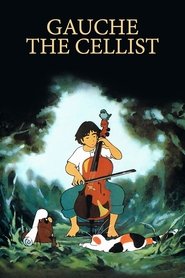
1982
Gauche the Cellist
1982
star 7.2Gauche is a diligent but mediocre cellist who plays for a small town orchestra and the local cinema in the early 20th century. He struggles during rehearsals and is often berated by his conductor during preparations for an upcoming performance of Beethoven's Sixth Symphony. Over the course of four nights, Gauche is visited at his mill house home by talking animals as he is practicing.The Good Old Days
1939
The Good Old Days
1939
1840 - Max Miller and a troupe of artistes come to perform at a tavern, which is not licensed for such performances. A rival tavern informs the police and they have to pay a heavy fine. However, they find the money by rescuing a boy and getting the reward.Gift
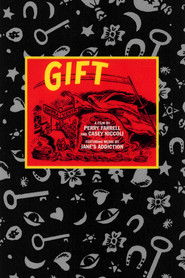
1993
Gift
1993
star 5.6What would you do if you came home and found your wife dead? Do you call the cops? Her parents? That's where the true nightmare begins. A story of love and addiction. An experimental docudrama made by Perry FarrellLVCRFT - Skeleton Sam
2023
As heard in Hocus Pocus 2, Adam Sandler's Hubie Halloween & Netflix's Chilling Adventures of Sabrina Season 3Money Sings
1963
Money Sings
1963
A lively pop musical with a variety of talent and music; featuring Johnny Carson, Patricia Shakesby and The Condors.The Silver Scream 2: Welcome to Horrorwood
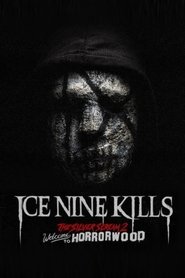
2021
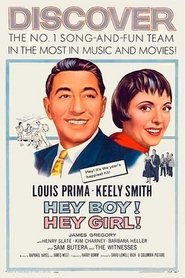
Follows in the bloody footsteps of its predecessor, paying tribute to 13 more of the most gruesome tales to ever grace the silver screenHey Boy! Hey Girl!
1959
Hey Boy! Hey Girl!
1959
Meant primarily as TV fare, this standard, song-filled romantic drama stars Louis Prima as himself, and his real-life wife Keely Smith as Dorothy Spencer, a devout woman with a good singing voice. Dorothy is active in her local parish which like all parishes, is constantly thinking of ways to raise funds. One of the needy projects is a boys' camp, so when Dorothy is approached by Louis Prima to sing with his band she agrees only on one condition -- that he perform a concert benefit for the parish church and boys' camp. The interactions between Dorothy and Prima lead toward romance and a happy ending, as well as a popular album with the same title song featured in this film. ~ Eleanor Mannikka, Rovi (NY Times Review).