Popular War Movies - Page 143

Liberation
1994
Liberation
1994
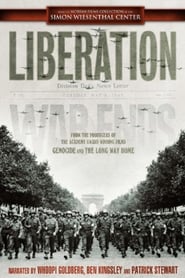
star 8Liberation tells the dramatic story of the battle waged on two fronts during World War II - the Allied campaign to liberate Europe and Hitler's genocidal campaign against the Jews. The World War II documentary uses film footage, radio broadcasts, and period music gathered from archives around the world. Interwoven throughout the film are the compelling stories of the Jews of Europe - unforgettable stories of tragedy, courage, resistance, and survival. Liberation begins in 1942, when Adolf Hitler was still at the height of his power and the Allies began envisioning a cross-channel invasion of Europe.No Path Through Fire
1967
No Path Through Fire
1967
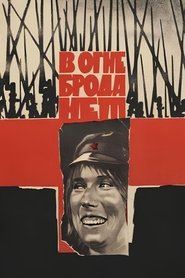
star 5.6A talented girl is trying to find happiness amidst the Russian revolution of 1917 and the civil war that split the nation.Heroes del 95
1947
Heroes del 95
1947
Saito Dosan: Rage of Power
1991
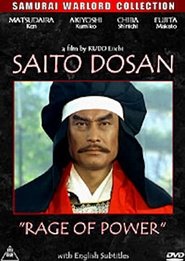
star 6.5During the age of warring clans (Sengoku Jidai), many samurai lords sought to unite the country under their banners by becoming the supreme leader. One of the first to vie for power in this way was Saito Dosan, the 'Viper'. His son-in-law, Oda Nobunaga, did in fact unite the nation after subduing all of his enemies, yet falling at last to the treachery of one of his most trusted generals. This story is a pre-cursor to those later events as the brilliant military strategist Saito Dosan rises to power and notoriety as a great lord in his own right. Directed by Kudo Eiichi and with a tremendous supporting cast that includes Nakamura Toru as Oda Nobunaga and Chiba Shinichi as Akechi Mitsutsugu, battle scenes of awesome power and a unique view of Japanese history, this is a marvelous production highlighted by the action scenes done by the Japan Action Club (JAC).Last Days in Vietnam
2014
Last Days in Vietnam
2014
star 7.3During the chaotic final weeks of the Vietnam War, the North Vietnamese Army closes in on Saigon as the panicked South Vietnamese people desperately attempt to escape. On the ground, American soldiers and diplomats confront a moral quandary: whether to obey White House orders to evacuate only U.S. citizens.Mission: Iron Castle
1970
Mission: Iron Castle
1970
star 6.6The Shinobi-no-Mono series was so successful that Daiei Studios dipped into the well one more time, making the best 60′s B&W ninja movie ever seen in the otherwise color-dominated year of 1970. Issei Mori directs Hiroki Matsukata as the reluctant leader of a small band of spies charged with kidnapping a noblewoman from a heavily ninja-proofed castle. The finality of the air slowly began to fill like smoke, and in all that had become dark the loyalty of the Ninja who dared to go shone like light as they entered a world shrouded in mystery. Things do not go as planned in what is possibly the darkest and most fatalistic of the already noir-ish 60′s fare. Both the decade and it’s distinctive style of shinobi cinema went out on a high note with Mission Iron Castle.The Black Chapel
1959
The Black Chapel
1959
star 7.51933 in Germany. The rise of Nazism fears war and some officers, concerned the fate that hostilities would reserve to their country, organize an anti-Nazi group. They send a reporter, Golder, to communicate the plan of the German offensive allies.Snipers Alley
2002
The Blue and the Black 2
1966
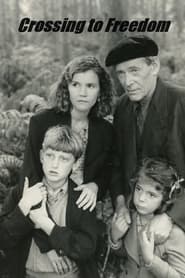
star 5.2War and time change everything. Their love becomes more than reunion, it becomes a reckoning with what was and what could've been. Part two of the wartime love story.Crossing to Freedom
1990
Crossing to Freedom
1990
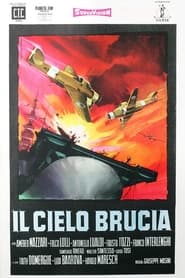
star 6A very proper Englishman becomes saddled with youngsters that he has to help escape Nazi Germany. Adaptation of Nevil Shute's novel.Il cielo brucia
1958
Il cielo brucia
1958
Refugee Poetry
2016
Refugee Poetry
2016
star 10The Kurdish Iraqi poet and actor Zeravan Khalil travels with his dog through an Alpine gorge after fleeing from IS war and genocide. As he remembers the abomination, he writes a poem with the title “You drive me mad” in Kurmanji Kurdish. In his home country, Yazidic Kurds are forbidden to work in his profession. Then he eats his apple and wanders through Europe’s middle with more hope.Morning Stars
1980
Barefoot Gen
1976
The Walking Major
1970
The Walking Major
1970
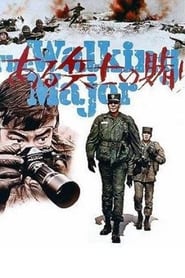
star 2U.S. Army Captain Clark Allen gains attention by walking back and forth, the length of Japan, gambling with U.S. servicemen in order to raise funds to rebuild an orphanage. Suspicious of Allen's motives, a Japanese newsman, Hiroshi Kitabayashi, traces the American's background until he discovers the motive behind Allen's long walk.The Dawn of Freedom
1944
The Dawn of Freedom
1944
This film was made by the Japanese occupation authorities in the Philippines as a propaganda film to show the Philippine people the "benefits" of the Japanese invasion and takeover of their country.Buty
1966
Buty
1966
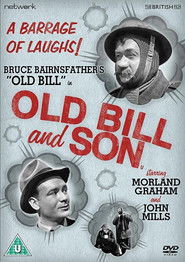
During the war, a nurse finds footwear belonging to a Soviet soldier. The discovery haunts her.Old Bill and Son
1941
Old Bill and Son
1941
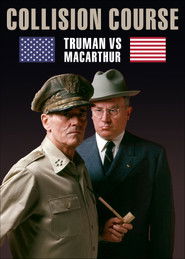
star 6.5Old Bill has grumbled his way through the trenches of the First World War. Now it is the Second and, envious of his son, Young Bill, he decides to enlist. He finally enters the Pioneer Corps, which is based near his son. When Young Bill goes missing during a raid, Old Bill shows that there's still life in the old dog yet!Collision Course: Truman vs. MacArthur
1976
star 4U.S. President Harry S Truman and his commander in the Korean War, General Douglas MacArthur, disagree on war strategy. Their conflict comes to a head when Truman relieves the insubordinate MacArthur from command.