Popular War Movies - Page 163

Gemmeker
2020
Gemmeker
2020
star 6.4In 1948, Albert Gemmeker, the former commander of the Dutch concentration camp Westerbork, finds himself in an interrogation room opposite a man unknown to him. It soon turns out that Gemmeker's interrogator has a personal reason to force him to confess about his war past and the transportation of 80.000 Jews to the extermination camps.Identity Unknown
1945
Identity Unknown
1945
star 5A soldier survives a bombing in which his three fellow soldiers were killed. When he recovers he discovers he has amnesia, and since his companions' bodies were burned beyond recognition, the army doesn't know which one of the four he is. He goes AWOL and searches out the families of the three dead soldiers, hoping to find out his own identity.Sakura Official
1962
Sakura Official
1962
star 6As Japan’s Tokugawa shogunate nears the end of its rule, Edo North Magistrate Toyama no Kinsan is called upon to judge the most difficult case of his career. In a masterfully woven tale, he has to face the truth about his estranged father’s possible involvement in a nefarious plot to take over rule of the Hizen Shimabara clan by assassinating the rightful lord, his son, and install one of Shogun Ienari’s offspring as daimyo.Censored
1944
Censored
1944
star 6.5Private Snafu wants to tell his sweetheart, Sally Lou, that he thinks his unit will be sent to the South Pacific. But every effort he makes to get his letter through uncensored is thwarted by a resourceful (and unseen) censor with an array of contraptions and booby traps. Not even Snafu's carrier pigeon can avoid the censor -- not when he has a hawk for an assistant. Technical Fairy, First Class, comes to the rescue and agrees to deliver the letter -- but he has good reason to say that he'll hate himself in the morning.Victory
1975
Victory
1975
star 7This film was created by combining and shortening the films Kierunek Berlin (Destination Berlin) and Ostatnie dni (The Last Days). It presents the final phase of the great offensive of 1945, which ended with the capture of Berlin, from the perspective of a private soldier of the First Polish Army.Cat Shit One
2010
Cat Shit One
2010
star 5.8The war against terrorism has gone private. War has always been a profitable business, so having private corporations field their own armies to fight against terrorism is just good business. Who else could protect those innocent bunnies from the religiously fervent turbaned camel fanatics. It falls upon a small cadre of seasoned furry rabbit soldiers to take the battle to the camel's home turf.Derived from a popular Vietnam-conflict based manga series called Apocalypse Meow , this sequel series uses animal characters to tell the story of the war against terrorism fought in distant countries. Non-human cast of characters notwithstanding, this compelling and painstakingly-researched work places an emphasis on factualism in order to accurately portray the weapons and tactics used by soldiers.Out of the Depths
1945
Out of the Depths
1945
Told in flashback, Out of the Depths strives to explain why its four male protagonists are bobbing around the Pacific in a lifeboat. The story proper begins as Captain Faversham (Jim Bannon) and his crew embark upon a secret mission which takes them into Japanese waters. The plan is to prevent a kamikaze attack against the American invading forces. Compelling in itself, the plotline isn't improved by arbitrary doses of misfire pathos and comedy relief. One of the sailors is played by Ken Curtis, later to gain TV fame as Festus on Gunsmoke.The Mountain and the Molehill
1989
It is May 1944, two weeks before D-day. Britain stands poised for the long-awaited invasion of France - thousands of troops wait anxiously for the orders to come for embarkation. MI5 is horrified to discover the top-secret codewords for the invasion suddenly appearing as clues in the Daily Telegraph crossword. Two agents are immediately dispatched to confront the culprit, the headmaster of a boys' school in southern England.Honey Sweet Love
1996
Honey Sweet Love
1996
A British commander falls in love with a local Sicilian girl during World War II.The Dunera Boys
1985
The Dunera Boys
1985
star 6At the start of WWII the British Government decided to arrest all Germans in the UK no matter how long they had been there. Among those arrested were many Jewish refugees and many who were fully assimilated. This film records the story of a group who were sent to a POW camp in Australia aboard the Dunera.The Tough Ones
1968
The Tough Ones
1968
star 5Two brothers return to their devastated home village after the end of the Second World War with nothing to their name but their army-issue machine guns. There they find a traumatised German, abandoned in retreat. Together, the three men act out a tragicomic tale.The Man from Yesterday
1932
star 4.8A woman whose husband never came home from World War I finds herself in love with her doctor. She travels with him to Switzerland, and as they check into the hotel there, she is astounded to see her supposedly dead husband.The Long Way Home
1997
The Long Way Home
1997
star 7.1The story of the post World War II Jewish refugee situation from liberation to the establishment of the modern state of Israel.Champagne for Savages
1964
star 6.1A diverse group of friends gather to celebrate a witless woman's birthday in this comedy drama set in France during World War II. The guests include an uncle who is a Nazi collaborator, a blind war veteran, a simpering physician, an arrogant educator, a patriotic girl, and the husband of the guest of honor. When some German soldiers are killed outside the house, the group is told by the Gestapo that they must choose among themselves two who will be shot if the killer is not caught. If two victims are not chosen, all seven at the party will be captured. Things sound pretty grim, but the black comedy begins when all seven try to save themselves by any means possible.The Rats of Tobruk
1944
The Rats of Tobruk
1944
star 5.7Three friends enlist in the Australian Army and serve in North Africa, holding the city of Tobruk against Rommel's forces.Big and Small
1956
Big and Small
1956
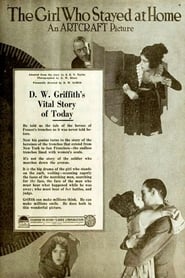
star 4.6Under a police pursuit, Pavle tries to transfer a group of illegals on a free liberated territory. Pavle hopes to find a hideaway at an old friend Stevan, but these expectations fail. However, help unexpectedly comes from Stevan's little son Aca.The Girl Who Stayed at Home
1919
star 4.8Ralph visits France with his father, a shipbuilder, and falls in love with Blossom, the granddaughter of his father's friend, a Civil war veteran not reconciled with the Union. Blossom, however, is engaged to a French nobleman. When the war breaks out, Ralph enlists, while his brother Jim, a heartbreaker, is drafted.Angels of Sinjar
2022
Angels of Sinjar
2022
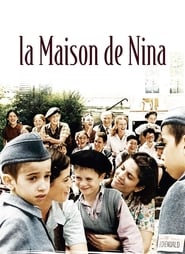
star 9Hanifa and Saeed barely survived the hell that ISIS inflicted on them and their people. Hanifa escaped kidnapping, but her younger sisters were enslaved by the Islamic State. Hanifa embarks on a mission to find them and bring them home.Nina's House
2005
Nina's House
2005
star 5.7Starting in 1944 in the wake of the Liberation and continuing into the '60s, 'houses of hope' were established to lend a semblance of continuity to youngsters orpahaned by the war. Nina's Home takes place between September 1944 and January 1946 in an orphanage housed in a chateau outside Paris. At the outset, the country residence is run by Nina who has a core population of French Jewish children whose parents are probably dead. Food is scarce. News of the Concentration Camps hasn't hit yet, but some months later, a contingent of youths arrive form the liberated camps. The children are a disparate, wild, damaged group and conflicts ensue. Nina's challenge is to help them make their first delicate moves toward the future and in the process restore all of them, including herself, to life.To Your Majesty, The Emperor
1963
A conscript from a poor background writes the Emperor asking if he can stay in the army when his service is up.