Popular War Movies - Page 173

Dear America: Letters Home from Vietnam
1987
star 7.1Real-life letters written by American soldiers, sailors, airmen, and Marines during the Vietnam War to their families and friends back home. Archive footage of the war and news coverage thereof augment the first-person "narrative" by men and women who were in the war, some of whom did not survive it.The Rebellion
1993
The Rebellion
1993
star 6.1The disabled ex-soldier Andreas Pum lost a leg for emperor and father land. After leaving the army he receives a license and a drehorgel. One day he gets into a controversy with a welldressed gentleman, disturbs the public order, and hits a policeman. Andreas Pum goes to jail, loses his license and becomes toilet guard in the Cafe Halali after his release. Only at the moment of death he recognizes that he was always too decent and too obedient.Will
2012
Will
2012
In World War I, a Canadian soldier finds himself trapped in a hole while the war carries on around him. There, he finds himself conversing with a German soldier trapped in an adjacent crater, who reminds him of his own German heritage. While tensions are high, there’s a camaraderie there that can’t be denied.Jungle Drums
1943
Bouboulina
1959
Bouboulina
1959
star 7The life and action of Laskarina Bouboulina. Captain Lascarina decides to organize the revolution in Spetses and to participate herself, despite her double widowhood. In the struggle for the liberation of Greece, she gives all her property and fighting along with her lads.A Pilot Returns
1942
A Pilot Returns
1942
star 5A young Italian pilot is interned in a British prison camp after his plane is shot down during the war against Greece. He falls in love with a doctor's daughter and manages to escape during a bombardment. He reaches home, wounded, just as news arrives of the Greek surrender.Agent #1
1972
Agent #1
1972
star 4.8Jerzy Szajnowicz-Ivanov, the son of a Polish mother and a Russian father, raised in Greece, reports to the Carpathian Brigade in the spring of 1941. While the Poles are wary of him at first, he proves his worth by taking part in several sabotage actions against the Nazis.Threads
1984
Threads
1984
star 7.6Documentary style account of a nuclear holocaust and its effect on the working class city of Sheffield, England; and the eventual long run effects of nuclear war on civilization.Englandsfarere
1946
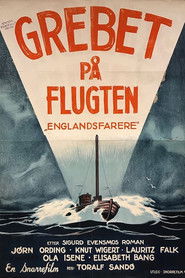
Englandsfarere
1946
star 6The secret smuggling of Wanted persons from the westcoast of Norway over to England during the WWII, based upon the novel by Nowegian novelist Sigurd Evensmo, telling the true story about his own experiences during the war.Beginning of an Unknown Era
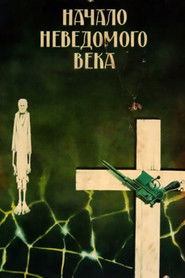
1967
star 5.4Two young directors adapted the short stories of two Russian authors whose works had been banned for decades, and so their film ended up in the censor’s vault as well – for twenty years. Both tales look back to the post-revolutionary era: 'Angel' (Olesha) speaks tragically of the brutality and destruction of the time, and 'The Homeland of Electricity' (Platonov) captures its haunting grotesquery.08/15
1954
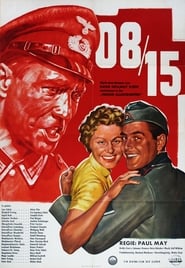
08/15
1954
star 7.2Life in the barracks, drill, harassment, and private Asch′s pranks are the ingredients of Hans Hellmut Kirst′s successful novel "08/15" (the number of an Army regulation). Shortly before the outbreak of World War II: Private Asch and gunner Vierbein belong to the same unit but could not be more contrary. The instructors use every opportunity to bully the clumsy Vierbein with erratic corporal Platzek leading the way. The harassment starts with minor extra duties but soon the methods become more and more brutal. Finally, Asch comes to Vierbein′s help and takes on his superiors. Joachim Fuchsberger stars in his first major role.Railway Heroes
2021
Railway Heroes
2021
star 6.8The historical story of an enemy fighting the wits and courage of an extraordinary brave group of ordinary heroes known as the "Lunan Railway Brigade" who desperately fight to defend their homeland.Wolves Action 2
2020
D-Day in 14 Stories
2019
D-Day in 14 Stories
2019
star 8Unflinching and deeply personal, D-Day In 14 Stories interviews many of the last surviving veterans who were on the beaches of Normandy that fateful day 75 years ago (a rare spectrum of Allies and Axis); seldom-heard voices, including a female Resistance fighter, an African American, a Native American, Jewish Americans and a 5-year old French boy.Rail of the Star - A True Story of Children and War
1993
star 6.1A young Japanese actress remembers her war childhood in Korea. Her father goes to fight, her baby sister Miko dies of typhoid, her beloved Korean maid Ohana is fired due to a mistake which could cost Chiko her life... By and by Chiko realizes that the country is being ruled by the Japanese and the Koreans are persecuted. When the war ends, the Koreans chase the Japanese rule and the roles change. Now Chiko's family is unwanted. But then the Russians come and this is the end. They have to burn all the pictures to avoid all suspicions... even Miko's picture. But when the Russians come to their house, they decide to flee over the 38th Parallel towards freedom. A group of men, women, children struggles along the mountains, led by the light of the Northern Star. Along the way they meet a Korean man, who is willing to help them to escape the Russian soldiers although his family was killed by the Japanese.The Boy and the Sea Turtle
2002
The first film in Shin-Ei's series of annual WWII themed anime television movies for children "Sensou Douwa"The Pacific War and Himeyuri Corps
1962
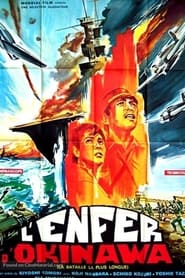
The last fight put up by remaining forces and a special volunteer nursing corps in 1944-5.The Black Parachute
1944
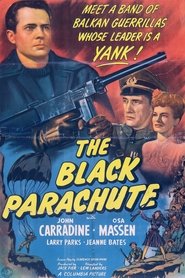
The Black Parachute
1944
star 5.5A paratrooper drops behind enemy lines to rescue the deposed king of a mythical Balkan nation.The Bamboo Blonde
1946
The Bamboo Blonde
1946
star 5A pilot of a B 29 meets Louise Anderson, a singer in a New York nightclub. He falls in love with her, but he had to leave next day for action in the Pacific. He lets paint her picture on his bomber, the "Bamboo Blonde" and becomes a hero with his crew sinking a Japanese battleship and shooting down a Japanese fighter wing. Back in New York, he leaves his fiancée and engages him to Louise.Conquered City
1962
Conquered City
1962
star 4.3Filmed in 1962 but not released in the US until 1966 (with 20 of its 108 minutes removed), Conquered City is an all-star World War II drama financed in Italy and filmed in Greece. An Athens hotel, full of refugees and expatriates of all nationalities, is captured by Allied troops in the closing days of the War. British Major David Niven has been ordered to prevent a cache of weapons hidden in the hotel from falling into the hands of renegade troops. He cannot allow himself to trust anyone--not even the most innocent-looking (or attractive) of guests. Originally titled La Citta Prigioniera. Conquered City was released in English-speaking countries outside the U.S. as Captive City.