Popular War Movies - Page 189

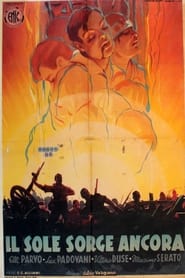
Outcry
1946
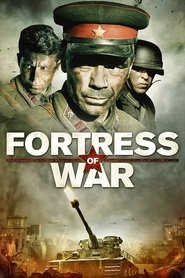
Fortress of War
2010
Fortress of War
2010
star 7.2The film covers the heroic defence of the Brest Fortress, which was attacked during the first strike of German invaders on June 22 1941. The story describes the events of the first days of the defence, including the three main resistance zones, headed by the regiment commander, Pyotr Mikhailovich Gavrilov, the commissar Efim Moiseevich Fomin and the head of the 9th frontier outpost, Andrey Mitrofanovich Kizhevatov. Many years later veteran Alexander Akimov again recalls the memories of the time, when he, then a 15 year old Sasha Akimov was deeply in love with the beautiful Anya and suddenly found himself in the middle of the bloody events of war.Love and Fury
1978
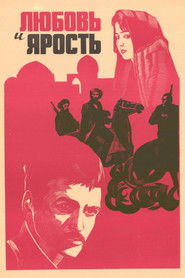
Love and Fury
1978
star 8.5At the beginning of the First World War, Alexander Dragovich went to the front as a teenager. The October Revolution caught the hero in captivity in Russia. Like many of his countrymen, Alexander defected to the revolution. After becoming a chekist, Dragovich was sent to Turkestan. The film tells about the heroic struggle of a special purpose unit with gangs of Basmachi, spies of various stripes and saboteurs, about the adventures of the anarchist Kolya and the tragic love of Mushtari and Dragovich.See You
1995
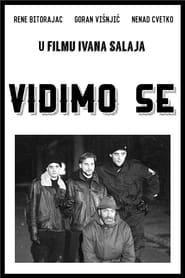
See You
1995
star 5In the war-driven Balkans in 1991, four friends meet to pay respect to a dead friend...Dreamless Sleep
1986
Dreamless Sleep
1986
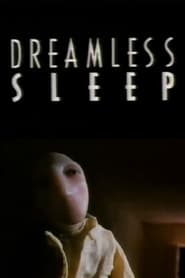
Silently conveys a couple's fear of an immanent nuclear blast. Part of Sweet Disaster; a 1986 series of short films made for Channel 4. It consists of “animated visions of the apocalypse”.Sharpe's Peril
2008
Sharpe's Peril
2008
star 6.7Our story begins at the end of Sharpe's Challenge. Sharpe and Harper are en route to Madras when they encounter a baggage train from the East India Company traveling through hostile territory. Chitu, a legendary bandit leader in control of the area, strikes fear in the members of the party. When an attack occurs Sharpe takes control of the situation, leading the group 300 miles through enemy territory and training the disorganized, rag-tag group to be proper soldiers. Despite all these responsibilities, Sharpe still manages to find time for a little romance...The Pity of War: The Loves and Lives of the War Poets
2016
The story of the WWI poets Siegfried Sassoon, Wilfred Owen and Robert Graves, using their diaries and letters to tell the inside story of the war in their own words.Kiku and the Wolf
2008
Kiku and the Wolf
2008
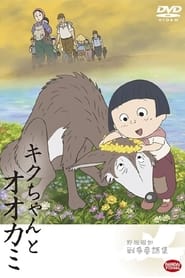
star 4Kiku-chan to Ookami is, like most of the Sensou Douwa specials, based on a short story by Nosaka Akiyuki. It is set in the Japanese puppet state of Manchukuo (the Chinese province of Manchuria) during the closing days of Word War II. Life for the Japanese colonists is tranquil, with none of the hazards and shortages occurring in the Japanese homeland. Then, on August 9, 1945, the Soviet Union, fulfilling its obligations to the Western Allies, declares war and invades. The local Kwantung Army folds up like a house of cards, leaving the Japanese colonists exposed to the invading Russians and Chinese.Sam's Army
1999
Sam's Army
1999
star 10Canada was led to war by a bigoted, ignorant, self-obsessed Minister of Militia, who may well have been clinically insane, but the importance of Canada's contribution in that war owes a great deal to him. The man of course, was Colonel - later made Lieutenant General by his own hand - Sam Hughes. Sam's Army is a compelling portrait of a complex man and the formidable military he built. Sam Hughes was not your standard-issue military leader. Canada's World War I Minister of Militia and Defence concentrated power in his own hands, insisted that the Canadian military use the ill-conceived Ross rifle and liberally promoted his cronies. But there was no denying Hughes was a visionary. He assembled the world's largest-ever volunteer army and bucked superiors to keep his ferocious fighting force together in one Canadian Corps.Escape
1972
Escape
1972
By using force and threats, two captured partisans try to persuade the local village commander to set them free.The Cut-Throats
1969
The Cut-Throats
1969
star 3.4Captain Kohler recruits an outfit of five American soldiers besides himself (dubbed "The Cut-Throats,") to attack a German stronghold to capture battle plans... although his real motive is to steal a cache of jewels that is Nazi plunder. After the enemy soldiers are gunned down, the beautiful women in the compound treat The Dirty Half-Dozen to a stage show and, later, themselves.A Russian Youth
2019
A Russian Youth
2019
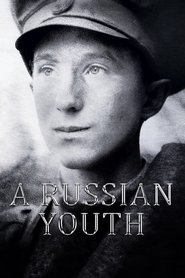
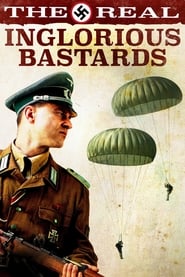
star 5.2A teenage soldier in World War I—a simple village boy with a naive youthful dream of fame and medals—throws himself into the unknown and goes blind in the first battle, thus taking on a new job: intercepting enemy planes by listening to the air through huge metal funnels.The Real Inglorious Bastards
2012
star 7.8The truth is way stranger than fiction,” muses one interviewee in this unbelievable true account of an incredible war time saga. As the Second World War was coming to a close, the US Office of Strategic Services trained and parachuted two Jewish refugees and a German deserter deep into Nazi occupied Austria. Through vivid first-person accounts, re-enactments, archival footage and learned commentary, the film reveals how their efforts disrupted a vital supply route between Germany and the Italian front to bring about the surrender of Innsbruck to Allied Forces. Their unbelievable adventure has a finale that beats any Hollywood movie hands down — but a story so powerful that it became the basis for Quentin Tarantino’s mega hit.Red Roses for the Fuhrer
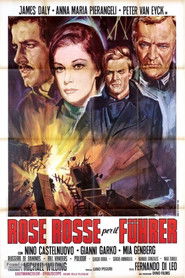
1968
star 5.2James Daly is an American special soldier who goes behind enemy territory during WWII. His Objective: to steal top secret SS document that can change the course of the war.El Salvador: The People Will Win
1980
star 5The battle of El Salvador and its revolutionary history, from the time of the Spanish conquest and colonization, to the insurgency of the 80s, approached by a Puerto Rican filmmaker immersed in the conflict. Depicts a host of F.M.L.N. guerrillas marching forth from Monte Alzaco, the spiritual home of Salvadoran resistance.The Small Unit
1979
The Small Unit
1979
Based on the true story of the Vig heroes, about 5 soldier friends who get executed by the Nazis in the north of Albania.Don't Cry, Nanking
1995
Don't Cry, Nanking
1995
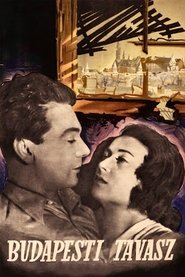
star 8.5In December 1937, during the Second Japanese-Sino War, a Chinese doctor, his Japanese pregnant wife, their teenage daughter and their young son travel from Shanghai to Nanjing seeking shelter in the Capital during the Japanese invasion. The family faces the Rape of Nanking by the Imperial Japanese Army, with rapes, mass murder of prisoners of war and civilians including women, children and elders, and disrespect of international conventions.Springtime in Budapest
1955
star 8At Christmas Eve in 1944 the runaway Pintér and Gozsó get through the Soviet blockade around Budapest. Pintér intends to hide in a flat abandoned by his own relatives, but he finds his relatives called the Turnovszkys, who are hiding the Jewish Jutka as well. Love unfolds between Zoltán and Jutka.Mr. Winkle Goes to War
1944
star 6.2Wilbert Winkle, a henpecked, mild-mannered, middle-aged bank clerk and handyman finds himself in the midst of battle in the South Pacific.The Eye of the Night
1916
The Eye of the Night
1916
William H. Thompson plays a likeable old lighthouse keeper who must contend with his less likeable fellow villagers. One of Thompson's acts of kindness is to bless the "scandalous" romance between hero and heroine.