Popular War Movies - Page 238

A Song on the Passage
1972
star 7.7Set during the Six-Day War, the connection between a group of Egyptian soldiers on a passage in the desert and the command center drops. They try to survive despite the enemy attacks and lack of ammunition and supplies.Area 88 Act I: The Blue Skies of Betrayal
1985
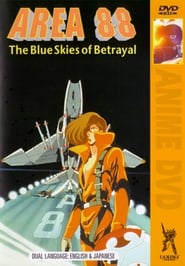
star 6.7Shin Kazama, tricked and forced into flying for the remote country of Aslan, can only escape the hell of war by earning money for shooting down enemy planes or die trying. Through the course of the series, Shin must deal with the consequences of killing and friends dying around him as tries to keep his mind on freeing himself from this nightmare.Above and Beyond
1953
Above and Beyond
1953
star 6.1The story of Colonel Paul Tibbets, the pilot that dropped the atomic bomb on Hiroshima. Although unaware of the full potential of this new weapon, he knows that it can do tremendously more damage than any other weapon used before, and that the death toll resulting from it will be huge. He is reluctant to be the person who will end so many lives, but as time goes on, the pressure upon him only increase.A Lonely Place for Dying
2009
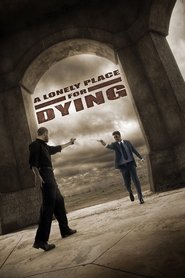
star 3.5In 1972, the conflict in Vietnam continues. The creeping threat of communism grips the nation in fear. In an abandoned prison on the US/Mexican border, KGB mole Nikolai Dzerzhinsky waits for his contact from the Washington Post. He holds explosive evidence against the CIA, information he will trade for asylum in the United States. Special Agent Robert Harper's orders are clear: take the documents from Dzerzhinsky and kill him.The Airship Destroyer
1909
star 5.8An inventor uses a wireless controlled flying torpedo to destroy enemy airships.Behind the Door
1919
Behind the Door
1919
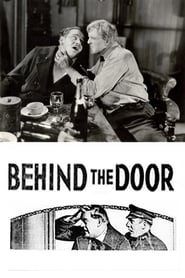
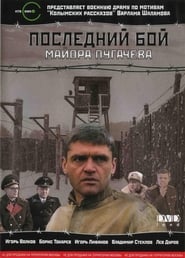
star 6.9Oscar Krug is looked upon with suspicion by his neighbors because of his German name. When the US is drawn into the war with Germany, he enlists and travels the seas with his wife, Alice Morse. During a submarine attack Alice is snatched from Krug's side by a German officer. Krug now lives to have his revenge, and when the opportunity presents itself, he will have it.Major Pugachev's Last Stand
2007
star 5During WWII, Major Ivan Vasilyevich Pugachev fights at the front, but after being wounded he is taken prisoner. During the offensive of the Soviet troops, the Germans decide to eliminate the prisoners of war. Before the execution, General Vlasov arrives in a German concentration camp, who agitates to join the ROA. Pugachev and his comrades decide to escape.Double Headed Eagle: Hitler's Rise to Power 1918-1933
1973
star 8Presents a unique and disturbing look at the rise of the Nazi party. The documentary, directed by Lutz Becker, attempts to remain as objective as possible, serving as a neutral observer of the years 1918 through 1933 in Germany. Via newsreel footage and clips of features from the era, the film offers a kaleidoscopic view of the many elements that fueled the rise of the Socialist Nationalist Party, including post-WWI poverty. Hitler occupies a central place in the documentary.The Boy and the Violin
1975
The war is over. Children without mothers and fathers, children of fighters who fell for freedom...This is the story about such boys who placed in the homes for children of fallen soldiers. One of these homes was especially for boys with gift for music. One of them was a boy named Goran. he and his best friend exchanged violins. The difference in violins was only in color, but this one reminded him strangely of the past he past. All his boyish feelings and is tender memories of his mother killed in war, Goran put into his music, producing wonderful sounds on the dark violin. But it was this violin that caused many misunderstanding in the Home.Sangokushi: The Yangtze Is Burning!
1993
star 6.3Covering roughly 13 years, from Cao Cao's victory over Lu Bu in 198 CE, through the Battle of Red Cliffs in 208 CE, and the aftermath up until 211 BCE. As other players are swept from the board, the story focuses on Liu Bei and his increasingly desperate attempts to prevent Cao Cao from seizing all of China. The turning point is Liu Bei's recruitment of the best strategic mind of that generation, Zhuge Kongming, the Crouching Dragon.The Red Baron - Manfred von Richthofen
2016
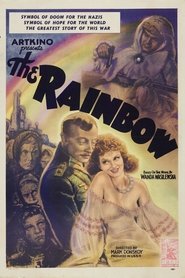
A documentary of early airplane pilot and WW1 fighter ace Manfred von Richthofen, famously known as The Red Baron.Rainbow
1944
Rainbow
1944
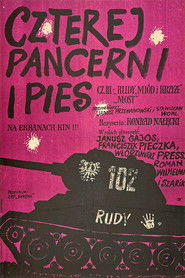
star 4.5The German conquerors are above nothing, not even the slaughter of small children, to break the spirit of their Soviet captives. Suffering more than most is Olga, a Soviet partisan who returns to the village to bear her child, only to endure the cruelest of arbitrary tortures at the hands of the Nazis. Eventually, the villagers rise up against their oppressors-but unexpectedly do not wipe them out, choosing instead to force the surviving Nazis to stand trial for their atrocities in a postwar "people's court." (It is also implied that those who collaborated with the Germans will be dealt with in the same evenhanded fashion).Four Tankmen and a Dog Part Three
1968
The third of four theatrically released episode compilations of the TV series, including episodes 5 and 6.Ik ga naar Tahiti
1992
Ik ga naar Tahiti
1992
star 7.5A short feature film about the last days in the life of the Groningen printer and typographer Hendrik Nicolaas Werkman, who was arrested by the German Sicherheitsdienst in the spring of 1945 and executed. His work is prominently featured in the film, which uses flashbacks to portray Werkman's personal and artistic life.Mount of Lament
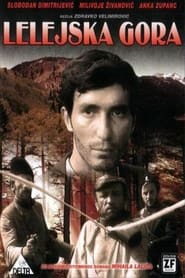
1968
Mount of Lament
1968
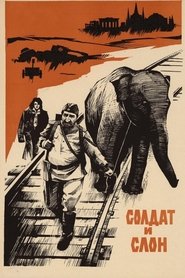
star 6Lado Tajovic, a student, is charged by the communist party to go to his home in the Montenegrin Mountains, to illegally spread the liberation movement's propaganda. Alone, surrounded by enemies, always awake and ready to evade traps and ambushes, Lado fights on the verge of sleep, against people which are cowards ready to betrayal. He fights his own temptations, hallucinations that constantly besiege him. Although he perseveres in holding to party directives: no killing and no revenge, Lado at one moment of weakness falls to a primal human act vengeance.The Soldier and the Elephant
1978
star 4.8Soldier Armenak is given an extraordinary task: to transport an elephant from Germany to the Yerevan Zoo.WWII: Saving the Reality
2013
See Kenneth W. Rendell's collection of over 6,000 artifacts that range from the end of World War I and the rise of Nazism to the start of World War II and the fight in Europe and the Pacific.Vi mötte stormen
1943
Vi mötte stormen
1943
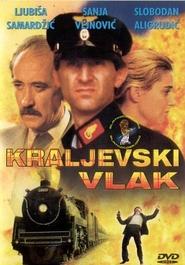
star 4News reel film sequences from September 1938 until the end of 1942, integrated with the fictive Swedish family Söderberg in their everyday life at home and the changes, because of the escalating war, that are brought upon them.The Train for Kraljevo
1981
star 5.3It is 1941 and the German occupying forces are taking over Yugoslavia, making a train ride to Kraljevo a dangerous game for a secret communist agent carrying important documents. Both the Germans and the police are looking for him on the train, and his safe arrival in Kraljevo seems like an impossibility. His determination to get the papers to the right people keeps him going, even through a gun battle after the train arrives - challenging him to find a way to complete his mission.