Popular War Movies - Page 262

Wartorn: 1861-2010
2010
Wartorn: 1861-2010
2010
star 5.9With suicide rates among active military servicemen and veterans currently on the rise, this documentary brings urgent attention to the invisible wounds of war. Drawing on personal stories of American soldiers whose lives and psyches were torn asunder by the horrors of battle and PTSD, the documentary chronicles the lingering effects of combat stress and post-traumatic stress on military personnel and their families throughout American history, from the Civil War through today's conflicts in Iraq and Afghanistan.The Lost Patrol
1929
The Lost Patrol
1929
A patrol of twelve soldiers is lost in the desert and killed by the tribesmen, but the sergeant makes sure that one of the tribesmen dies for every one of his men.Ukraine 2022: Attack on Freedom
2022
Despite warnings of imminent war, the world was shocked when Russia’s invasion of Ukraine began from the east on February 24th, 2022. But liberty, democracy, and human dignity were not snuffed out by Putin; freedom will prevail, and so will Ukraine.Earthy Love
1975
Earthy Love
1975
star 5.8A life of a few people during the years before WWII before the events shown in "Destiny" (1977).Rogue Warfare
2019
Rogue Warfare
2019
star 5.6A group of military elite from the U.S., Russia, UK, China and France join forces to fight an elite underground terrorist network.The Bombers
1973
The Bombers
1973
star 5.6Two best friends, former Partisans, must face new challenges after the war.The Cruel Sea
1944
The Cruel Sea
1944
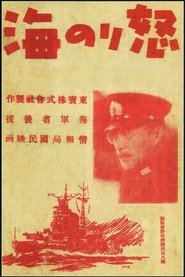
It is 1921 and a town has a newspaper which prints urgent bulletins as required. The Washington-based CITES treaty, in which Japan participates, puts a limit on the number of warships any country can possess. As a result, Japan has to decommission a ship to its makers' disappointment. An institute of technology's laboratory designs a new ship. Due to less ships, sailors have to retire and are also disappointed. The laboratory's manager and an admiral are visiting a patient at a hospital and meet coincidentally. The former has a daughter who worries about her father's workload. She asks him to accompany her to a concert. Father has little time, but is convinced for her sake. He is inspired for a ship's design at the performance. The film is inspired by the life of Jo Hiraga.National Geographic: Untold Stories of World War II
1998
star 6Showcases 3 major events during World War 2 involving both the Europeans & Pacific conflicts. The Raids to destroy Nazi Germany's heavy water production based in Norway, plus the final desperate act to deny them what had already been stockpiled. The Japanese midget submarines role and participation in the attack on Pearl Harbor, December 7, 1941. What they achieved plus what was their ultimate fate. The attacks on United States warships in the Pacific late in World War 2 by the Japanese Kamikaze and Okha Squadrons. The Kamikaze attacks were in whatever planes the Japanese forces were able to gather. The Okha attacks were made in specially built flying bombs that were towed by larger and usually slower aircraft that were not suitable for fighter work.No Trespassing
1975
No Trespassing
1975
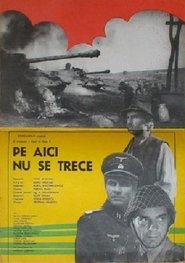
star 7.2The film follows the stories of a handful of characters: Andrei (Radescu), who finds himself in conflict with his peers; Colonel Maxineanu (Stanculescu), the school commander; and Adrian (Mavrodineanu), a young villager who is inspired by the bravery of the cadets. The Hungarians arrive and launch a series of attacks against the Romanians. The Axis are pushed back again and again, despite superior numbers and weaponry. At the end of the film, they launch one last attack, which seems to momentarily begin breaking through. Just at that moment, reinforcements from the Soviet and Romanian armies arrive, pushing the Hungarians back.Emisia continuă
1985
Emisia continuă
1985
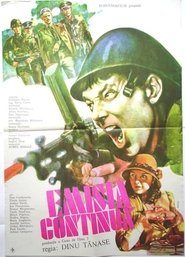
star 6.3Based on actual events which happened at the Radio Romania station in Bod-Brasov, during the beginning of the revolution for social liberation and for the country's national liberation, an anti-fascist and anti-imperialist revolution, on August 23, 1944. After King Michael I ousts the Nazi-allied dictator Ion Antonescu, Nazi troops struggle to recapture the Radio Romania station, their former headquarters in an attempt to regroup their forces, but are opposed by a determined band of anti-fascist fighters.House of the Generals
2000
Based on a true story. The life of a Ukrainian Jewish girl from the last days of the Russian Czarist regime through the end of WWII and the affects of the political turmoil and Jewish persecution on her and those closest to her. Ukraine amassed thousands of WWII monuments. 600,000 Ukrainian Jews perished as victims of Hitler and Stalin, and half of the Russian losses occurred in Ukraine.An Indecent Obsession
1985
star 4.1Sister Honour Langtree (Wendy Hughes), is in charge of a military hospital for psychiatric patients. She however transgresses boundaries by developing a sexual attraction for a new patient.The Fortress
1979
The Fortress
1979
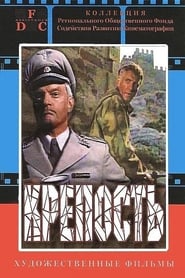
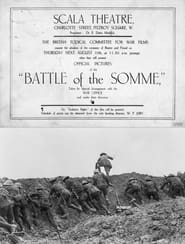
star 5A group of Soviet paratroopers are engaged in a secret operation in Adriatic sea during the last year of WWII.The Battle of the Somme
1916
star 6.5A documentary and propaganda film which shows the British Army's preparations for, and the early stages of, the battle of the Somme.The Elephant Who Waited
1949
The story of Kanesuke and Entaro who are master elephant trainers in charge of two elephants, Taro and Hanako at the Metropolitan Zoo.Wind from the Sea
1930
Frenchman's Flat
2017
Frenchman's Flat
2017
star 2In 1953 at the height of the Cold War "Frenchman's Flat" focuses on the atomic weapons testing that was conducted on U.S soil in Nevada.Chapayev is with Us
1941
Chapayev is with Us
1941
star 1Short propaganda film released to raise army morale during first months of war. Civil War hero and Red Army commander Vasily Chapayev (killed in 1919 by White Army officers then drowned in the Ural river) swims ashore but it's the summer of 1941. Chapayev asks who are Soviets fighting off this time, hears that it's Germans once again and then gives an inspiring speech. He is played by Boris Babochkin who famously portrayed Chapayev in 1934 biopic.