Popular War Movies - Page 282

Traces
1967
Traces
1967
star 8A Japanese fine art teacher helps a Korean independence fighter to escape from a threat of being arrested by the Japanese police. The Korean man introduces him a gisaeng (Koran geisha) who learned Korean traditional court dance and he falls in love with her. However she hates Japanese because her parents were killed in the war.Facing the Enemy
2007
Facing the Enemy
2007
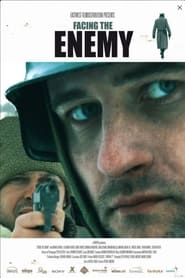
star 4The heart of this dramatic story based on the novel by Leopold Lahola is the search for the principle of humanism. The story plays in a single day towards the end of World War II in a rough, snow-covered landscape where a German soldier escorts his prisoner with orders to shoot him. The background of the story is formed by the flashbacks of the partisan soldier being interrogated by a Russian commissar who wants to know all about him being taken prisoner. The German soldier Helmut Kampen escorts the captive partisan who is condemned to death but finally manages to flee. The commissar wants to know why the Germans did not kill him and accuses the partisan soldier of collaborationSarajevo Film Festival
1993
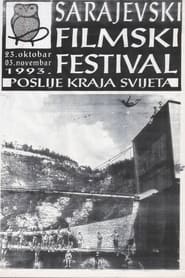
Sarajevo in the twentieth month of its besiegement. The situation is critical, but the city chooses to organise an international film festival. Dutch filmmakers Johan van der Keuken and Frank Vellenga present Van der Keuken's documentaries Face Value and Brass Unbound there, and one of the festival organisers asks a festival visitor: "What is the significance of film in war?" In Sarajevo Film Festival Film, a reflection on film, war and daily life, fictional images are juxtaposed in a disconcerting way with the gruesome reality of the life of a festival visitor.Red Sun
1972
Red Sun
1972
Young Venka investigates the cause of death of a fellow villager during the Great Patriotic War - in the process uncovering a traitor who has been murdering witnesses to his own inglorious past.The White Bird Marked with Black
1972
star 5.9A family struggles to survive in an area that was claimed as part of Rumania, Poland and the Ukraine, all within a short span of time. When World War II comes, various family members choose different masters; some even choose to work for the Soviets. War, struggle, marriages, births, deaths--all these events punctuate the story of this large family.I'm Coming Home
2014
I'm Coming Home
2014
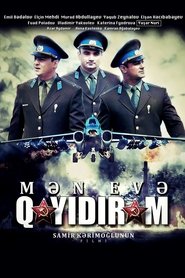
The propaganda film tells the heroic story of Tarlan Seyidzade, who served in the Russian army.Time to Kill
1945
Time to Kill
1945
A group of sailors kid their shipmate Frank about his constant reading, when they would all rather play cards. But each of them has a dream for the future that they consider impossible. Harry wants a better world for his two kids, Shorty and Eddie want to start a trucking company, Joe wants to learn about engines, and another of the gang just wants to know how to write well. When Frank reveals that he's been studying to get his high school diploma and to have a career in the Navy, the others realize that the educational benefits offered by the Armed Forces Institute can help them achieve their dreams.Nazi Law: Legally Blind
2016
Sobering look at how Hitler and the Nazi party manipulated laws to further their hate-filled agenda. People who were considered physically or racially inferior or disloyal to the state were deprived of their rights and often their lives under these Nazi laws. When Germany was ultimately defeated, Nazi leaders were charged with crimes against humanity in the Nuremberg Trials, in an attempt by the world community to restore the rule of law.Comrade Song
1966
Comrade Song
1966
The movie-almanac consists of three novellas dedicated to the song. "Song-password". Lieutenant Marchenko is sent to the Nazi-occupied city to pass a purse with fuses to the underground scouts through the liaison. The password song helps the scouts to find each other. "Song about the mother." Working in distant Africa, pilots Igor and Victor once recorded on a tape recorder a song about his mother. Soon Igor dies during an epidemic. And Victor, in memory of his friend, gives his mother the tape they recorded. "Song at Dawn". Student Sergei dedicated to his favorite girl Valya composed by him "Song at Dawn". Valya then did not understand Sergei's feelings and married his friend. Sergei leaves. Years pass. Valya's personal life did not go well. And now she often remembers Sergei's sweet song.Nothing to Report
1973
Nothing to Report
1973
star 5.5In 1956, the professional army of France lacks the manpower to keep the peace in Algeria, the colony which the country is determined to hold on to at any price. For this reason, reservists are called up and subject to an intense period of training before being sent to the front. Rémy March, Alain Charpentier and Raymond Dax are three such young men who have no interest in the military escapade and are reluctant conscripts. What they witness in Algeria will appall and transform them. Rape, torture, executions... there is no end to the atrocities in which they become unwilling participants. No wonder the French military are so willing to proclaim that there is nothing to report...Mountains on Fire
1931
Mountains on Fire
1931
star 6Two of Germany's best and busiest directors collaborated on Berge in Flammen (Mountain in Flames). The storyline should be of interest to pro-ecologists, inasmuch as the directors take to task the warmongers of the world for despoiling the natural beauties of the European mountain ranges with their shell-fire. The final outrage occurs during a battle between the Austrians and the Italians in the Dolomites, culminating with the destruction of an entire mountain (hence the film's title). The harrowing images on screen were complemented perfectly by the musical score of Giuseppe Beece. Also known as The Doomed Batallion, Berge in Flammen was filmed in three different languages -- German, English, French -- for a total cost of $150,000.The Unknown Soldier
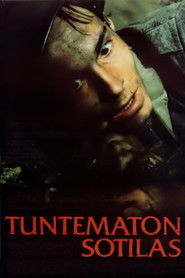
1985
The Unknown Soldier
1985
star 6.7Second silver screen adaption of the Finnish war book by Väinö Linna. The story is based on Linna's experiences as an infantry man in the Finnish army during the so called "Continuation War" (1941-1944).The Enemy Below
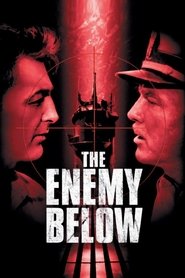
1957
The Enemy Below
1957
star 7The crew of the American destroyer escort, the USS Haynes, detects a German U-Boat—resulting in a prolonged, deadly battle of wits.Nameless Heroes
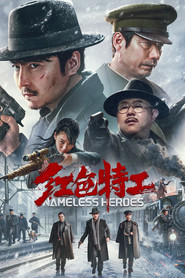
2023
Soldier's Mementos
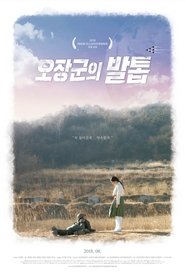
2018
Soldier's Mementos
2018
star 7Jang-gun lives in a remote country, Kkachigol, with his loving mom. His name, Jang-gun, means ‘General’ in Korean which his mother named wishing him to be a great person. But he just want to be a ordinary farmer and his only wish is growing potato well and getting married Kkotbuni someday. One day, Jang-gun receives a draft notice and conscripted into the army even not knowing the meaning of the war.Chocolate and Soldiers
1938
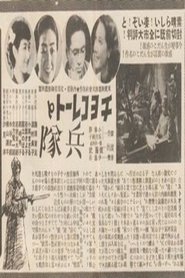
star 8Chocolate and Soldiers (チョコレートと兵隊, Chokorēto to Heitai) is a 1938 Japanese war film directed by Sato Takeshi and one of the most effective Japanese propaganda films of the late 1930s. The American director Frank Capra said of Chocolate and Soldiers "We can't beat this kind of thing. We make a film like that maybe once in a decade. We haven't got the actors. It shows the common Japanese soldier as an individual and as a family man, presenting even enemy Chinese soldiers as brave individuals. It is considered to be a "humanist" film, paying close attention to the human feelings of both the soldier and his family. Cinema theorist Kate Taylor-Jones suggests that Chocolate and Soldiers provided "a vision of the noble, obedient and honourable Japanese army fighting to defend the emperor and Japan.Белая земля
1971
Белая земля
1971
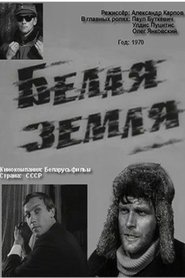
Operation Holtsauga was a Nazi plan to destroy Soviet ships and aircraft approaching Murmansk, which was carried out in 1942. Near Bezymyanny Island, a Soviet ship struck a mine and sank, and engineer Okulich, who miraculously survived, was taken prisoner. However, he managed to escape and even took German officer Ritter with him. During a week of difficult travel to the mainland, he learns from the German about the Holzaug plan. Thirty years later, an explosion occurs on Bezymyanny Island during the construction of an astrophysical station. Now Okulich must uncover all the details of the old operation in Munich...442: Live with Honor, Die with Dignity
2010
star 10Medal of Honor Recipient George Sakato said with tear, ' I am not a hero. I just killed a lot of people. It's not good. This medal is for the people who couldn't return their homes, not for me.' Even many soldiers who received the decoration still have deep scars in their hearts now. He is the veteran of 442nd Regimental Combat Team in WW2 composed of Japanese Americans, who were at first seen as the problem because of their race, but later seen as problem solvers because of their splendid achievements on the battle field. They had to fight not only the enemy but also prejudice. This is the story of the 442nd and their veterans now and then.681 - The Glory of the Khan
1981
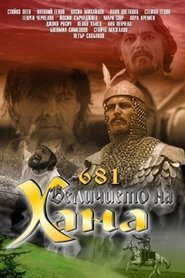
In 651, Khan Kubrat died and the Khazars accelerated their raids upon Great Bulgaria. His five sons split the Bulgarian tribe and each led his to find new land where they could live in peace. Khan Asparukh, the youngest son, went west and, after an arduous journey lasting for years, southward across the River Danube, into Moesia. In 680-81, in alliance with the Slavs, he inflicted stunning defeats on the Roman legions and forced the Byzantine Empire to recognize the formation of the new state of Bulgaria in the lands where it still exists today.Legend of the Galactic Heroes Side Story Oberstein Hen
2012
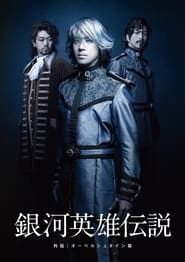
DVD release of the theatrical play of the best seller novel and anime series. It is an original story