Popular War Movies - Page 290

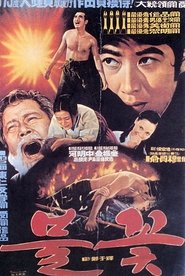
Flame
1975
Flame
1975
A man wanders around the mountains with a bleeding leg, holding a rifle in his hand. Seemingly a fugitive, he runs from as-yet unknown pursuers, but he also seems to be following somebody who has already walked the same path. As he hides in a secluded cave, past memories sweep through his exhausted mind, memories of lifelong cowardice and evasion. And this recollection leads to a reconstruction of early 20th century Korean history. Winner of Best Picture (Nam-a Pictures Co., Ltd.), Best Actor (Ha Myung-joong), Best Art Direction (Kim Yoo-joon), Best Lighting (Son Young-cheol) at the 14th Grand Bell Awards. (source: Jiro Hong, koreanfilm.org)Good Times, Wonderful Times
1966
star 4.4Lionel Rogosin's plea for humanity and against war and fascism. For two years, Rogosin traveled to twelve countries to collect footage of war atrocities from their archives. He interspersed these harrowing images with scenes of a London cocktail party's mundane chatter. Good Times, Wonderful Times was released in 1964 at the height of the Vietnam War, and became one of the great anti-war films of the era.Первый взвод
1933
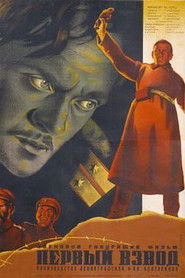
Первый взвод
1933
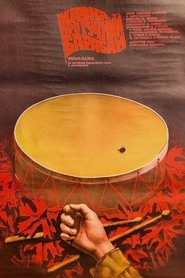
A Tale of a Loud Drum
1987
A tale of a twelve years old Larik, one of the young heroes of Civil War in Russia.Iron Angel
1964
Iron Angel
1964
star 6A seasoned Sargent with a sorry unit, led by an angry 1st Lt., to take out an enemy hold for a convoy to proceed. After their success the Sarge and the crew meet up with another Lieutenant - Female nurse.The Stragglers
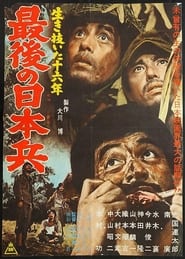
1960
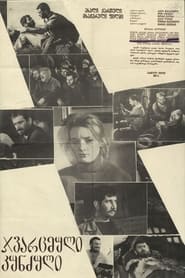
Crucified Island
1968
Crucified Island
1968
star 5Based on true story of Georgian uprising on Texel. Insurrection of captured Soviet-Georgian soldiers conscripted into German Wehrmacht on Holland's Texel Island during German occupation of HollandDay of Rulers
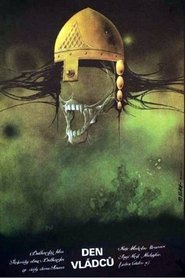
1986
Day of Rulers
1986
star 7The protagonist in this picture is legendary Bulgarian Khan Krum - a ruler in the beginning of IX century. In this period, Bulgaria ranked third in Europe in terms of territory and military power. It is Khan Krum who contributed to the union of Bulgarians and Slavs. He enforces unseen to that day laws against calumniators, thieves, violators. It stirs discontent among his closest men. The ruler is smart and just, but isn't he too severe? At what cost can one ensure order and progress in a state?Крушение империи
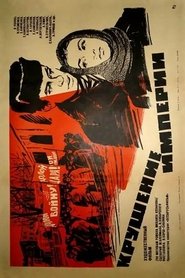
1971
Крушение империи
1971
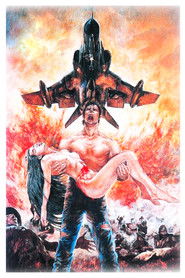
Legend of the Phantom Heroes
1991
star 5.8Yazawa, a Japanese pilot, suffers a crash in his Phantom jetfighter. After a six month recovery, his old friend from an airplane magazine wants him to investigate the appearance of a Phantom in an armed conflict in El Salvador. Yazawa's investigations makes him wind up in an international arms conspiracy. Based on a series of military fiction novels.Red Cherry
1995
Red Cherry
1995
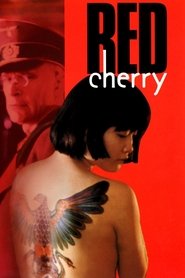
star 5.1Based on a true story, this horrifying tale follows two orphaned friends as they struggle to survive during World War II.On Secret Service
1912
On Secret Service
1912
star 5Fred Martin is a Southern spy. A northern dispatch bearer is captured, the signature to his messages is forged, and Martin is sent on the dangerous mission of luring the Northern troops into an ambush. He accomplishes this and a terrible battle results, in which the Federals are driven back. The work of Martin is so damaging to the North that plans are laid for his capture, and John Bruce, a secret service man, is assigned to the task.The Prelude to an Undeclared War
1984
In 1939, when the Japanese army invaded the protected border of our country, our border warriors showed how they protected the protected border of our country from foreign invaders.Let There Be Light
1946
Let There Be Light
1946
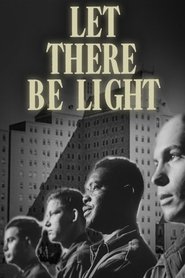
star 7.4The final entry in a trilogy of films produced for the U.S. government by John Huston. Some returning combat veterans suffer scars that are more psychological than physical. This film follows patients and staff during their treatment. It deals with what would now be called PTSD, but at the time was categorised as psychoneurosis or shell-shock. Government officials deemed this 1946 film counterproductive to postwar efforts; it was not shown publicly until 1981.Axe. 1943
2021
Axe. 1943
2021
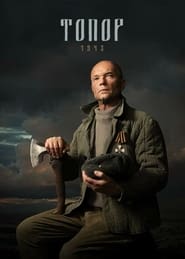
1943. On the eve of the Red Army offensive, Captain Belov's group, which includes Ivan Rodin, accidentally discovers a disguised tank division near the village of Anino. The scouts understand that only they know about the ambush arranged by the Germans. The wounded Belov orders Ivan to reach the Soviet command and warn them of the danger. He reports to the headquarters about the tanks he saw and even reproduces the tactical number of the division, but the front command does not believe him. Suspecting Ivan of misinformation and working for the Germans, the military sends him under arrest. Colonel Alyoshin tries to save his friend: thanks to his perseverance, the command sends another group to Anino — Ivan becomes the guide, and Odintsovo leads the detachment.Hands Up!
2003
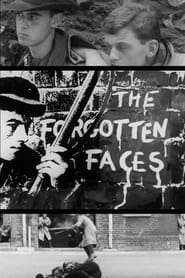
The Forgotten Faces
1961
The Forgotten Faces
1961
star 6“The Forgotten Faces (1961), a film reconstruction of the Hungarian revolution of 1956, won Watkins another amateur Oscar, and to this day, the film is praised in England as "one of the most memorable amateur films ever made".Strangers To The World
2020
star 5A short documentary about the lives of Etty Hillesum and Franz Jaegerstaetter.