Popular War Movies - Page 87

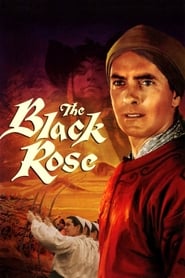
The Black Rose
1950
The Black Rose
1950
star 6.6In the 13th century, Walter of Gurnie, a disinherited Saxon youth, is forced to flee England. With his friend, Tristram, he falls in with the army of the fierce but avuncular General Bayan, and journeys all the way to China, where both men become involved in intrigues in the court of Kublai Khan.Outlaws - For Greater Glory
2012
star 6.8A chronicle of the Cristeros War (1926-1929), which was touched off by a rebellion against the Mexican government's attempt to secularize the country.The Patriot
1998
The Patriot
1998
NATO prepares a global plan as a protection of Central Europe, which is why they set up an aerial defense system in Slovenia named as The Patriot. International terrorist organization attempts to destroy it together with the nuclear power plant. An ex-criminal who's in charge of The Patriot, tries to prevent this catastrophe and also stop the internal enemies.Jump Into Hell
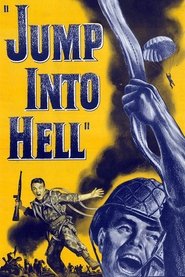
1955
Jump Into Hell
1955
star 3.4Arriving in IndoChina by parachute, Captain Guy Bertrand and his comrades make a courageous stand against the Communist forces. Jump into Hell is one of the first films to deal with the ongoing conflict in Vietnam or, as it was still known in 1955, French IndoChina.War Live
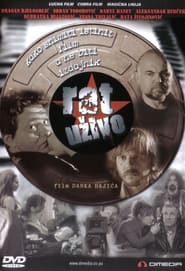
2000
War Live
2000
star 5.7Belgrade, 1999. Producer Sergei and his film crew are in a disastrous situation - the film they're making is under threat - there's no money, the crew are dissatisfied - and NATO bombing is just around the corner. Then a member of the State Security Service (Mileta) comes looking for American co-producer Harvey. Anxious and worried, in the midst of the bombing that's begun, Sergei hides Harvey from what he thinks is awaiting him - arrest. During the night, he thinks up a plan. He announces the start of filming on a new, patriotic film - in which the main role will be played by Harvey. The plan works - the State supports the film and Mileta, as the State's representative, joins the crew. However, the underlying conflict between Mileta and Sergei explodes during the first screening. Mileta accuses them of being artists, and not being patriots.Let Joy Reign Supreme
1975
star 6.4A look at 18th-century France, when the depravity of the authorities contributed to social oppression, and the uprisings flared up one after another.The Resistance Banker
2018
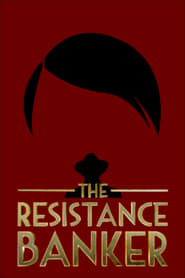
star 6.7In the occupied Netherlands during World War II, banker Walraven van Hall is asked to use his financial contacts to help the Dutch resistance. With his brother Gijs, he comes up with a risky plan to take out huge loans and use the money to finance the Resistance.1944: Should We Bomb Auschwitz?
2019
star 7.5In 1944, two prisoners miraculously escaped from Auschwitz. They told the world of the horror of the Holocaust and raised one of the greatest moral questions of the 20th century.The Battle of Okinawa
1971
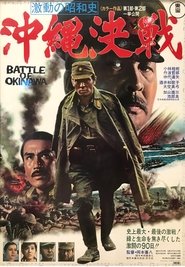
star 7.5The Americans are swiftly closing on Okinawa, an island just south of the Japanese mainland. The Imperial command sends top generals and several army divisions to defend it at all costs. The mission quickly degenerates as vital resources and troops are diverted to other islands. After a civilian evacuation ends in tragedy most of non-combatants are forced to remain on the island. Many convert to soldier status. Tokyo sends mixed messages that squander time and resources, as when they order the defenders to build an airstrip for aircraft that never come. The truth soon becomes obvious: the high command decides that the island cannot be held and effectively abandons the Okinawan defenders. When the Americans land many troops are deployed in the wrong places. As the slaughter mounts, a suicidal attitude takes hold. Okinawa becomes a death trap, for civilian volunteers and non-combatants as well.Až do konce
1985
Až do konce
1985
Sudetenland, May 1945. A group of retreating German soldiers capture a group of young female workers, totally deployed in a chemical factory. He wants to use them as hostages during his advance to the American demarcation line. Together with them, they take refuge in a nearby castle, which soon becomes the site of the last battle that takes place both in the minds and in the backdrop of war-torn Czechoslovakia, shortly before liberation. A psychological probe as well as an intimate drama set within the walls of a small castle, it is a mosaic of mini-stories charting the fates, attitudes and thought processes of individual characters on both sides of the barricade.Sangokushi: The Distant Land
1994
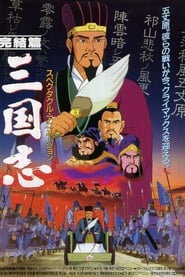
star 6.3Third movie of the Sangokushi animated film trilogy. The movie covers the longest time span of the three films, from Liu Bei's expedition to Shu in 211 CE to the death of Kongming in 234 CE.Operation
1960
In Which We Serve
1942
In Which We Serve
1942
star 6.8The story of the HMS Torrin, from its construction to its sinking in the Mediterranean during action in World War II. The ship’s first and only commanding officer is Captain E.V. Kinross, who trains his men not only to be loyal to him and the country, but—most importantly—to themselves.Reunion in France
1942
Reunion in France
1942
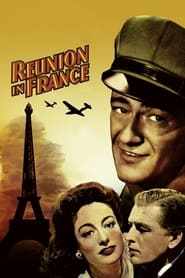
star 6.4French woman Michele de la Becque, an opponent of the Nazis in German-occupied Paris, hides a downed American flyer, Pat Talbot, and attempts to get him safely out of the country.Seven Warriors
1989
Seven Warriors
1989
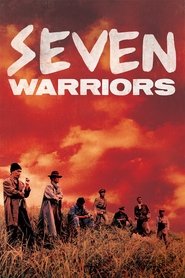
star 6.2In the early 1920's of China, seven former soldiers band together to defend a helpless village against a group of vicious bandits in this Hong Kong remake of Seven Samurai.Anne Frank's Diary
1995
Anne Frank's Diary
1995
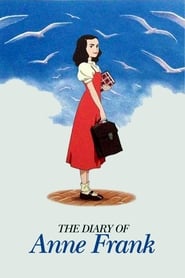
star 6.5During World War II, a teenage Jewish girl named Anne Frank and her family are forced into hiding in the Nazi-occupied Netherlands.Korczak
1990
Korczak
1990
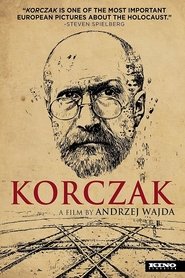
star 7The story of Polish pedagogue Janusz Korczak and his dedication to protecting Jewish orphans during the war.Diên Biên Phu
1992
Diên Biên Phu
1992
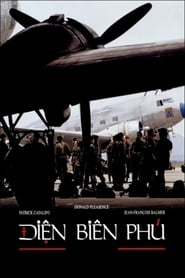
star 6.4Vietnam, 1954. An American reporter finds himself in the middle of the battle of Điện Biên Phủ, between the French army and the Vietminh.Block-Heads
1938
Block-Heads
1938
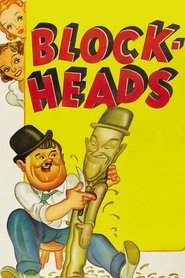
star 7It's 1938, but Stan doesn't know the war is over; he's still patrolling the trenches in France, and shoots down a French aviator. Oliver sees his old chum's picture in the paper and goes to visit Stan who has now been returned to the States and invites him back to his home.Murderers Among Us: The Simon Wiesenthal Story
1989
star 5.7A biographical portrayal of Simon Wiesenthal, famous Nazi Hunter. From his imprisonment in a Nazi Concentration Camp, the film follows his liberation and his rise to become one of the leading Nazi hunters in the world, bringing such criminals to justice as Adolf Eichmann and Klaus Barbee. (Written by Anthony Hughes)