Popular History Movies - Page 217

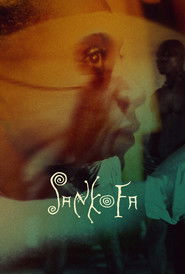
Sankofa
1993
Sankofa
1993
star 5.6On a photo shoot in Ghana, an American model slips back in time, becomes enslaved on a plantation and bears witness to the agony of her ancestral past.Ada and the Doc
2023
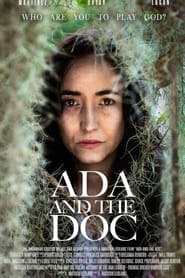
Ada and the Doc
2023
In 1927 southern Louisiana, subversive housewife Ada LeBoeuf is put on trial alongside her alleged lover for the grisly murder of her husband in one of the most explosive sex-murder trials ever reported.Tarakanova
1930
Tarakanova
1930
star 1Tarakanova is a 1930 French historical drama film directed by Raymond Bernard and starring Édith Jéhanne, Paule Andral and Olaf Fjord. It depicts the life of Princess Tarakanoff, the pretender to the throne of Catherine II in Eighteenth Century Russia.Soleils
2014
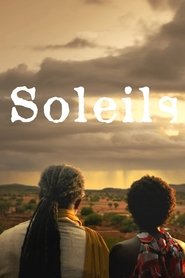
Soleils
2014
star 4An old man is entrusted in curing a young girl struck by amnesia. He takes her on a healing trip, eccentric and joyous, to Ouagadougou by way of the Cape, Berlin, Mali, Belgium… In their travels full of surprises, they meet characters both remarkable and luminous, or ignorant, with set ideas, some fabulous creatures, and a text hidden deep in a continent that reveals a well-kept secret: Africa has something to tell us.A Samurai's Sorrow
1993
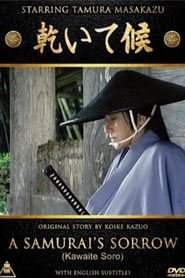
A Samurai's Sorrow
1993
A rare grouping of the three Tamura brothers, Masakazu, Takahiro, and Ryu highlight this exciting tale of a series of attempts on the life of Shogun Yoshimune. The Owari have longed for the post of shogun, and are willing to do anything, including murder, in order to achieve their goal. Directed by master filmmaker Inoue Akira, this action packed movie, based on a manga by Koike Kazuo who created the Baby Cart (Lone Wolf) series, is loaded with splendid swordplay and an intelligent story line. It all starts when poison is discovered in the shogun’s food. Can the brilliant swordsman Mondo (Tamura Masakazu) manage to save Japan’s leader from certain death?!Run Melos!
1981
Run Melos!
1981
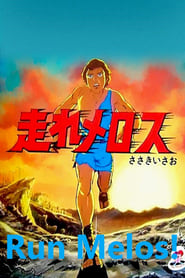
star 6.4Hashire Melos! is the title of two Japanese animated films. The first was directed by Tomoharu Katsumata and released on Japanese television on February 7, 1981. It was either 68 or 87 minutes long, and its official title did not include the exclamation mark on the end. The second, with the exclamation mark, was a 107-minute remake of the first and was released on July 25, 1992. It featured direction and screenplay by Masaaki Osumi, music by Kazumasa Oda, art by Hiroyuki Okiura and Satoshi Kon, and background art by Hiroshi Ohno. Both were produced by Toei Company Ltd. Visual 80, and both were based on the original short story written by Osamu Dazai in 1940.Three Believers
1990
Three Believers
1990
A thief in Lvov, Poland, during the German occupation who uses his knowledge of the sewer system to help a Jewish family escape.The Last Note
2017
The Last Note
2017
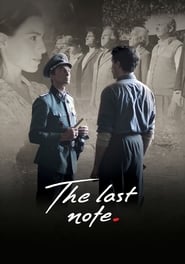
star 6.6The execution of 200 Greek resistance fighters by the German occupiers on May 1st, 1944 in Kaisariani, as reprisal for the Greek Resistance ambush against Nazis.Red Rain
1950
Red Rain
1950
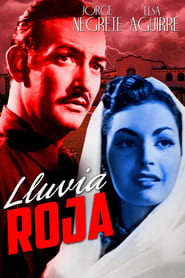
star 5.7Military leader is appointed to local government, becomes overly despotic in his leadership.Three Nobunagas
2019
Three Nobunagas
2019
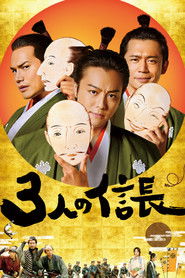
star 7Warlord Oda Nobunaga has lost the battle in sixteenth century Japan and is currently being pursued by Ujinori Kanbara who was Yoshimoto Imagawa's vassal. Yoshimoto was slayed by Nobunaga and the former vassal is burning with the fires of revenge. Yet, success is seemingly tripled when he captures not one but three Nobunagas. Each prisoner claims to be the warlord.The People Speak
2009
The People Speak
2009
star 7.2A look at America's struggles with war, class, race and women's rights. based on Howard Zinn's "A People's History of the United States."Surrealissimo: The Trial of Salvador Dali
2002
star 5A comic drama about the weird and wonderful world of Salvador Dali and the Surrealists. This film charts Dali's meteoric rise from obscurity to the world's most publicised artist.Pornography
2003
Pornography
2003
star 5.9Two intellectuals, a writer and a director, begin to play a mysterious psychological game in a peaceful countryside manor house during the Nazi occupation.Turkish Ice Cream
2019
Turkish Ice Cream
2019
star 5.9In 1915, two Turks in Australia make a living by selling ice cream. When they hear war has broken out, they decide to go to Çanakkale. Authorities don't let them leave the island, so the two decide to put up a fight in Australia.The Son
2021
The Son
2021
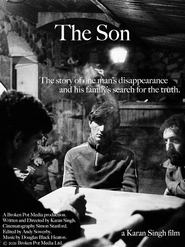
Using unpublished photos taken by Italian war photographer Enrico Sarsini, and the reconstruction of key events, this film examines the battle for a strategically-located church that was defended by Azerbaijani teenager Natig Gasimov. After his surrender and interrogation by Armenian forces, he was never heard of again. This film finds out what happened to Natig and who may be responsible. Filmed over a period of three years, filmmaker Karan Singh spoke to witnesses in Armenia, Azerbaijan, Italy and Russia in his search for the truth.The Nose
2015
The Nose
2015
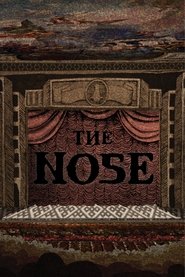
Created using collage, stop motion animation, pixillation, and live action footage. Inspired by Nicolai Gogol’s short story, “The Nose” follows the peregrinations of a part who has left the whole to begin its own subversive narrative.Martyr or Murderer
2023
Martyr or Murderer
2023
star 2A sequel to Maid in Malacañang. The film explores the assassination of Ninoy Aquino on August 21, 1983, three years before the events of Maid in Malacañang, and how the Marcoses were accused of as those responsible for killing him.