Popular History Movies - Page 236

Shahjehan
1946
Shahjehan
1946
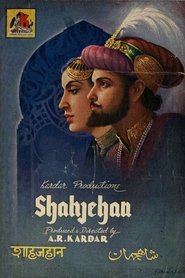
star 5Shahjehan (a raw Rehman in one of his first releases) is approached by a Rajput chieftain, Jwala Singh, narrating the plight of his foster daughter, Ruhi (Ragini), who is blessed with unheard of beauty. This gives rise to an army of suitors, who indulge in violence to prevent her from getting married by scaring her to-be grooms. Her beauty, confined to four walls of Jwala's haveli becomes part of folklore, and street gossip, through the poetry of Sohail (Saigal) who accidentally catches her glimpse, and falls in love with her.Rajkahini
2015
Rajkahini
2015
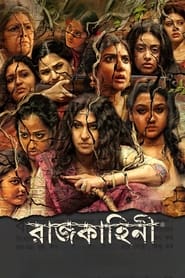
star 8.1In August 1947, the British passed a bill regarding the partition of Bengal. Delving into the grim history of the Partition, Mukherjee's movie Rajkahini is woven around a border between the two nations that runs through a brothel housing 11 women.Thirteen Days
2000
Thirteen Days
2000
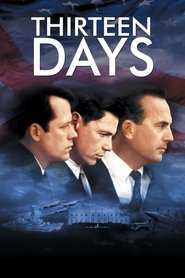
star 7The story of the Cuban Missile Crisis in 1962—the nuclear standoff with the USSR sparked by the discovery by the Americans of missile bases established on the Soviet-allied island of Cuba.Silent Mobius Gaiden: The End of the Edo Period
1993
Set in the final years of Japan's shogunate, all characters from the main series, Silent Mobius, appear with the same name. According to the setting, they are said to be the previous lives of the characters in the main story...Steve Jobs
2015
Steve Jobs
2015
star 6.8Set backstage at three iconic product launches and ending in 1998 with the unveiling of the iMac, Steve Jobs takes us behind the scenes of the digital revolution to paint an intimate portrait of the brilliant man at its epicenter.The Time of Our Lives: The Most Amazing 60 Years in History
1983
Retrospective of TIME's reporting of the personalities and events of the past six decades. Made in collaboration with TIME editors and representatives of the publisher's office, and checked for accuracy by reporter-researchers in the manner of TIME stories. Includes March of Time archival film and quotes from TIME's contemporaneous judgments. Provides behind-the-scenes insights into the publication's history, like the origin of Man of the Year, TIME's early writing style of backward-running sentences and neologisms like "tycoon" and "socialite" that are now English vernacular, and canceled cover stories.Almost a Bride
2024
Almost a Bride
2024
Marika is a young and beautiful girl, her family runs a fabric shop called White Peacock. Their life turns upside down when the train and the promise of the modern world arrives in their little hometown. However, not only the train arrives in the girl's life, but also two men: the rational and cunning Jenő Toll and the intelligent and dreamy Baron Pankotay. In Marika, the two men, new, strange feelings and family pressure break the usual balance. Marika must make a decision when the modern world threatens both the security and livelihood of her family. Her decision surprises everyone.Hong Kong: Retrocession Generation
2017
star 7.5In 2017, twenty years after the British handed over Hong Kong to China in 1997, young people, more politicized than any previous generation and proud of their land, do not feel Chinese and actively fight against the oligarchs who want to subdue them to China's authoritarian power.The Long Way Home
2013
The Long Way Home
2013
star 6.7Inhospitable at the best of times, the snow-covered mountainscapes of Eastern Anatolia constituted a fatal frontier for many war exiles after the battle of Sarikamish in 1915, and provides a canvas laced with beauty and threat for this bone-chilling survival yarn, the superb debut feature of Alphan Eşeli. Starting out with three characters – a refugee mother and daughter and their grizzled guide – the film traces their daunting trek across this barren terrain to safety, with the Russians encroaching and other stragglers, including a pair of wounded, frostbitten Ottoman soldiers, all orbiting the same burnt-out village they find in their path. Puncturing its aura of ghostly impasse with some shocking narrative reversals, and constantly prickling with the mutual dread of strangers in gruelling extremes, the movie stakes out hugely credible ground next to established Eastern Front war classics (In the Fog, Come and See) while remaining thoroughly its own beast. (Source: LFF programme)Eien no Nispa
2019
Eien no Nispa
2019
star 4.5Takeshiro Matsuura was a Japanese explorer who was the first person to document the inner reaches of what is now known as Hokkaido. He explored the area extensively during the mid 19th century and created a map of the island that included parts which had been ignored by earlier cartographers. He visited Ainu communities and compiled records of the large numbers of the population who had been conscripted for forced labor far from their homes. Matsuura suggested the name Hokkaido for the areaThe Great Wall
1962
The Great Wall
1962
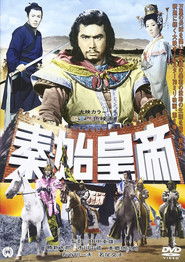
star 6In 221 BC, Qin Shihuangdi conquered the rest of China. Qin's great accomplishments and also his serious faults are showed in this film. Qin adopted autocratic dictatorship and led a luxurious life: abolition of feudalism and the centralization of power in the form of a now-hereditary bureaucracy loyal to himself; burning books and burying scholars; the construction of a sumptuous palace for his concubines and also the Great Wall.Song & Story: Amazing Grace
2021
star 1Follows two women who find that their paths are intertwined, and have a surprising connection.The Death Triangle
1999
The Death Triangle
1999
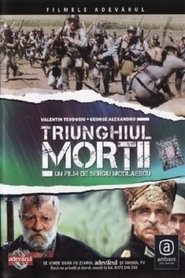
star 5The Romanian army faces the German army in the epic battles of Marasti, Marasesti and Oituz, marking a turning point in World War 1.Dangerous Tour
1969
Dangerous Tour
1969
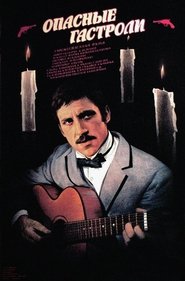
star 5.6Based on the events that took place in Odessa in 1910, when, on the instructions of the Foreign Bureau of the RSDLP, a prominent Bolshevik underground worker arrived in the city under the guise of a French timber merchant, who was to organize the delivery of illegal literature to Russia through the Odessa port. The task can be completed. In Odessa, a variety show theater was created, which, having gained fame, toured Russia and received "theater props" from France...A Blind Hero: The Love of Otto Weidt
2014
star 7.2A Blind Hero depicts Otto Weidt's story as told by award-winning journalist and author Inge Deutschkron, who tells the incredible tale of Weidt's efforts to save her and the rest of his employees from the Nazis, including Alice Licht, the love of Otto Weidt's life.Moses
1995
Moses
1995
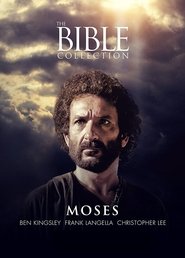
star 8Pharaoh Ramses II decrees the death of all Hebrew children, but Moses, placed in a basket on the Nile by his mother, is picked up by a princess and raised as the brother of the heir to the throne of Egypt.Radium Girls
2020
Radium Girls
2020
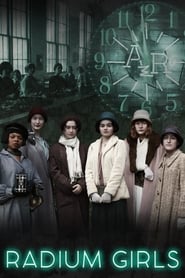
star 6.5Young women toiling in a factory are exposed to hazardous material which takes a disastrous toll on their health.Riddles of the Sphinx
2010
star 6For over 4000 years, the Sphinx has puzzled all who have laid eyes on it. What is this crouching lion, human-headed creature? Who built it and why? To unlock its secrets, two teams of scientists and sculptors immerse themselves in the world of ancient Egypt — a land of pharaohs and pyramids, animal gods and mummies, sun worship and human sacrifice.The 47 Ronin
1941
The 47 Ronin
1941
star 6.9In 1701, Lord Takuminokami Asano has a feud with Lord Kira and he tries to kill Kira in the corridors of the Shogun's palace. The Shogun sentences Lord Asano to commit suppuku and deprives the palace and lands from his clan, but does not punish Lord Kira. Lord Asano's vassals leave the land and his samurais become ronin and want to seek revenge against the dishonor of their Lord. But their leader Kuranosuke Oishi asks the Shogun to restore the Asano clan with his brother Daigaku Asano. One year later, the Shogun refuses his request and Oishi and forty-six ronin revenge their Lord.The Voyageurs
1964
The Voyageurs
1964
This short film tells the tale of the men who drove big freighter canoes into the wilderness in the days when the fur trade was Canada's biggest business. The film recreates scenes of the early 19th century with a soundtrack by an all-male chorus.