Popular History Movies - Page 270

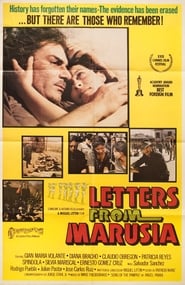
Letters from Marusia
1975
Letters from Marusia
1975
star 5.4Chronicle of the repression that a foreign company exerts on the miners of a small nitrate town in Chile, whose workers decide to claim their most essential rights. A reflection of the historic union struggles in the northern Chile that ended with terrible repressive acts.Last Days of the Samurai
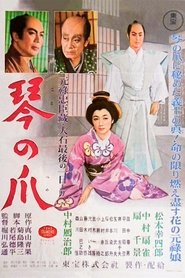
1957
Seppuku Day 17 Ako ronins, including Kuranosuke Oishi, who were entrusted to the Hosokawa family, and the events of the two days before are depicted as a tragic romance between one of the ronins, Jurozaemon Isogai, and Omino. An adaptation of Seika Mayama play "Genroku Chusingura, the Last Day of Oishi", which tells about the torments of life and death of samurai living in feudal times.A Strange Mark of Identity
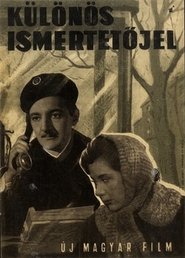
1955
Imre, secretary of the illegal communist party arrives in Budapest secretly in 1942, in order to start the newspaper of the party in the fight against war. Not even his own mother can see him.Pathonpatham Noottandu
2022
star 5Arattupuzha Velayudha Panicker, a 19th century fiery social reformer and his unswerving fight against the dominant caste oppressions by the upper classes.18-14
2007
18-14
2007
star 7.2Detective story set up in the time and place of young Pushkin, at Tsarskosel'sky Liceum.The Adventures of Nellie Bly
1981
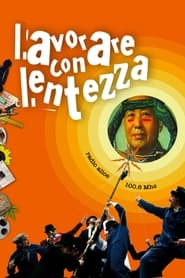
star 3A "Classics Illustrated" account of pioneer female journalist Nellie Bly, who became a legend through her exposes of corruption and inhumane conditions in New York of the 1880s in "The New York World."Working Slowly (Radio Alice)
2004
star 6.3Bologna, 1976. The paths of two aimless young friends intertwine with those of Radio Alice, a pirate radio politically aligned with the leftist student movement.Himiko
1974
Himiko
1974
star 6.9The myth of the Sun Goddess who founded Japanese society is seen through the lens of a modern view of history.Musical Insects
2013
Musical Insects
2013
star 4.3Film time takes on book time. An homage to a Bette J. Davis' illustrated text, itself an homage to the small music makers of the insect world.Marcello Mastroianni, the Ideal Italian
2015
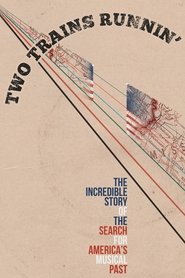
star 6.6A portrait of the mythical Italian actor Marcello Mastroianni (1924-96), a unique performer who was one of the kings of European cinema.Two Trains Runnin'
2016
Two Trains Runnin'
2016
star 7.2The search of several young, white men for blues singers who have been missing for decades coincides with the Civil Rights Movement in Mississippi in the 1960s.The Labour and Rose
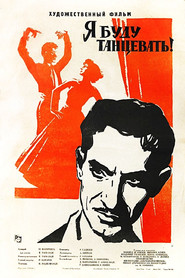
1962
The Labour and Rose
1962
The film is about famous Chechen ballet and folk dancer Mahmud Essembayev's life.The Fight for Life
1940
The Fight for Life
1940
star 5.3The Fight for Life was documentary filmmaker Pare Lorentz' first "dramatic" film, utilizing the talents of several top New York stage actors. A tribute to the Chicago Maternity Center and its efforts to provide the best possible care for destitute mothers, the film is based on the book of the same name by Paul de Kruif. Myron McCormick plays the largest role as a dedicated intern, while others in the cast include such theatrical heavywrights as Will Geer, Dudley Digges and Dorothy Adams. The film's many vignettes range from the tragic (a mother dying in childbirth in the opening scene) to the exultant (another mother rescued from the brink of death in a disease-ridden tenement). Filmed in Chicago, Detroit and Cleveland, Fight for Life is a worthwhile effort, though Lorentz seems more comfortable with the "actuality" scenes than with the dramatized passages.Die Zigarrenkiste
2006
Die Zigarrenkiste
2006
Tomorrow, After the War
2015
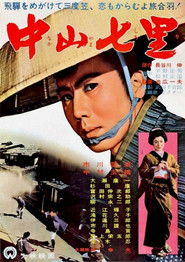
In February 1945, Jules Ternes returns to Luxembourg. To escape conscription, he fled the country and joined the resistance movement in France. Back in his hometown, Jules hopes to find peace of mind and put the war behind him. But he returns to a country devastated by the Battle of the Bulge and deeply divided from four years of occupation. His sister Mathilde is now engaged to Armand, the leader of the local resistance and his girlfriend Leonie has another man in her life. Jules nevertheless resumes a relationship with her and accepts a post as an auxiliary policeman. When Leonie is assassinated along with the German farmers she works for, the life Jules was struggling to rebuild collapses. The ensuing investigation will reveal grey areas of the Occupation along with the efforts made in high places to cover them up.Seven Miles to Nakayama
1962
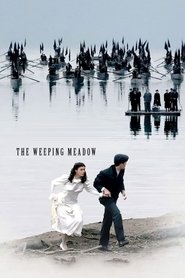
star 6.3When a corrupt magistrate rapes Oshima, Masa (Raizō Ichikawa) avenges her by killing the officer, becoming thereby a fugitive, haunted and grief-stricken by the fact that Oshima committed suicide. Going underground in the gambling world, perpetually hiding from the law, Masa eventually meets a young woman named Onaka, who looks exactly like Oshima. Tales having two look-alike heroines are a commonplace in Japanese period films, a plot affectation inherited from the kabuki theater. Based on a novel by Shin Hasegawa, Nakayama shichiri was already twice filmed in 1930, one version directed by Namio Ochiai, and from which less than 40 minutes survive, the other directed by Kyotaro Namiki. Both are silent films, preserved by the Makino film institute.The Weeping Meadow
2004
The Weeping Meadow
2004
star 7.5The first part of an incomplete trilogy telling the story of the greek people. The film begins in 1919, with Greek immigrants from Odessa arriving near Thessaloniki. Led by the charismatic Spyros, they establish a new settlement in the delta of a river. The youngest of the settlers are Spyros' son Alexis and an orphan from Odessa, Eleni. A strong, almost incestuous affection develops between the teenagers, resulting in twins who are given to a foster family. Also standing in the way of love is Spyros, determined to take his foster daughter as his wife. The lovers then decide to flee the village, persecuted by their father, leading a life of exile. As Alexis joins a group of musicians planning to go to the United States, Eleni regains custody of the twins. Angelopoulos, as in previous films, looks at the sacrifice of civilians confronted by the workers' demonstrations of 1935, the rule of Metaxas' fascist junta and forced emigration to America, and finally the civil war of 1944-1949.Bullets for the Emperor
1980
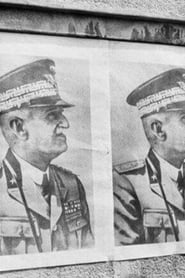
Film about Vasil Laçi, who attempted to kill Victor Emmanuel III during his visit in Albania.The Dakota War: Chase
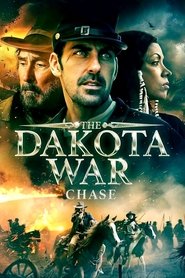
2024
In the aftermath of "Uprising" and "The Assault on Fort Ridgely", Colonel H. H. Sibley establishes a military tribunal to place the captured Dakota on trial for their actions. Lead by Lieutenant Olin and appointed commissioners, the US Army seeks revenge, but at what cost?