Popular Documentary Movies - Page 484

L'Artifice et le factice
2012
"L'Artifice et le factice" is the episode that covers the period from January 1, 1988 to December 31, 1988 of my filmed Notebooks.The Gulf War... What Next?
1993
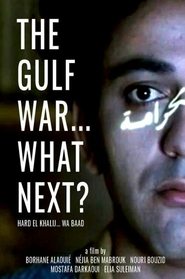
The second Gulf War from 1990 to 1991 represents in the collective Arab memory a turning point in regards to the Arab nationalism’s self-perception as well as a moment of deep historical and existential insecurity. Five Arab directors discuss the events from their personal perspective.Mondo Cane 2
1963
Mondo Cane 2
1963
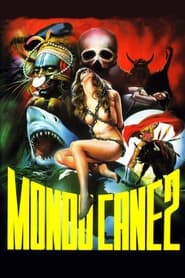
star 5.6The official sequel to the original shockumentary, presenting new and bizarre behavior from around the world, including cruelty, graphic gore, and strange rituals.Quipu Viscera
2011
Quipu Viscera
2011
Graduate Together: America Honors the High School Class of 2020
2020
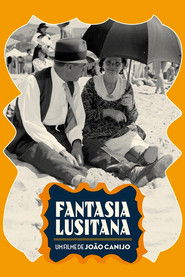
star 8.6Artists, athletes, musicians, commencement speakers, influencers, and cultural icons will show their support for the High School Class of 2020.Lusitanian Illusion
2010
Lusitanian Illusion
2010
star 6.4Images and sounds expose the duality of Portugal during the days of WW2: a peaceful, god-loving, rural country, providing an escape route for over one hundred thousand European refugees to the Americas; and a political and cultural elite that disguised their Nazi inclinations just enough to play its neutral role in international politics.Frederick Douglass: In Five Speeches
2022
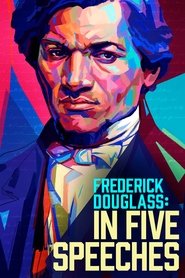
star 6Acclaimed actors draw from five of Douglass’ legendary speeches, to represent a different moment in the tumultuous history of 19th century America as well as a different stage of Douglass’ long and celebrated life, while famed scholars provide context for the speeches, and remind us that Frederick Douglass’ words about racial injustice still resonate deeply today.Black at Yale: A Film Diary
1974
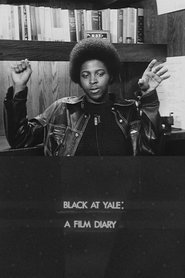
The film focuses on the experiences of African-American students at Yale in the early 1970s. The influential documentary short follows students Erroll McDonald and Eugene Rivers, and features a conversation with civil rights activist Stokely Carmichael.Cold Homeland
1995
Cold Homeland
1995
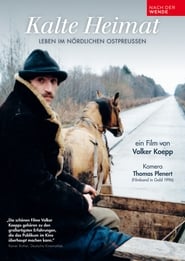
star 6In this documentary Volker Koepp shows part of the history of Prussia. He begins 700 years ago with the land of the Pruzzen situated between the rivers Weichsel and Memel and proceeds the development of the state.Mary Pickford: The Muse of the Movies
2008
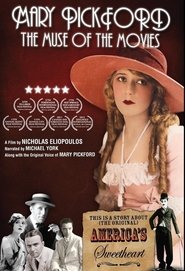
star 5This documentary traces the life and work of the legendary "America's Sweetheart" Mary Pickford, silent film star, movie pioneer and keen businesswoman. Pickford's life also parallels an even larger story, telling of the birth of the cinema itself.Moog
2004
Moog
2004
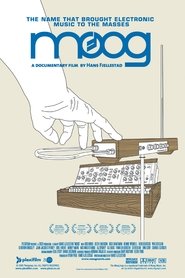
star 5.2Best known as the inventor of the Moog synthesizer, Robert Moog was an American pioneer of electronic music, and shaped musical culture with some of the most inspiring electronic instruments ever created. This "compelling documentary portrait of a provocative, thoughtful and deeply sympathetic figure" (New York Times) peeks into the inventor's mind and the worldwide phenomenon he fomented.Tess: From Novel to Screen
2004
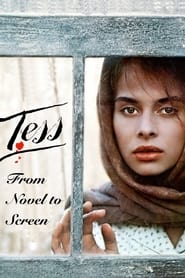
Documentary about Roman Polanski's film adaptation of the 1891 novel "Tess of the d'Urbervilles" by Thomas Hardy.Mac Dre: Legend of the Bay
2015
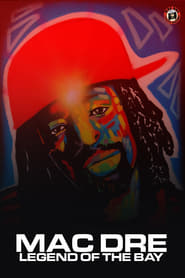
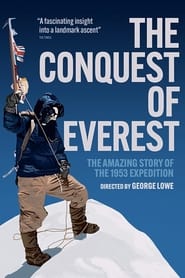
star 8Bay Area rapper Mac Dre began his career at 18 and quickly became an influential force in early west coast hip-hop. In 1992 he was convicted of conspiracy to commit bank robbery when his lyrics were used against him in court. He left prison with a new lease on life, founded an independent record company, and then was murdered just when he began to emerge as a star. For the first time ever, his mother Wanda reveals the true experiences of a hip-hop legend.The Conquest of Everest
1953
star 7.2A documentary of the first successful expedition to the summit of Mount Everest. New Zealand's Edmund Hillary and Sherpa Tenzing Norgay climb Mount Everest in 1953.At the Edge of Russia
2010
star 6.5Alexei is a nineteen year old recruit being flown in to perform his military service on the frontier of northern Russia. The base is one of few such remaining outposts on the Arctic Ocean. There are five other seasoned and long serving soldiers stationed here, each with their own personal story or secret that has caused them to retreat from the real world. Their training and breaking in of the new arrival is sometimes humorous, at times harsh. Gradually, they each reveal something of themselves in their daily interactions and private moments as they continue their absurd duty in this snow covered no man's land, hundreds of miles from the nearest human settlement.The World of Hammer: Wicked Women
1994
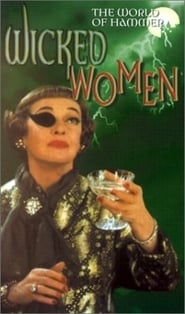
star 7The wicked women of Hammer included such cult stars and screen legends as Bette Davis, Ingrid Pitt, Joan Fontaine, Martine Beswick, Tallulah Bankhead, Lizabeth Scott and more. This is nothing more than assembled clips from various Hammer productions narrated by Oliver Reed. It aired on Channel 4 in the UK in 1994 before select episodes were released on VHS.A Night with the Stars
2011
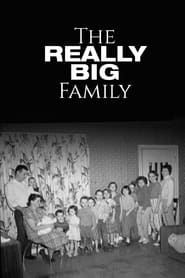
star 8For one night only, Professor Brian Cox goes unplugged in a specially recorded programme from the lecture theatre of the Royal Institution of Great Britain. In his own inimitable style, Brian takes an audience of famous faces, scientists and members of the public on a journey through some of the most challenging concepts in physics. With the help of Jonathan Ross, Simon Pegg, Sarah Millican and James May, Brian shows how diamonds - the hardest material in nature - are made up of nothingness; how things can be in an infinite number of places at once; why everything we see or touch in the universe exists; and how a diamond in the heart of London is in communication with the largest diamond in the cosmos.The Really Big Family
1966
star 4The Really Big Family is a 1966 American documentary film directed by Alexander Grasshoff about the Dukes family of Seattle, who had 18 children. It was nominated for an Academy Award for Best Documentary Feature.Ulrike Meinhof
2006
Ulrike Meinhof
2006
The authors Johannes Unger and Sascha Adamek follow the traces of Ulrike Meinhof's life. In the documentary, contemporary witnesses who knew Ulrike Meinhof directly and experienced her path from different perspectives have their say: publisher Klaus Wagenbach, Spiegel editor-in-chief Stefan Aust, Meinhof friends Peggy Parnass and Erika Runge, RAF members Monika Berberich and Manfred Grashof, friends and neighbors from her youth and journalist Bettina Röhl, Ulrike Meinhof's daughter.